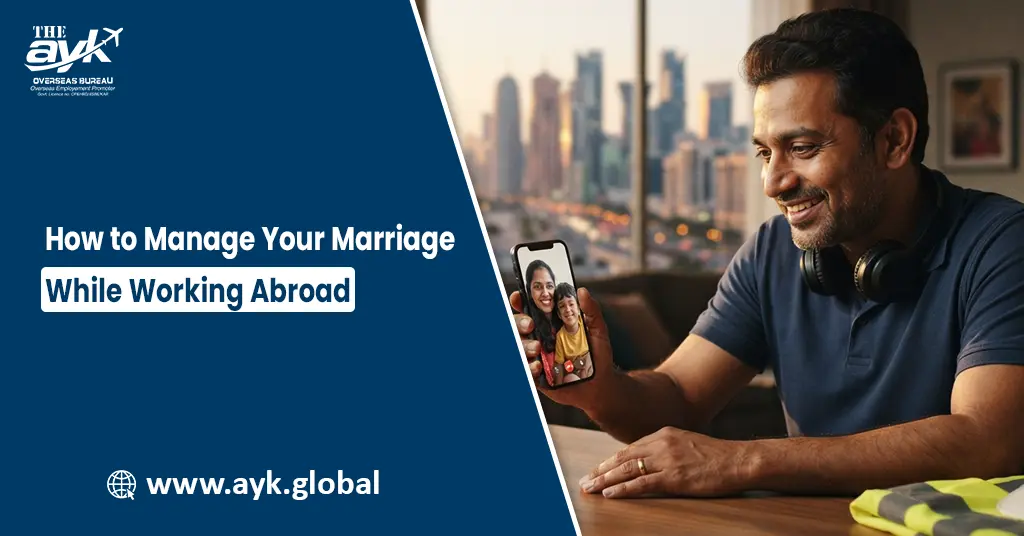
How to Manage Your Marriage While Working Abroad
Published: July 04, 2026 | Views: 14
Introduction
Managing a marriage across the distance and time separation that overseas employment creates represents one of the most personally significant challenges that Pakistani workers face throughout their Gulf employment, with the health of this most important personal relationship directly affecting both the emotional wellbeing that work performance requires and the family motivation that overseas employment's financial purpose fundamentally serves. Workers who invest genuine attention and deliberate effort in maintaining and even strengthening their marriage during overseas employment periods arrive home to relationship quality that makes their overseas sacrifice genuinely worthwhile, while those who allow the demands of overseas employment to crowd out adequate marital relationship investment sometimes discover upon return that the distance has created emotional distance that physical return alone does not automatically heal. AYK Overseas Recruitment & HR Manpower Agency, recognized as one of Pakistan's top manpower agencies, genuinely cares about the complete personal wellbeing of overseas workers and this guide provides honest, compassionate guidance for maintaining strong marital relationships throughout the challenging separation that overseas employment creates.
Establishing Honest Communication Foundations Before Departure
The most important marital relationship investment that overseas-bound workers can make before departure involves establishing genuinely honest, mutually understood communication about realistic expectations for the overseas employment period, covering how frequently communication will realistically be possible given working schedules and time zone differences, what financial remittance amounts can sustainably be sent without compromising the worker's own legitimate personal expenses, how significant family decisions will be handled across the distance, and how both spouses genuinely feel about the separation they are entering. This pre-departure honest communication prevents the misaligned expectations that create marital friction during separation, with spouses who have genuinely discussed and mutually understood realistic expectations managing the separation period considerably more effectively than those who enter it with unspoken assumptions that surface as painful disappointments only after the worker has departed and changed circumstances make expectation renegotiation more emotionally charged than pre-departure discussion would have been. Workers should approach this pre-departure communication with genuine listening orientation toward their spouse's concerns and feelings rather than primarily seeking reassurance that the departure is acceptable, recognizing that authentic mutual acknowledgment of the genuine difficulty creates stronger relational foundation than performed positivity that suppresses genuine feelings without actually resolving the emotional reality of significant family separation.
Communication Quality Over Communication Frequency
The quality of communication that overseas workers maintain with their spouses matters significantly more than the sheer frequency of contact, with genuinely present, emotionally engaged communication during fewer but more meaningful conversations creating stronger marital connection than high-frequency brief check-in contacts that maintain surface-level information exchange without the genuine emotional depth that marital intimacy specifically requires. Workers should deliberately create conditions for quality communication including finding adequate privacy, minimizing environmental distractions, approaching calls when personal energy allows genuine present engagement rather than exhausted mechanical check-in, and genuinely listening to and engaging with their spouse's life experience rather than primarily reporting their own overseas experience without reciprocal interest in the home-side reality that their spouse is navigating. Identifying specific scheduled call times that both spouses protect as genuinely important relationship investment rather than treating communication as something that happens whenever schedule gaps allow prevents the communication drift that busy overseas working periods can create when no protected communication time exists that both parties treat with the priority that marital relationship maintenance genuinely deserves.
Managing Financial Communication and Remittance Expectations
Financial communication represents one of the most common sources of marital tension during overseas employment, with spouses sometimes developing different understandings of available finances, conflicting priorities for limited financial resources, or unspoken frustration about remittance amounts that honest, regular financial communication can prevent from escalating into serious marital conflict. Workers should maintain transparent, regular financial communication with their spouses covering what has been earned, what legitimate personal expenses have been required, what has been remitted, and what is being saved toward agreed financial goals, treating this financial transparency as basic mutual respect rather than as accountability that resentment implies. Spouses who feel genuinely informed about the family's complete financial situation, including the overseas worker's legitimate personal expense requirements that cannot be fully eliminated without compromising the worker's health and basic dignity, typically manage their own domestic financial situation with better realistic planning and less frustrated expectation than spouses who receive remittances without context about the complete financial picture from which those remittances come.
Supporting Your Spouse's Pakistan-Side Life and Wellbeing
Overseas workers whose spouses remain in Pakistan managing household, children, and often extended family obligations without the worker's physical presence should actively acknowledge and appreciate the genuine burden and responsibility that this managing role involves rather than unconsciously framing the domestic management role as simply the expected home-side reality while the overseas employment represents the genuine sacrifice that deserves acknowledgment. Spouses who manage Pakistani households during their partner's overseas absence carry real responsibility, make daily decisions without their partner's physical consultation, and manage the emotional demands of single-parent household management that overseas employment creates, deserving genuine acknowledgment and expressed appreciation that validates their contribution rather than simply being assumed as the arrangement that overseas employment requires. Workers who specifically express gratitude for their spouse's household management contribution, acknowledge specific difficult situations their spouse has navigated successfully during the separation, and genuinely celebrate their spouse's capability and resilience demonstrate the relational investment that sustains and strengthens marital connection across separation periods rather than the passive relationship maintenance that simply waiting for reunion represents.
Maintaining Emotional Intimacy Across Distance
Emotional intimacy that keeps marital relationships genuinely connected across long separation requires deliberate investment in the vulnerability, mutual sharing, and genuine relational depth that physical co-presence naturally facilitates but that distance requires more intentional cultivation to maintain without the organic daily-life-sharing that marriage under the same roof continuously provides. Workers can maintain emotional intimacy across distance through sharing genuine feelings about their overseas experience including the difficult moments that stoic self-presentation might otherwise conceal, expressing genuine affection through messages, voice notes, and video calls that communicate emotional connection rather than simply transactional information exchange, and creating small meaningful gestures across the distance including remembering and acknowledging important personal dates, sending thoughtful messages at meaningful moments, and finding creative ways to express care and love despite physical separation. Spouses who feel genuinely known, genuinely cared for, and genuinely emotionally connected despite the distance maintain stronger marital bonds through separation periods than those whose connection exists primarily through obligation-fulfilling regular check-in without the genuine emotional engagement that true marital intimacy requires to remain vital across extended separation.
Handling Marital Conflict Across Distance
Conflict inevitably arises within marriages during overseas employment separation, with different perspectives on financial decisions, parenting approaches, extended family situations, and various other matters creating disagreements that geographic distance makes particularly challenging to resolve through the kind of face-to-face conversation that conflict resolution most effectively employs. Workers should approach distance conflict with particular care about communication tone and content that digital channels strip of the nonverbal context that face-to-face communication naturally provides, recognizing that text messages and even video calls leave more interpretive ambiguity about tone, intention, and emotional state than in-person conversation where physical presence and nonverbal communication provide important conflict navigation context. Some conflicts genuinely cannot be effectively resolved across distance and are better acknowledged as matters requiring deferred resolution upon reunion rather than forced resolution through limited digital communication channels that cannot fully support the nuanced, emotionally present conversation that significant marital conflict genuinely requires for healthy resolution.
Annual Leave Planning as Relationship Investment
Annual leave periods represent genuinely precious opportunities for marital relationship renewal that workers who treat as primarily administrative re-integration with family responsibilities rather than deliberate relationship investment sometimes waste without the marriage-strengthening benefit that intentional leave period relationship focus creates. Workers should specifically plan annual leave periods to include dedicated couple time alongside family and extended family obligations that leave periods also genuinely require, protecting this couple time from the competing demands that leave periods create rather than allowing every available leave moment to be consumed by obligations without any deliberate marital relationship investment that both spouses have been looking forward to throughout their separation. The reunion dynamics of annual leave present their own adjustment challenges that workers who have read or discussed realistic reunion expectations manage more gracefully than those who approach reunion expecting seamless immediate intimacy that re-establishment after months of separation typically requires some warm-up period to achieve rather than being instantly available regardless of how strong the underlying marital relationship is.
Involving Your Spouse in Overseas Career Decisions
Workers who treat their overseas career decisions as individual choices requiring only family notification rather than genuine joint decisions involving their spouse's meaningful input create a marital dynamic where the spouse feels excluded from the major life decisions that affect the entire family rather than genuinely partnered in the family's collective planning. Discussions about contract renewal, destination changes, career development direction, and major financial decisions like property investment or business planning deserve genuine spousal consultation where the spouse's perspective meaningfully influences outcomes rather than simply being informed of conclusions the worker has already reached independently. Spouses who experience genuine decision partnership in the overseas employment career feel more emotionally invested in the shared enterprise that overseas employment represents for the entire family rather than experiencing it as something their partner does to them rather than with them, creating stronger mutual support for the difficult aspects of overseas employment when spouses feel genuinely included in the decisions that create those difficulties.
Preparing for Permanent Return and Reintegration
The eventual return from overseas employment requires deliberate preparation for the marital reintegration that extended separation makes genuinely necessary rather than simply assumed as automatically smooth once physical proximity is restored. Workers and their spouses should discuss their expectations for the return period including household management transition, family routine reestablishment, extended family expectation management, and the personal adjustment period that both parties need for reintegrating as daily life partners after the extended independence that separation creates on both sides. Workers who approach permanent return with realistic understanding that reintegration requires patient, deliberate relationship rebuilding rather than immediate restoration of pre-departure relational patterns typically navigate this transition considerably more gracefully than those who expect unchanged marital dynamics upon return without acknowledging the genuine personal development and adaptation that both spouses have undergone throughout the separation period.
How AYK Overseas Supports Workers' Complete Personal Wellbeing
As a government-licensed international recruitment and HR manpower firm with offices in Karachi and Islamabad, AYK Overseas Recruitment & HR Manpower Agency recognizes that genuinely successful overseas employment encompasses the complete personal wellbeing of workers and their families rather than simply the employment transaction that placement services most obviously facilitate, providing pre-departure guidance that addresses the personal relationship dimensions of overseas employment preparation alongside the more obviously employment-focused preparation that workers typically prioritize. Being recognized as one of Pakistan's top manpower agencies, we genuinely care about the families and marriages of the workers we place, understanding that workers who maintain strong marital relationships throughout their overseas employment return home with both the financial improvement and the personal relational foundation that makes their overseas sacrifice genuinely worthwhile in its complete human terms.
Conclusion
Managing marriage during overseas employment requires deliberate, consistent investment in communication quality, emotional intimacy maintenance, financial transparency, spousal acknowledgment and appreciation, and genuine decision partnership that together sustain the marital connection across separation periods that purely transactional maintenance without this genuine relational investment cannot preserve at the depth that lasting marital strength requires. Workers who treat their marriage as a living relationship requiring active, thoughtful cultivation during overseas employment rather than a stable institution that simply maintains itself through obligation-fulfilling routine contact return home to the relational foundation that makes their overseas sacrifice genuinely meaningful for both themselves and the spouse whose partnership makes the entire overseas employment journey worthwhile.
 Documents Required for Overseas Employment Visa Processing
 Top Recruitment Agency in Pakistan for Bulgaria Employers, Complete Hiring Guide
 Warehouse and Logistics Jobs in GCC Countries
 KSA Recruitment
 UAE Recruitment
 Qatar Recruitment
 Oman Recruitment
 Kuwait Recruitment
 Libya Recruitment
 Bahrain Recruitment
 Iraq Recruitment
 Malaysia Recruitment
 Malta Recruitment
 Canada Recruitment
 USA Recruitment
 Europe Recruitment
 UK Recruitment
 Romania Recruitment
 Poland Recruitment
 Bulgaria Recruitment
 Albania Recruitment
 Serbia Recruitment
 Lithuania Recruitment
 Japan Recruitment
 Turkey Recruitment
 Kyrgyzstan Recruitment
 South Korea Recruitment