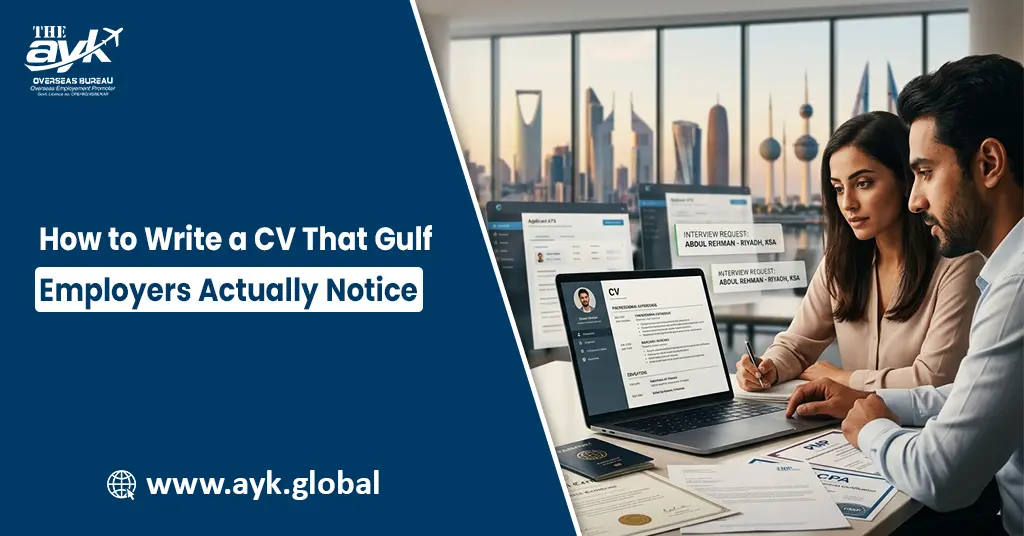
How to Write a CV That Gulf Employers Actually Notice
Published: June 30, 2026 | Views: 18
Introduction
Writing a CV that genuinely captures Gulf employer attention requires understanding specific formatting conventions, content priorities, and increasingly, optimization for digital screening systems that many employers and recruitment platforms now use to initially evaluate candidate applications. Many qualified Pakistani workers inadvertently undermine their genuine competitiveness through poorly formatted or improperly focused CVs that fail to effectively communicate their actual relevant qualifications.
This guide provides practical, actionable guidance for creating a CV that effectively showcases your qualifications to Gulf employers. AYK Overseas Recruitment & HR Manpower Agency, recognized as one of Pakistan's top manpower agencies, helps every candidate develop properly optimized CV materials, recognizing this document's critical importance as often the very first impression employers form regarding your candidacy.
Using Clear, Industry-Standard Terminology
Your CV should use clear, industry-standard terminology relevant to your specific trade or profession, avoiding vague or unconventional descriptions that might not align with how employers and digital screening systems typically search for and evaluate relevant qualifications. This terminology precision helps ensure your genuine qualifications are properly recognized rather than potentially overlooked due to unclear or non-standard language choices.
Workers should research how their specific skills and experience are typically described within their target industry, ensuring their CV language matches these conventional descriptions rather than using personal or regional terminology that might not translate clearly to Gulf employer expectations. This terminology research helps ensure your CV effectively communicates your genuine qualifications using language your target employers actually recognize and search for.
Structuring Your CV with Clear, Logical Organization
Your CV should follow clear, logical organization, typically beginning with your contact information and a brief professional summary, followed by your work experience listed in reverse chronological order, your educational background, and relevant certifications or skills. This logical structure helps employers quickly locate and evaluate the specific information most relevant to their hiring decision.
Workers should avoid overly creative or unconventional CV formatting that might appear visually distinctive but actually complicates employers' ability to quickly extract relevant information during their typically brief initial review process. This straightforward, conventional structure generally serves candidates better than attempting visually striking but functionally confusing alternative formatting approaches.
Highlighting Quantifiable Achievements Where Possible
Rather than simply listing job duties and responsibilities, your CV should highlight quantifiable achievements where genuinely possible, such as specific project completions, efficiency improvements, or other measurable outcomes that demonstrate concrete value you provided within previous positions. These quantifiable achievements typically prove more compelling than generic duty descriptions lacking specific demonstrated impact.
Workers should think carefully about their previous work experience, identifying any genuine quantifiable achievements worth highlighting, even within roles that might not traditionally emphasize this kind of measurable outcome documentation. This achievement-focused approach helps your CV demonstrate concrete value rather than simply confirming you held certain positions without clear indication of your actual performance or contribution within those roles.
Including Relevant Certifications Prominently
Given the importance Gulf employers place on verified, documented competency, your CV should prominently include relevant certifications and qualifications, ensuring these credentials are clearly visible rather than buried within less prominent sections of your document. This prominent certification placement helps ensure employers immediately recognize your verified competency relevant to their specific position requirements.
Workers should consider creating a dedicated certifications section if they hold multiple relevant credentials, making these qualifications easily scannable for employers conducting quick initial review of your application materials. This dedicated section approach helps ensure your verified qualifications receive appropriate attention rather than potentially being overlooked within less organized CV formatting.
Avoiding Common CV Formatting Mistakes
Workers should avoid common CV formatting mistakes, including excessive length beyond what genuinely relevant content requires, inconsistent formatting or fonts throughout the document, spelling or grammar errors that create unprofessional impression, and overly dense text lacking appropriate visual organization through headers and bullet points. These common mistakes can undermine even genuinely strong qualifications through poor overall presentation.
Workers should carefully proofread their CV multiple times, ideally having someone else review the document as well, since errors that the original writer might overlook often become apparent to fresh reviewers. This careful proofreading helps ensure your CV presents your qualifications professionally without distracting errors that might create unfavorable employer impressions regardless of your actual underlying competency.
Tailoring Your CV for Specific Position Applications
Rather than submitting an identical generic CV for every application, workers should consider tailoring their CV somewhat for specific position applications, emphasizing particularly relevant experience or skills that align closely with each specific job's particular requirements. This tailoring effort, while requiring some additional time investment, often significantly improves your competitiveness compared to generic, one-size-fits-all CV submissions.
Workers should identify the specific keywords and requirements mentioned within particular job postings, ensuring their tailored CV appropriately addresses these specific priorities where their genuine experience supports this emphasis. This targeted tailoring approach helps your CV more effectively demonstrate alignment with each particular position's actual requirements rather than relying on generic qualification descriptions that might not clearly connect to specific employer priorities.
Understanding Digital Screening System Considerations
Given the increasing use of digital screening systems within modern recruitment processes, workers should understand that these systems typically scan CVs for specific keywords and formatting patterns, making it important to ensure your CV includes relevant industry terminology and avoids unusual formatting that might complicate digital text extraction and analysis. This digital screening awareness helps ensure your CV successfully navigates this initial automated evaluation stage.
Workers should avoid embedding important information within graphics, tables, or unusual formatting elements that digital screening systems might struggle to properly process, instead relying on standard text formatting that ensures reliable digital readability. This formatting awareness helps protect against your genuine qualifications being inadvertently overlooked due to digital processing complications rather than any actual deficiency in your underlying competency.
Including Appropriate Personal Information
Workers should understand what personal information is appropriate and expected within Gulf job applications, which sometimes differs from conventions in other regions, including whether to include photographs, specific personal details like marital status or nationality, and other information that Gulf employer conventions might specifically expect or appreciate within properly formatted application materials.
Workers should research specific conventions relevant to their particular target destination country and industry, recognizing these expectations can vary somewhat between different contexts rather than assuming universal, identical conventions apply across every Gulf destination and employer type. This research helps ensure your CV format aligns appropriately with your specific target audience's actual expectations.
How AYK Overseas Helps You Create an Effective CV
As a government-licensed international recruitment and HR manpower firm with offices in Karachi and Islamabad, AYK Overseas Recruitment & HR Manpower Agency provides candidates with thorough CV development guidance, ensuring your application materials effectively showcase your genuine qualifications to Gulf employers. Being recognized as one of Pakistan's top manpower agencies, we understand the specific formatting and content priorities that genuinely improve candidate competitiveness.
Our team helps candidates develop properly formatted, effectively tailored CV materials specific to their particular target sector and destination country, ensuring this critical first impression document genuinely represents their authentic qualifications. This thorough support has helped AYK Overseas Recruitment & HR Manpower Agency assist numerous candidates in creating CVs that successfully capture Gulf employer attention and interest.
Conclusion
Writing a CV that genuinely captures Gulf employer attention requires clear industry-standard terminology, logical organization, quantifiable achievement highlighting, prominent certification placement, and careful attention to formatting consistency throughout your document. Workers who invest proper effort into these CV development priorities, ideally with guidance from a knowledgeable recruitment agency, are well positioned to ensure their genuine qualifications receive the attention and consideration they actually deserve from Gulf employers.
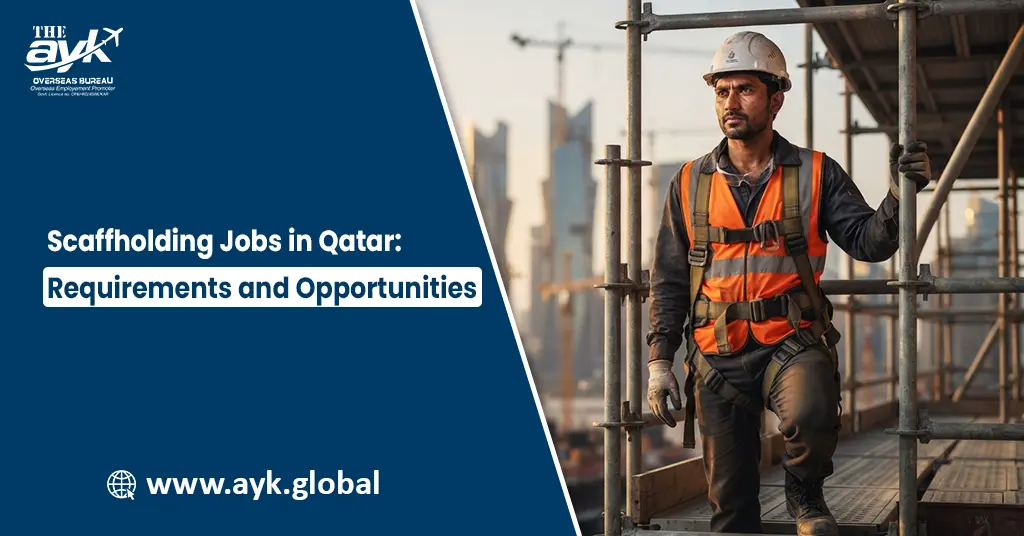 Scaffolding Jobs in Qatar: Requirements and Opportunities
 Benefits of Hiring International Workers for Business Expansion
 KSA Recruitment
 UAE Recruitment
 Qatar Recruitment
 Oman Recruitment
 Kuwait Recruitment
 Libya Recruitment
 Bahrain Recruitment
 Iraq Recruitment
 Malaysia Recruitment
 Malta Recruitment
 Canada Recruitment
 USA Recruitment
 Europe Recruitment
 UK Recruitment
 Romania Recruitment
 Poland Recruitment
 Bulgaria Recruitment
 Albania Recruitment
 Serbia Recruitment
 Lithuania Recruitment
 Japan Recruitment
 Turkey Recruitment
 Kyrgyzstan Recruitment
 South Korea Recruitment