Learning a New Trade While Working in the Gulf
Published: July 04, 2026 | Views: 11
The Gulf employment period represents a genuinely valuable opportunity for Pakistani workers to develop new trade skills alongside their primary employment, with the access to international technical standards, experienced colleagues from diverse backgrounds, and sometimes employer-provided training programs creating a skill development environment that may actually exceed what Pakistani domestic employment would provide for workers motivated to use their Gulf employment period as a genuine professional development investment rather than simply an income generation period. Workers who approach Gulf employment with the dual objective of earning strong income and developing new technical capabilities return home with substantially stronger professional profiles than those who focus exclusively on income generation, creating career flexibility and advancement potential that single-skill profiles cannot provide across the complete professional career that extends well beyond any single overseas employment period. AYK Overseas Recruitment & HR Manpower Agency, recognized as one of Pakistan's top manpower agencies, encourages candidates to approach Gulf employment as professional development opportunity and this guide provides practical guidance for workers who want to develop new trade capabilities during their Gulf employment period.
Why Gulf Employment Creates Exceptional Skill Development Opportunity
Gulf construction and industrial employment environments expose workers to technical standards, equipment types, and work methodologies that often exceed what Pakistani domestic employment contexts provide, creating skill development opportunities embedded within daily employment that workers who remain attentive and curious about the technical environment around them can capitalize on without requiring formal training program enrollment. International colleagues from Philippines, Egypt, India, and various other countries bring diverse technical approaches and problem-solving methods that genuinely curious workers can learn from through the informal knowledge exchange that genuine cross-cultural professional relationships naturally facilitate when workers approach their multinational colleagues with authentic learning orientation. Employer-provided training programs that some Gulf construction, industrial, and hospitality employers operate specifically to develop workforce capabilities represent the most formally structured skill development opportunity available within Gulf employment, with workers who actively seek information about and participation in available employer training programs accessing development opportunities that passive workers miss despite working for the same employers with the same access to available programs.
Identifying Adjacent Skills to Your Current Trade
The most practically accessible trade skill development during Gulf employment involves identifying skills adjacent to your current primary trade that share foundational knowledge, tools, or working context that make acquisition more manageable alongside ongoing primary employment than completely different trades with no foundational overlap. An electrician who develops basic instrumentation skills builds on electrical foundation knowledge in ways that create genuine additional competency without the complete learning curve that starting from scratch in an unrelated trade would involve, similarly a plumber who develops basic HVAC understanding leverages their existing mechanical systems knowledge toward a related but distinct trade specialization that meaningfully broadens their employment options. Workers should analyze their current trade's knowledge foundation and identify which adjacent skills would create the most valuable additional competency from both employment market and personal interest perspectives, prioritizing development that reflects genuine interest alongside market value since skill development sustained without personal interest motivation typically produces less complete competency than development driven by genuine curiosity alongside strategic career calculation.
Time Management for Learning Alongside Full-Time Employment
Learning a new trade skill alongside full-time Gulf employment requires deliberate time management that protects consistent learning time from the legitimate competing demands of employment, rest, family communication, and social activity that Gulf employment creates alongside the primary work schedule. Workers who identify and protect specific daily or weekly learning time blocks, even relatively modest ones of thirty to sixty minutes several times weekly, accumulate meaningful skill development across months that sporadic learning without consistent schedule protection never produces regardless of the learner's genuine motivation and ability. The most sustainable learning schedules fit within realistic life patterns rather than idealized ambitious plans that initial motivation makes seem achievable but that employment fatigue, social demands, and normal human schedule variability quickly render unsustainable, with workers who sustain modest consistent learning schedules producing better actual skill development than those who commit to ambitious learning plans that collapse after initial weeks because they were unrealistic from the start.
Accessing Technical Training in Gulf Countries
Gulf countries offer Pakistani workers several channels for accessing technical training that can develop new trade skills alongside ongoing employment, including employer-provided training programs that some companies operate as workforce development investments, technical training centers operating in major Gulf cities that offer courses in various trade and technical subjects, online learning platforms that provide technical training accessible from any internet connection, and informal mentor-based learning through relationships with experienced colleagues who are willing to teach specific skills that the worker wishes to develop. Workers should research training options available in their specific Gulf city and employment context before assuming that no accessible development opportunities exist beyond purely self-directed study, since training infrastructure varies significantly between different Gulf cities and employer organizations in ways that research rather than assumption more accurately reveals. Online technical learning platforms have made trade skill development more accessible during Gulf employment than previous generations of workers experienced, with high-quality technical training content available through platforms including YouTube technical channels, specialized technical training websites, and various online course providers whose content addresses practical trade skill development rather than purely theoretical knowledge.
The Role of Experienced Colleagues as Learning Resources
The multinational, experienced workforce that many Pakistani workers encounter in Gulf employment environments represents one of the most valuable and accessible learning resources available, with colleagues who have developed specific technical expertise through their own career development potentially willing to share knowledge through informal mentoring relationships that workers who approach with genuine respect and authentic learning interest can cultivate. Workers should identify colleagues whose specific technical expertise they most wish to develop and approach potential knowledge-sharing relationships with genuine professional respect, offering value in return through their own knowledge sharing, practical assistance, or professional support that makes the relationship genuinely reciprocal rather than purely extractive. The cultural richness of Gulf multinational workforces means that workers encounter technical approaches and problem-solving methodologies from Filipino, Egyptian, Indian, Sri Lankan, and various other worker populations that each bring their own distinctive technical traditions, creating learning exposure that any single-country employment environment could not provide regardless of technical quality, and that genuinely curious workers can leverage as an education in diverse technical approaches that enhances their own technical thinking and problem-solving capability.
Building Your New Skill Portfolio with Documentation
New skills developed during Gulf employment represent career assets only when they are verifiable through documentation that prospective employers can assess, making investment in documenting skill development and obtaining formal certification or assessment of newly acquired competencies an important component of skill development that raw capability acquisition alone does not provide. Workers who develop new trade skills should investigate whether formal assessment and certification of these skills is available through Gulf country technical assessment bodies, TEVTA or NAVTTC certification obtained during Pakistan visits, or employer-provided internal certification programs that document competency in ways that external employment applications can reference. Documenting new skill development through a professional portfolio that includes specific projects where new skills were applied, assessor evaluations of demonstrated competency, and reference letters from supervisors who observed skill application creates the evidence foundation that formal certification supplements with official verification, together providing the comprehensive skill documentation that career advancement toward roles requiring demonstrated new trade competency benefits from.
Financial Management of Learning Investment
Some new skill development during Gulf employment involves financial investment in training materials, course fees, certification costs, or specialized tools that self-funded skill development requires, with workers who approach this investment as a genuine career development cost rather than a discretionary expense creating better sustained investment decisions than those who treat learning costs as optional spending that financial pressure easily eliminates. Workers should incorporate realistic skill development investment costs into their Gulf employment financial planning rather than treating learning investment as an afterthought that gets funded only from whatever remains after other financial obligations are met, recognizing that skill development investment typically generates returns through improved employment options and compensation potential that substantially exceed the initial learning costs when new competencies genuinely create valuable career advancement. Employer-provided training opportunities that fund skill development at no personal cost to the worker represent the highest-value development opportunities for financial return calculation purposes, making active pursuit of available employer training before self-funded external training the most financially efficient development strategy when employer training programs adequately address the skills the worker wants to develop.
Integrating New Skills into Your Career Identity
New trade skills that remain compartmentalized as separate capabilities rather than integrated into a coherent professional identity create less career value than skills that are presented as part of a unified, evolving professional story that explains how different competencies complement each other within the worker's developing professional expertise. Workers who develop plumbing skills alongside electrical knowledge should think about how these complementary mechanical systems competencies create a professional profile as a mechanical systems specialist rather than simply presenting two separately acquired skills without the integrating professional narrative that makes the combination more attractive to employers than either individual skill presented without connection to the other. This career identity integration involves developing the ability to explain how different competencies work together in providing distinctive professional value, with workers who can compellingly articulate their combined competency profile creating stronger employer impressions than those who simply list skills without the narrative integration that makes combined competencies more than the sum of individual capability additions.
Using New Skills to Access Different Employment Opportunities
New trade skills developed during Gulf employment create tangible career opportunity expansion when actively leveraged toward employment applications in the additional employment categories that new competencies create eligibility for, with workers who add new skills to their employment search scope accessing opportunities unavailable to single-skill workers while also potentially accessing stronger compensation packages that broader competency profiles command relative to narrower specialist profiles in some employment markets. Workers should research which specific additional employment categories their newly developed skills create eligibility for, then pursue these expanded employment opportunities through their recruitment agency's relevant employer connections and through additional job market channels that their broader competency profile now makes relevant. New skills can also support entrepreneurial opportunity development for workers who return to Pakistan with multiple trade competencies that allow them to offer broader service scope than single-trade specialists, creating potential business development advantages that their Gulf skill development investment created as an unintended but valuable additional benefit.
How AYK Overseas Supports Worker Skill Development Goals
As a government-licensed international recruitment and HR manpower firm with offices in Karachi and Islamabad, AYK Overseas Recruitment & HR Manpower Agency actively encourages workers to use their Gulf employment as a genuine professional development opportunity, providing pre-departure guidance that includes discussion of skill development opportunities relevant to their specific employment placement and continued career planning support throughout their Gulf employment that helps workers identify and pursue development opportunities within their specific employment context. Being recognized as one of Pakistan's top manpower agencies, we believe that maximizing the career development value of Gulf employment alongside its financial contribution serves workers' long-term professional interests most comprehensively, making skill development encouragement and support a genuine component of the comprehensive worker support that distinguishes our approach from agencies focused exclusively on placement transactions.
Conclusion
Learning a new trade during Gulf employment requires deliberate identification of adjacent skill development opportunities, consistent time protection for learning activities within realistic schedule frameworks, access utilization through employer training, experienced colleague mentorship, and online learning resources, documentation investment that verifies newly acquired competency, and career identity integration that presents combined competencies as a coherent professional profile. Workers who treat Gulf employment as dual-purpose income generation and professional development investment return home with substantially stronger career positioning than single-purpose income generators, creating the long-term professional advancement that deliberate skill development investment during overseas employment genuinely produces.
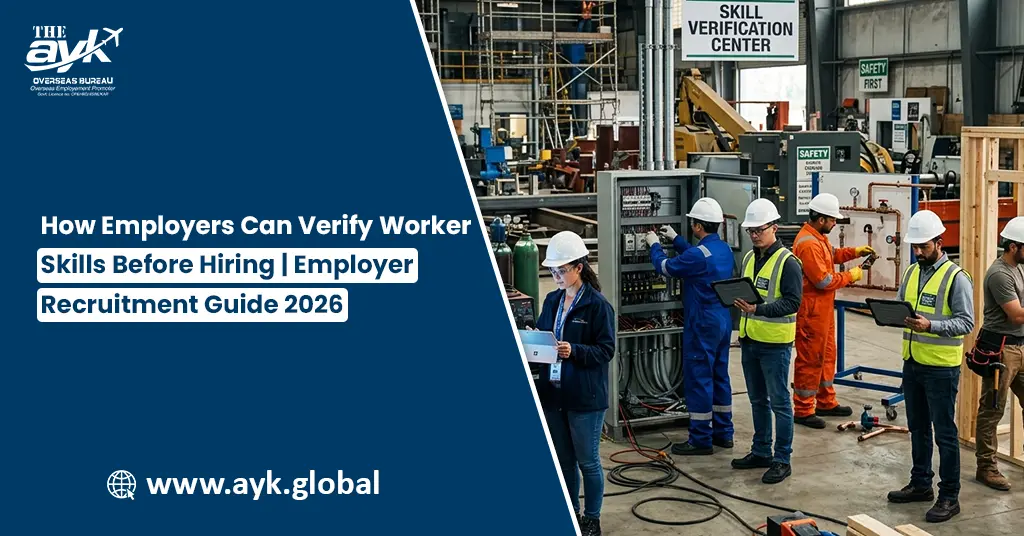 How Employers Can Verify Worker Skills Before Hiring
 Bakery and Pastry Jobs Beyond Five-Star Hotels
 How to Get Job Abroad Without Experience from Pakistan
 KSA Recruitment
 UAE Recruitment
 Qatar Recruitment
 Oman Recruitment
 Kuwait Recruitment
 Libya Recruitment
 Bahrain Recruitment
 Iraq Recruitment
 Malaysia Recruitment
 Malta Recruitment
 Canada Recruitment
 USA Recruitment
 Europe Recruitment
 UK Recruitment
 Romania Recruitment
 Poland Recruitment
 Bulgaria Recruitment
 Albania Recruitment
 Serbia Recruitment
 Lithuania Recruitment
 Japan Recruitment
 Turkey Recruitment
 Kyrgyzstan Recruitment
 South Korea Recruitment