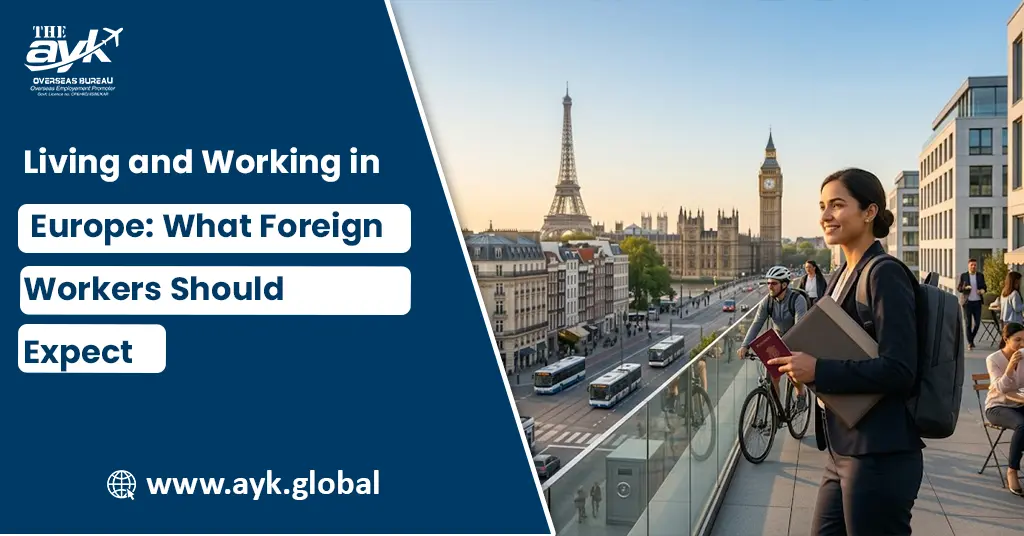
Living and Working in Europe: What Foreign Workers Should Expect
Published: July 06, 2026 | Views: 10
Living and Working in Europe: What Foreign Workers Should Expect
Europe is one of the most popular destinations for foreign workers in 2026 due to its strong economy, high living standards, and wide range of job opportunities. Countries such as Germany, Netherlands, Poland, France, Italy, Spain, Sweden, and Ireland attract thousands of workers from countries like Pakistan, India, Bangladesh, and Nepal every year. These workers are employed in industries such as construction, healthcare, logistics, manufacturing, hospitality, and IT. While Europe offers better salaries and stable working conditions compared to many developing countries, it also comes with strict rules, structured work environments, and high living costs in some regions. Understanding what to expect before moving is very important for a smooth transition. This guide explains living and working conditions in Europe for foreign workers in 2026.
Work Environment in Europe
The work environment in Europe is highly structured, disciplined, and professional. Employers expect workers to follow rules, arrive on time, and complete tasks efficiently. Most workplaces have fixed working hours, safety regulations, and clear job responsibilities. Unlike informal job systems in some countries, European workplaces are highly organized and regulated by labor laws. Workers are also expected to maintain professionalism and respect workplace hierarchy. Teamwork and communication are important, especially in industries like construction, logistics, and manufacturing. Employers value productivity, discipline, and responsibility. Foreign workers who adapt quickly to this environment often perform better and secure long-term contracts.
Salary and Income Expectations
Salaries in Europe are generally higher than in many Asian countries, making it attractive for foreign workers. Income depends on the country, industry, and skill level. Skilled workers such as electricians, welders, nurses, and IT professionals earn significantly higher wages compared to unskilled laborers. Many jobs also include overtime pay, bonuses, and additional benefits. However, salaries must also be viewed alongside living costs, which vary across countries. Western European countries usually offer higher salaries but also have higher expenses, while Eastern European countries may offer lower wages but cheaper living costs. Overall, Europe provides stable and reliable income opportunities for foreign workers.
Cost of Living in Europe
The cost of living in Europe varies widely depending on the country and city. Major cities like Berlin, Paris, Amsterdam, and Zurich are more expensive in terms of rent, food, and transportation. Smaller cities and Eastern European countries tend to be more affordable. Foreign workers often share accommodation to reduce expenses. Some employers also provide free or subsidized housing, especially in construction, agriculture, and factory jobs. Food and transportation costs are generally manageable with proper budgeting. Understanding the cost of living is important for financial planning before moving to Europe. Workers who manage expenses wisely can save a good portion of their income.
Accommodation and Living Conditions
Accommodation for foreign workers in Europe is usually provided by employers in many industries, especially for entry-level and skilled trade jobs. Shared housing is common, where workers live together in apartments or dormitories. These accommodations are generally clean, safe, and regulated by labor laws. In some cases, workers may need to arrange their own housing, especially in professional or urban jobs. Living conditions are generally comfortable, but workers must adapt to shared spaces and different cultural environments. Proper accommodation plays an important role in overall job satisfaction and financial savings.
Work Hours and Employee Rights
European labor laws strictly regulate work hours and employee rights. Most workers are expected to work around 35 to 48 hours per week depending on the country and job type. Overtime is usually paid separately and must follow legal guidelines. Workers are entitled to paid holidays, rest breaks, and health and safety protections. Employers are required to provide safe working environments and follow strict labor standards. Foreign workers are protected under the same laws as local employees. Understanding your rights helps ensure fair treatment and safe working conditions in Europe.
Work Culture and Professional Behavior
Work culture in Europe is highly professional, disciplined, and rule-based. Employers expect employees to be punctual, respectful, and focused on their tasks. Time management is very important, and being late is generally not accepted. Workers are also expected to communicate clearly, follow instructions, and work as part of a team. Unlike informal job environments in some countries, European workplaces emphasize equality, safety, and accountability. Foreign workers should also be prepared for multicultural environments where colleagues come from different countries and backgrounds. Respecting diversity and maintaining professional behavior helps workers integrate smoothly and succeed in their jobs.
Challenges Foreign Workers May Face
Foreign workers in Europe may face several challenges during their initial period. Language barriers are one of the most common issues, especially in countries where English is not widely used. Cultural differences and workplace expectations may also take time to understand. Some workers may struggle with weather conditions, especially in colder European countries. Homesickness and adapting to a new environment can also affect initial performance. Additionally, managing expenses and adjusting to shared accommodation may be challenging. However, these difficulties usually reduce over time as workers gain experience and confidence. Proper preparation helps overcome most of these challenges successfully.
Job Stability and Career Growth
Europe offers good job stability for foreign workers, especially in sectors facing labor shortages such as construction, logistics, healthcare, and manufacturing. Many jobs come with long-term contracts and opportunities for renewal based on performance. Skilled workers have better chances of career growth, salary increases, and even permanent residency options in some countries. Employers often provide training and skill development opportunities to improve worker performance. With experience, workers can move into better positions or switch to higher-paying jobs. Career growth in Europe depends on performance, skills, and adaptability.
Benefits of Working in Europe
Working in Europe offers several benefits including higher salaries, legal job protection, and better living standards. Workers also receive healthcare benefits, paid holidays, and regulated working hours. Many employers provide accommodation and transportation support, reducing living expenses. Europe also offers a safe working environment with strict labor laws protecting employees. Foreign workers gain international experience, improve skills, and increase future career opportunities. These benefits make Europe one of the most attractive destinations for overseas employment.
Final Thoughts on Living and Working in Europe
Living and working in Europe can be a life-changing opportunity for foreign workers if properly planned and understood. While salaries and job stability are attractive, workers must also adapt to strict rules, cultural differences, and living costs. With the right preparation, skills, and mindset, foreign workers can build successful and stable careers in Europe. Understanding expectations before moving helps avoid difficulties and ensures a smooth transition into European life and work culture.
 Understanding Gulf Workplace Hierarchy and Etiquette
 Recruitment Industry Outlook 2026: What HR Managers Predict
 Using LinkedIn to Land Gulf Employment Opportunities
 KSA Recruitment
 UAE Recruitment
 Qatar Recruitment
 Oman Recruitment
 Kuwait Recruitment
 Libya Recruitment
 Bahrain Recruitment
 Iraq Recruitment
 Malaysia Recruitment
 Malta Recruitment
 Canada Recruitment
 USA Recruitment
 Europe Recruitment
 UK Recruitment
 Romania Recruitment
 Poland Recruitment
 Bulgaria Recruitment
 Albania Recruitment
 Serbia Recruitment
 Lithuania Recruitment
 Japan Recruitment
 Turkey Recruitment
 Kyrgyzstan Recruitment
 South Korea Recruitment