Medical Fitness Certificate: Which Tests Are Required
Published: July 04, 2026 | Views: 8
Introduction
The medical fitness certificate represents a non-negotiable Gulf employment documentation requirement that verifies every overseas worker's health status against communicable disease screening standards that Gulf countries maintain to protect their resident populations from imported infectious disease risks, with every worker regardless of employment category required to obtain this certificate from approved medical testing centers before their work visa can be processed and approved. Many Pakistani workers approach medical fitness testing with vague awareness that some health checks are required without understanding the specific tests involved, the significance of different possible results, which specific centers are approved for their particular Gulf destination, and what timeline they should realistically expect between test completion and receiving their certificate. AYK Overseas Recruitment & HR Manpower Agency, recognized as one of Pakistan's top manpower agencies, provides pre-departure guidance covering medical fitness requirements and this guide provides the comprehensive practical information every Gulf-bound Pakistani worker needs before presenting themselves for medical testing.
Why Gulf Countries Require Medical Fitness Certificates
Gulf countries implement mandatory pre-employment medical fitness screening for overseas workers as a public health protection measure that identifies communicable diseases whose introduction through large-scale international labor migration could create genuine public health risks within Gulf resident populations if unscreened infected workers were permitted to enter and work without prior health assessment. The testing panel focuses specifically on communicable diseases that are transmissible through occupational or community contact rather than lifestyle-related conditions that would otherwise be considered private health matters, reflecting a proportionate public health policy approach that targets genuine transmission risk concerns while respecting workers' broader medical privacy for health conditions without public health implications. Understanding this public health rationale helps workers approach the testing process with appropriate perspective, recognizing that abnormal results in communicable disease screening create genuine visa eligibility consequences that cannot be circumvented regardless of the economic importance of the planned overseas employment, while also understanding that the vast majority of otherwise healthy Pakistani workers pass this screening without significant complication.
Approved Medical Centers for Gulf Country Testing
Each Gulf destination country maintains its own specific list of approved medical testing centers in Pakistan whose results they recognize as valid for visa processing purposes, meaning workers must specifically identify and attend an approved center for their particular target destination rather than assuming any accredited Pakistani medical facility's results will be accepted. These approved centers are typically located in major Pakistani cities including Karachi, Lahore, Islamabad, Rawalpindi, and Peshawar, with workers from smaller cities or rural areas sometimes needing to travel to the nearest city with an approved center for their specific destination rather than relying on local medical facilities without the required Gulf country approval status. Workers should confirm the currently approved centers for their specific Gulf destination through their recruitment agency or the relevant Gulf country's embassy or consulate in Pakistan, recognizing that approved center lists change periodically as centers gain or lose approval status, making current verification essential rather than relying on information from community sources that may reflect outdated approved center lists.
Standard Blood Tests in the Medical Fitness Panel
The standard blood testing panel for Gulf employment medical fitness typically includes HIV antibody testing, Hepatitis B surface antigen testing, Hepatitis C antibody testing, and syphilis serology testing as the core communicable disease screening components that Gulf countries universally require across all worker categories regardless of employment type or destination. Some Gulf destinations add additional blood tests to this standard panel including malaria parasite screening for workers from malaria-endemic regions, complete blood count for general health assessment, blood group and Rh factor determination, and various other tests that specific Gulf health authorities include in their particular medical fitness requirements beyond the universal core panel. Workers should obtain current complete test panel specifications for their specific Gulf destination from their recruitment agency or the approved medical center they plan to attend, ensuring they understand every test that will be performed and have realistic expectations about the complete testing scope before presenting themselves for their medical assessment appointment.
Chest X-Ray for Tuberculosis Screening
Chest X-ray examination for tuberculosis screening represents a standard component of Gulf employment medical fitness assessment across all major Gulf destinations, reflecting the importance that Gulf health authorities place on identifying active tuberculosis before permitting workers to enter their countries where TB transmission within densely housed worker populations could create genuine public health management challenges. The chest X-ray is evaluated by radiologists at the approved medical center specifically looking for active pulmonary tuberculosis signs, with results interpreted according to the specific medical standards that Gulf health authorities have established for work visa eligibility determination. Workers with any known history of tuberculosis treatment should inform the medical center physician before their examination, as radiological changes from previously treated TB can create interpretation complications that are best addressed through transparent health history disclosure rather than creating questions during result review that unexplained radiological findings without disclosed treatment history would generate.
Physical Examination Components
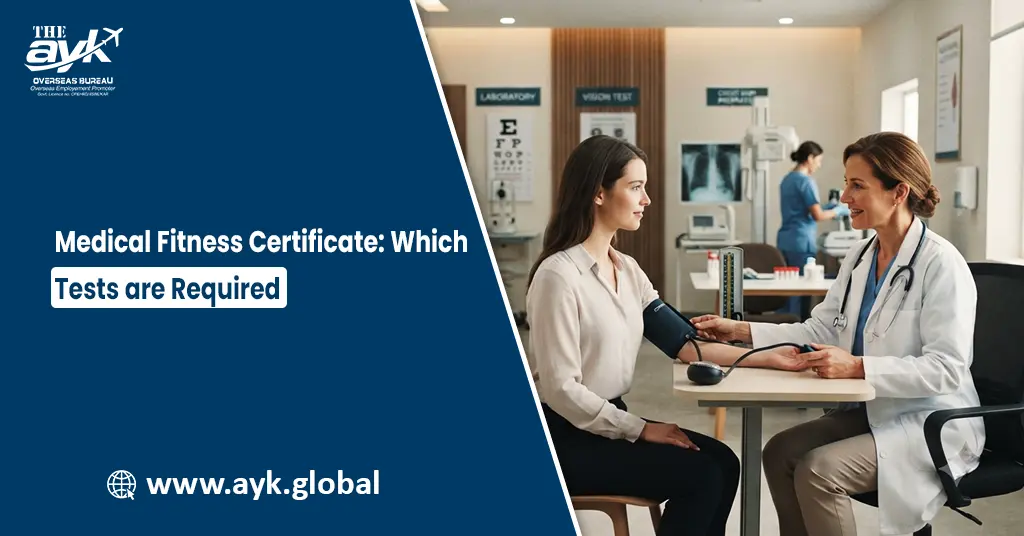
The medical fitness assessment includes a general physical examination conducted by an approved center physician who assesses overall health status, physical fitness for employment, and various clinical signs that might indicate health conditions relevant to work visa eligibility, including blood pressure measurement, weight and height assessment, vision screening, and physical examination of major body systems that might reveal clinically significant health findings. Workers should present themselves for physical examination in a generally healthy state, informing the examining physician of any significant current health conditions, regular medications, or recent illnesses that are medically relevant to their fitness assessment, as complete and honest health disclosure serves workers better than concealment that might be detected during examination or that might create health risks during overseas employment if significant conditions are not identified before departure. The physician's clinical judgment about overall fitness for overseas employment is communicated through their medical fitness assessment conclusion, with the examining physician authorized to recommend additional investigation or specialist consultation before fitness clearance is granted when their examination findings raise clinical questions that require further assessment before a clear fitness determination can be made.
Understanding Possible Results and Their Implications
Medical fitness assessment results fall into several categories that determine the path forward for workers after testing completion, with clear negative results across all screening tests allowing straightforward certificate issuance and visa processing progression, while reactive or positive results in any component trigger additional assessment protocols that may involve confirmatory testing, specialist evaluation, treatment, or in some cases ineligibility determination depending on the specific finding and its implications for work visa eligibility under the relevant Gulf country's medical standards. HIV positive results and active tuberculosis findings consistently create work visa ineligibility across all Gulf destinations regardless of treatment availability, while Hepatitis B and C findings receive somewhat variable treatment across different Gulf countries with some accepting vaccinated or treated workers under specific conditions and others maintaining general ineligibility regardless of treatment status or infectivity assessment. Workers who receive reactive or positive results in any testing component should seek immediate professional medical consultation to understand the clinical significance of their finding, confirm the result through recommended confirmatory testing, and understand their specific visa eligibility implications for their target destination before making irreversible financial commitments to overseas employment documentation that their health status may prevent from succeeding.
Processing Time from Testing to Certificate Issuance
Medical fitness testing centers typically provide certificate issuance within three to seven working days after completion of all required tests, with processing timelines varying between different approved centers, the specific testing panel required for different Gulf destinations, and any additional investigation requirements that initial results necessitate before final certificate issuance. Workers should factor this processing timeline into their overall documentation preparation schedule, recognizing that medical fitness certificate acquisition represents a time-sensitive step that needs to be completed within its validity window alongside all other documentation preparation activities that collectively must be completed before visa submission. Approved medical centers typically communicate with workers through mobile messaging or direct communication about result availability, with workers needing to collect their original certificate in person at the approved center upon notification that their assessment is complete and certificate is ready for collection and subsequent attestation.
Validity Period and Timing Coordination
Medical fitness certificates carry validity periods typically ranging from three to six months from the date of examination, creating an important timing coordination requirement that workers must manage carefully to ensure their certificate remains valid throughout the complete visa processing timeline from certificate issuance through final visa stamp receipt. Workers who complete medical testing too early relative to their actual visa processing may find their certificate has expired before visa approval is received, requiring repeat testing and certificate issuance that adds both cost and time to their overall documentation preparation without adding any genuine additional health information beyond confirming their continued fitness status. The optimal medical fitness testing timing involves completing testing approximately four to eight weeks before expected visa submission, providing adequate time for certificate issuance and subsequent attestation if required while leaving sufficient validity remaining to cover the expected visa processing period without expiry risk.
Special Considerations for Workers with Pre-Existing Conditions
Workers who have known pre-existing health conditions should research the specific medical fitness implications of their conditions for their target Gulf destination before attending their medical assessment, as some chronic conditions that are well-managed and do not affect employment capability may nonetheless affect visa eligibility under specific Gulf health authority standards that differ from purely clinical fitness assessments. Common conditions that workers should specifically research include diabetes, hypertension, psychiatric conditions, and various other manageable chronic conditions that Gulf health authorities assess differently across different destinations and employment categories, with some countries applying more restrictive medical standards than others for specific condition categories. Workers with pre-existing conditions are strongly advised to consult privately with a physician familiar with Gulf employment medical standards before their official assessment appointment, gaining advance clarity about their likely assessment outcome that informs their overall overseas employment planning rather than discovering eligibility complications only after completing significant documentation preparation investment.
How AYK Overseas Guides Your Medical Fitness Preparation
As a government-licensed international recruitment and HR manpower firm with offices in Karachi and Islamabad, AYK Overseas Recruitment & HR Manpower Agency provides specific guidance on approved medical center identification, testing panel expectations for different Gulf destinations, timing coordination with overall documentation schedules, and navigation of any results complications that require additional assessment before certificate issuance, treating medical fitness certificate support as an essential component of comprehensive pre-departure candidate preparation. Being recognized as one of Pakistan's top manpower agencies, we help candidates approach their medical fitness assessment with realistic expectations, appropriate timing coordination, and the specific practical guidance that transforms this important documentation step from a source of anxiety and uncertainty into a straightforward, systematically managed requirement within their overall Gulf employment preparation process.
Conclusion
Medical fitness certification for Gulf employment requires attending an approved testing center specific to your destination country, completing a comprehensive assessment including blood tests for communicable diseases, chest X-ray for tuberculosis screening, and physical examination, coordinating your testing timing carefully with your overall visa processing schedule to maintain certificate validity, and understanding that reactive results in communicable disease screening create genuine visa eligibility implications that require honest engagement rather than avoidance. Workers who research their destination-specific testing requirements, attend approved centers with realistic health expectations, coordinate timing carefully, and work with experienced recruitment agencies that provide professional medical fitness guidance are well positioned to complete this important documentation requirement efficiently as part of their systematic Gulf employment preparation.
 Top HR Trends Shaping Global Recruitment in 2026
 How to Get a Work Visa for Schengen Countries from Pakistan
 Does a Degree Really Matter for Gulf Job Applications?
 KSA Recruitment
 UAE Recruitment
 Qatar Recruitment
 Oman Recruitment
 Kuwait Recruitment
 Libya Recruitment
 Bahrain Recruitment
 Iraq Recruitment
 Malaysia Recruitment
 Malta Recruitment
 Canada Recruitment
 USA Recruitment
 Europe Recruitment
 UK Recruitment
 Romania Recruitment
 Poland Recruitment
 Bulgaria Recruitment
 Albania Recruitment
 Serbia Recruitment
 Lithuania Recruitment
 Japan Recruitment
 Turkey Recruitment
 Kyrgyzstan Recruitment
 South Korea Recruitment