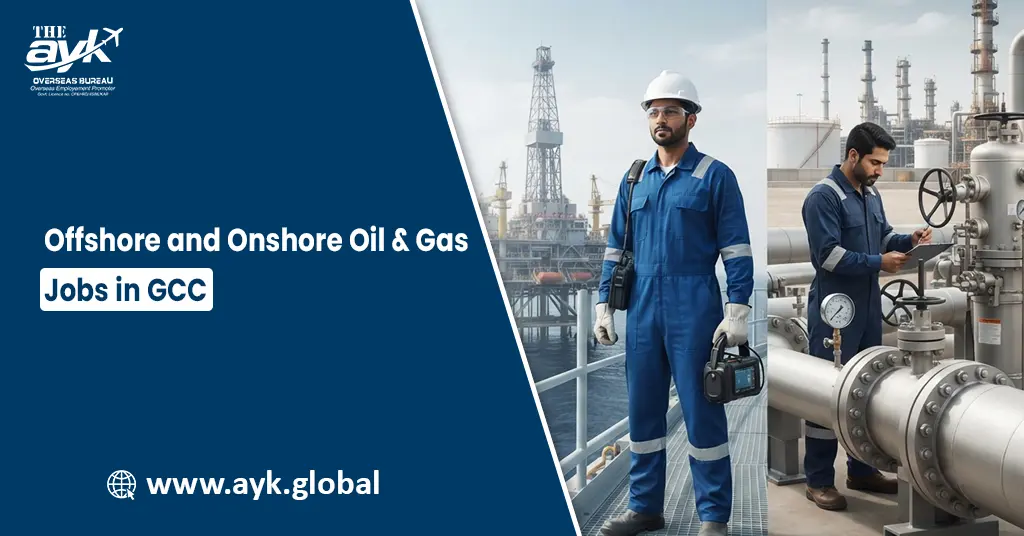
Offshore and Onshore Oil & Gas Jobs in GCC
Published: July 02, 2026 | Views: 14
Introduction
Offshore and onshore oil and gas jobs in GCC countries such as Saudi Arabia, United Arab Emirates (UAE), Qatar, Kuwait, Oman, and Bahrain are among the most high-paying and technically demanding employment opportunities in 2026. The Gulf region is one of the largest producers of oil and natural gas in the world, and this industry is the backbone of its economy.
Onshore jobs are located on land-based oil fields, refineries, and processing plants, while offshore jobs are carried out on platforms located in the sea. Both types of jobs require skilled workers, technicians, engineers, and support staff to ensure continuous production and safe operations.
For Pakistani workers, oil and gas jobs are highly attractive because they offer high salaries, long-term contracts, free accommodation, transport, medical benefits, and strong career growth opportunities.
Importance of Oil and Gas Industry in GCC
The oil and gas industry is the most important sector in GCC economies. Countries like Saudi Arabia, UAE, and Qatar rely heavily on oil exports and energy production. This industry supports national income, infrastructure development, and global trade.
Because of this importance, oil and gas companies invest heavily in skilled manpower to maintain production efficiency and safety standards. Every stage of exploration, drilling, refining, and distribution requires trained workers.
Both offshore and onshore operations run continuously, which creates year-round job opportunities for skilled and semi-skilled workers.
Difference Between Offshore and Onshore Jobs
Onshore oil and gas jobs are performed on land-based facilities such as drilling rigs, refineries, pipelines, and processing plants. These jobs are relatively more accessible and have easier working conditions compared to offshore roles.
Offshore jobs are performed on platforms located in the sea. Workers travel by boat or helicopter and stay on the platform for weeks at a time. These jobs are more challenging due to remote locations, harsh weather conditions, and extended shifts.
Offshore jobs usually offer higher salaries compared to onshore positions due to the difficulty and isolation involved.
Types of Offshore and Onshore Jobs
Oil and gas industries in GCC offer a wide range of job roles depending on skill level and specialization.
Common positions include rig operators, mechanical technicians, electricians, welders, pipe fitters, instrument technicians, safety officers, crane operators, and scaffolders. Engineers also play a key role in project design, supervision, and maintenance planning.
Support roles include helpers, laborers, and maintenance assistants who assist skilled workers in daily operations.
Each role is essential for smooth functioning of oil and gas facilities.
Skills Required for Oil and Gas Jobs
Oil and gas jobs require strong technical knowledge, discipline, and safety awareness. Workers must understand industrial systems, machinery operations, and maintenance procedures.
Important skills include mechanical aptitude, electrical knowledge, welding and fabrication skills, pipeline understanding, safety compliance, and teamwork coordination. Offshore workers also need physical fitness and mental strength to work in isolated environments.
Safety training is extremely important because oil and gas environments are high-risk and require strict adherence to protocols.
Experience Requirements
Most oil and gas jobs in GCC countries require at least 3 to 7 years of relevant experience depending on the position. Skilled technical roles such as engineers and senior technicians require even more experience.
Employers prefer candidates who have previously worked in refineries, drilling rigs, or industrial plants. Experience ensures that workers can handle complex systems and emergency situations safely.
However, some helper and entry-level positions are available for semi-skilled workers under supervision.
Salary and Benefits
Oil and gas jobs in GCC countries offer some of the highest salaries in the skilled labor market. Offshore jobs generally pay more than onshore jobs due to difficult working conditions and extended shifts.
In addition to basic salary, workers receive overtime pay, free accommodation, meals, transport, medical insurance, and annual leave benefits. Offshore workers often receive rotation-based salaries where they work for a set period and then get extended rest periods.
Overall income is significantly higher compared to most construction and industrial jobs.
Work Environment and Conditions
Onshore oil and gas jobs are performed in refineries, plants, and industrial sites where workers follow structured shifts and safety regulations. Offshore jobs require workers to stay on platforms in the sea for extended periods, often 2 to 6 weeks at a time.
Offshore environments are more challenging due to isolation, weather conditions, and limited mobility. However, they are well-managed with advanced safety systems and living facilities.
Both environments require discipline, teamwork, and strict compliance with safety rules.
Safety in Oil and Gas Industry
Safety is the most critical aspect of oil and gas jobs. GCC companies follow international safety standards to prevent accidents and ensure smooth operations.
Workers must wear protective gear, follow permit-to-work systems, attend safety training sessions, and strictly follow supervisor instructions. Regular safety drills and inspections are conducted on both offshore and onshore sites.
Any violation of safety rules can result in serious consequences, including termination of employment.
Career Growth Opportunities
Oil and gas jobs offer excellent long-term career growth. Workers can start in entry-level roles and progress to skilled technician, supervisor, or engineer positions.
Experienced workers are highly valued in international markets, and offshore experience especially opens doors to global opportunities. Continuous skill development and certifications can significantly increase salary and career stability.
Why Pakistani Workers Are Preferred
Pakistani workers are highly preferred in GCC oil and gas jobs due to their strong technical background, experience in industrial sectors, physical endurance, and ability to work in challenging environments.
Many Pakistani workers already have experience in mechanical, electrical, welding, and rig operations, making them suitable candidates for GCC oil and gas projects.
Their discipline and willingness to work in tough conditions make them valuable for employers.
Conclusion
Offshore and onshore oil and gas jobs in GCC countries are among the most rewarding career opportunities for Pakistani workers in 2026. These jobs offer high salaries, overtime benefits, accommodation, and long-term career development.
While offshore jobs are more challenging and high-paying, onshore jobs provide stable and continuous employment in industrial facilities.
For skilled Pakistani workers, the GCC oil and gas sector remains one of the strongest overseas career paths in Saudi Arabia, UAE, Qatar, Kuwait, Oman, and Bahrain.
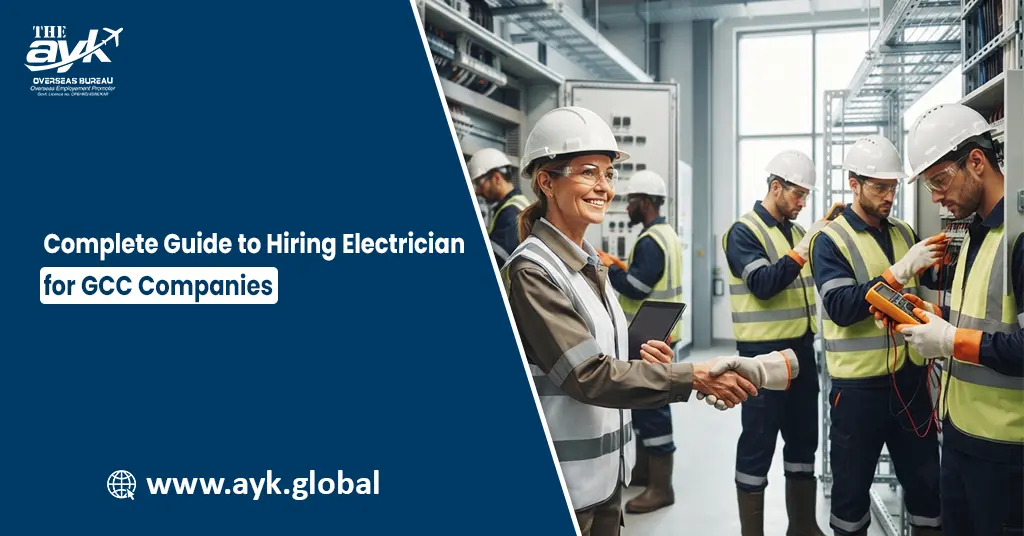 Complete Guide to Hiring Electricians for GCC Companies
 Schengen Jobs for Pakistani Workers – Apply Through AYK Overseas Recruitment
 KSA Recruitment
 UAE Recruitment
 Qatar Recruitment
 Oman Recruitment
 Kuwait Recruitment
 Libya Recruitment
 Bahrain Recruitment
 Iraq Recruitment
 Malaysia Recruitment
 Malta Recruitment
 Canada Recruitment
 USA Recruitment
 Europe Recruitment
 UK Recruitment
 Romania Recruitment
 Poland Recruitment
 Bulgaria Recruitment
 Albania Recruitment
 Serbia Recruitment
 Lithuania Recruitment
 Japan Recruitment
 Turkey Recruitment
 Kyrgyzstan Recruitment
 South Korea Recruitment