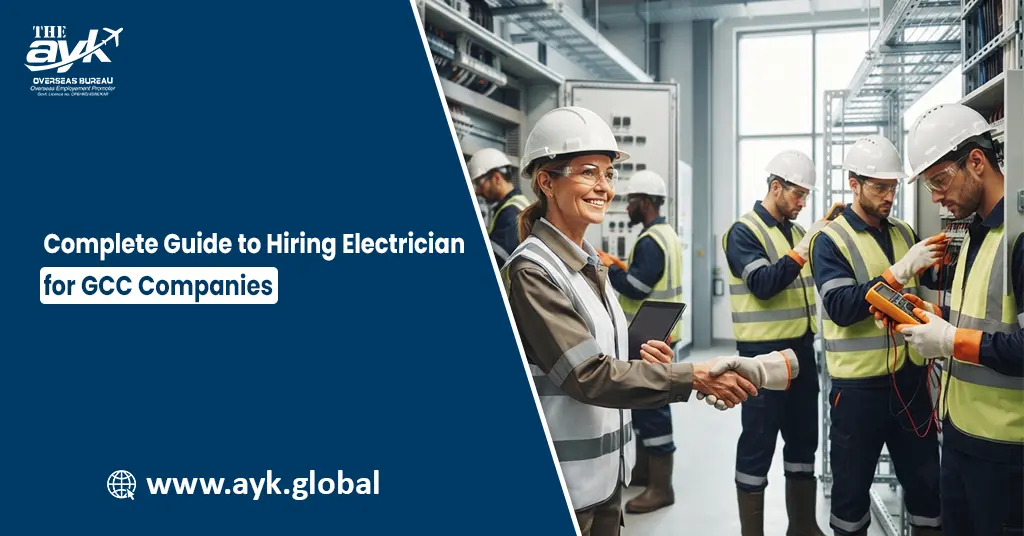
Complete Guide to Hiring Electricians for GCC Companies
Published: July 03, 2026 | Views: 10
Introduction
Electricians are one of the most essential skilled workers in GCC construction, infrastructure, and industrial projects. Countries like Saudi Arabia, United Arab Emirates, Qatar, Kuwait, Oman, and Bahrain depend heavily on qualified electricians for residential developments, commercial buildings, industrial plants, oil & gas facilities, and mega infrastructure projects.
As GCC nations continue to expand large-scale developments such as smart cities, airports, highways, and energy projects, the demand for skilled electricians continues to grow rapidly. However, hiring electricians for overseas deployment is not a simple process. It requires proper skill evaluation, certification verification, trade testing, and compliance with GCC labor regulations.
This guide explains the complete process of hiring electricians for GCC companies in a structured and efficient way.
Defining Electrical Skill Requirements Clearly
The first step in hiring electricians is clearly defining the technical requirements based on project needs. Electrical work varies widely depending on industry type, so employers must specify whether they need industrial electricians, construction electricians, maintenance electricians, or control panel technicians.
Without clear job specifications, recruitment agencies may source mismatched candidates, leading to performance issues on-site. Proper role definition ensures accurate hiring and better workforce efficiency.
Key requirements include:
- Industrial or construction electrical experience
- Knowledge of wiring systems and control panels
- Ability to read electrical diagrams
- Experience in high-voltage or low-voltage systems
- Safety awareness and compliance knowledge
Sourcing Skilled Electricians from Reliable Markets
GCC companies typically source electricians from countries such as Pakistan, India, Bangladesh, Nepal, Sri Lanka, and Egypt. Among these, Pakistan is a major supplier due to its large pool of technically trained electricians and vocational institute graduates.
Recruitment agencies play a crucial role in identifying electricians through training centers, industrial experience records, and previous GCC employment history. Pre-screened candidates are preferred because they are already familiar with international working environments.
Sourcing benefits include:
- Faster hiring process
- Access to experienced workers
- Better skill matching
- Reduced recruitment risks
Trade Testing and Practical Skill Assessment
Trade testing is the most important step in hiring electricians for GCC companies. It ensures that candidates can perform real electrical tasks before final selection. Electricians are evaluated through practical exercises such as wiring installations, fault detection, circuit assembly, and panel testing.
This step helps employers confirm technical competency and ensure that only job-ready electricians are deployed to critical projects.
Trade testing ensures:
- Verification of real electrical skills
- Reduced risk of faulty installations
- Improved project safety and quality
- Better workforce reliability
Documentation and Certification Verification
After trade testing, electricians must undergo strict documentation verification. GCC employers need to ensure that all candidates have valid identity documents, experience certificates, and any technical diplomas or training certifications.
Key documents include passport, experience letters, electrical diplomas or certificates, and medical fitness reports. Recruitment agencies verify these documents to ensure authenticity and compliance with GCC immigration requirements.
Proper documentation ensures:
- Legal compliance
- Smooth visa approval
- Reduced risk of fraud
- Faster deployment
Visa Processing and Work Permit Approval
Once electricians are selected and their documents are verified, the next stage is visa processing and work permit approval. This step involves submitting all required documents to GCC immigration authorities along with employment contracts and job offer letters.
Visa processing time varies depending on the country, embassy workload, and accuracy of submitted documents. Any mismatch in job title, experience, or personal information can lead to delays or rejection. Therefore, accuracy and proper documentation are essential for smooth approval.
Recruitment agencies play an important role here by coordinating with embassies, preparing paperwork correctly, and ensuring compliance with GCC immigration rules. This significantly improves approval speed and reduces administrative delays.
Medical Fitness and Health Clearance
Medical testing is mandatory for all electricians before deployment to GCC countries. Candidates must undergo health examinations at approved medical centers to ensure they are physically fit for demanding electrical work environments.
Medical tests typically include blood tests, chest X-rays, and general physical examinations. Since electricians often work in high-risk environments involving electrical systems, safety and health clearance are essential.
This step ensures:
- Worker safety in industrial environments
- Compliance with GCC health regulations
- Reduced risk of workplace accidents
- Smooth visa stamping process
Deployment and Onboarding Process
After visa and medical approval, electricians are deployed to GCC project sites. Proper onboarding is essential to ensure smooth integration into the workplace. This includes safety induction, job assignment, and introduction to site supervisors.
Electricians are briefed on electrical safety standards, site rules, reporting structure, and project requirements. This helps them quickly adapt and start productive work without delays.
Effective onboarding improves:
- Workforce productivity from day one
- Safety compliance on-site
- Worker confidence and performance
- Project coordination and efficiency
Cost Optimization in Electrician Recruitment
Recruiting skilled electricians can be costly if not managed efficiently. GCC companies can reduce recruitment costs by using bulk hiring methods, long-term recruitment agency partnerships, and pre-screened candidate databases.
Trade testing also helps reduce unnecessary costs by eliminating unqualified candidates early in the process, preventing visa wastage and replacement hiring expenses. Proper planning ensures better resource utilization and lower overall hiring costs.
Retention Strategies for Electricians
Retention is important for maintaining a stable workforce in GCC projects. Skilled electricians are in high demand, so companies must focus on keeping them satisfied and motivated to avoid turnover.
Retention strategies include competitive salaries, timely payments, safe working conditions, proper accommodation, transport facilities, and career development opportunities. A satisfied workforce improves productivity and reduces repeated recruitment needs.
Key retention strategies include:
- Competitive salary packages
- Safe working environments
- Timely salary payments
- Accommodation and transport support
- Career growth opportunities
Conclusion
Hiring electricians for GCC companies requires a structured recruitment process that includes sourcing, trade testing, documentation, visa processing, medical clearance, and onboarding. Each step ensures that only qualified and job-ready electricians are deployed to critical infrastructure and industrial projects.
By following a systematic hiring approach, GCC companies can improve workforce quality, reduce risks, and ensure successful project execution in highly demanding environments.
 Skilled vs. Unskilled Manpower: Which One Is in Higher Demand Abroad?
 AI in Recruitment 2026: How HR Hiring Is Changing
 KSA Recruitment
 UAE Recruitment
 Qatar Recruitment
 Oman Recruitment
 Kuwait Recruitment
 Libya Recruitment
 Bahrain Recruitment
 Iraq Recruitment
 Malaysia Recruitment
 Malta Recruitment
 Canada Recruitment
 USA Recruitment
 Europe Recruitment
 UK Recruitment
 Romania Recruitment
 Poland Recruitment
 Bulgaria Recruitment
 Albania Recruitment
 Serbia Recruitment
 Lithuania Recruitment
 Japan Recruitment
 Turkey Recruitment
 Kyrgyzstan Recruitment
 South Korea Recruitment