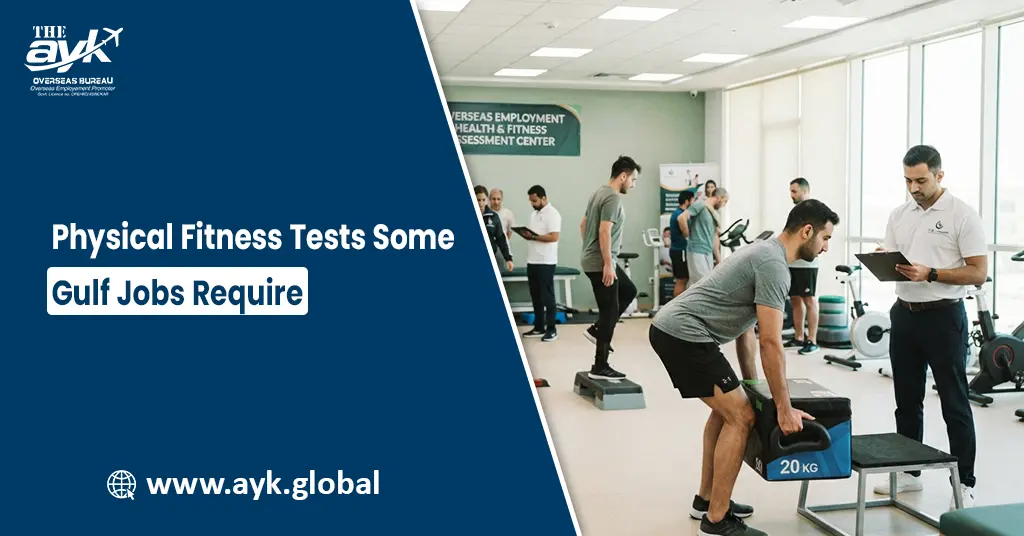
Physical Fitness Tests Some Gulf Jobs Require
Published: July 04, 2026 | Views: 9
Introduction
Physical fitness requirements for certain Gulf employment categories represent a genuinely important but often overlooked selection dimension that can determine whether otherwise well-qualified workers with appropriate technical skills and documentation successfully access their intended employment or face rejection at the physical assessment stage for which they were inadequately prepared. While standard Gulf employment medical fitness certificates establish baseline health status for communicable disease clearance, some specific employment categories impose additional physical fitness standards that go beyond general health clearance to assess candidates' actual physical capability for the demanding work conditions their intended employment involves, with security companies, construction site safety roles, certain military support employment, and various other physically demanding categories maintaining specific physical performance benchmarks that candidates must meet for employment eligibility. AYK Overseas Recruitment & HR Manpower Agency, recognized as one of Pakistan's top manpower agencies, prepares candidates for all assessment dimensions of their Gulf employment including physical fitness requirements, and this guide provides the practical guidance workers need to understand and prepare for physical fitness assessment wherever their target employment category involves this additional selection dimension.
Why Certain Gulf Employment Categories Require Physical Fitness Testing
Gulf employers in physically demanding employment categories implement physical fitness testing as a risk management measure that protects both the employer and the worker from the occupational health and safety consequences that employing workers whose physical capability falls significantly below the demands of their intended work creates, including elevated injury risk, poor work performance in physically demanding conditions, and the financial and human costs that these preventable outcomes impose on both parties. Security employment provides a clear example where physical fitness directly affects job performance capability, as security personnel must potentially respond to physical security incidents, maintain extended active patrol duties, and sustain physical presence requirements across shift patterns that workers with poor physical conditioning cannot reliably fulfill at the performance standard the role requires. Understanding this risk management rationale helps workers approach physical fitness requirements as legitimate, practically grounded selection criteria rather than arbitrary gatekeeping that creates unnecessary obstacles, recognizing that the same fitness standards that select against currently unfit workers also protect those workers from employment in conditions their fitness level cannot safely sustain.
Security Employment Physical Fitness Standards
Security guard and related security employment positions across Gulf countries represent the most consistently and formally structured physical fitness testing category within the broader Gulf employment market, with security companies maintaining specific physical performance benchmarks across dimensions including height and weight requirements, vision standards, endurance testing through timed running assessments, strength assessment through specific exercise performance, and general physical examination confirming the overall fitness that security role demands require. Different security employers and Gulf countries apply somewhat different specific physical standards within this general framework, with some maintaining formal height minimums alongside endurance and strength requirements while others focus primarily on weight-to-height ratio assessments and functional fitness demonstration without specific height criteria, making destination-specific and employer-specific research about the exact standards applicable to a particular security position important before workers commit to preparing specifically for that role's physical requirements. Workers targeting security employment who currently fall short of specific physical benchmarks should honestly assess whether their timeline allows meaningful physical improvement toward meeting the standards before their intended assessment, recognizing that genuine physical conditioning improvements require months of consistent training effort rather than weeks of crash preparation that produces limited sustainable improvement.
Construction Site Safety and Supervisory Physical Requirements
Certain construction site safety roles, including safety officers, site supervisors in some contexts, and various active site management positions, involve physical requirements that reflect the genuinely physical nature of construction site environments where these roles must function effectively, including regular site inspection walks across active construction environments, physical equipment handling in some contexts, and the sustained active presence throughout construction sites that sedentary fitness levels cannot adequately support across full working days. Workers targeting these somewhat more physically demanding site roles should honestly assess their physical conditioning relative to the demands of extended site activity in Gulf climate conditions, recognizing that even roles that are not manually labor-intensive still require meaningful physical baseline capability for the active site presence they involve across Gulf weather conditions that amplify the physical challenge of sustained outdoor workplace activity. Physical fitness preparation for these site roles, while typically less formally structured than security employment testing, should include building the general endurance and climate tolerance that extended active outdoor presence in Gulf conditions requires for both personal health management and effective role performance.
Preparing Physically Before Your Gulf Departure
Workers who know that their target Gulf employment involves physical fitness testing or demanding physical conditions should begin systematic physical preparation well before their departure date rather than arriving in the Gulf already committed to physically demanding work without having adequately conditioned their bodies for the physical demands they will immediately face. A realistic physical preparation approach for most workers involves establishing a consistent exercise routine covering cardiovascular endurance through regular walking or jogging, basic strength maintenance through bodyweight exercises that require no gym equipment, and gradual heat adaptation if preparing for outdoor work in Gulf summer conditions that Pakistani domestic climate may not have adequately prepared them for. Workers should honestly assess their current physical condition against their target employment's demands at the beginning of their preparation period, identifying specific conditioning gaps that require focused attention rather than general fitness improvement across all dimensions without targeted attention to the specific physical requirements their particular employment will impose.
Weight Management as a Physical Fitness Component
Weight management represents a physical fitness dimension that directly affects both medical fitness assessment outcomes and practical physical capability for demanding employment, with excess weight creating both visa processing complications when weight significantly exceeds healthy ranges and genuine physical performance limitations in manual labor and security employment that make weight management a practically important preparation dimension for overweight workers targeting physically demanding Gulf employment. Workers who recognize that their current weight creates disadvantage for their intended employment category should address this proactively before departure rather than hoping that the physical demands of Gulf employment will naturally produce weight management after arrival, recognizing that beginning physically demanding overseas employment in an already overweight condition creates elevated injury risk and performance challenge that adequate pre-departure preparation can meaningfully reduce. Sustainable weight management approaches involving gradual caloric deficit combined with increased physical activity produce more reliable and health-protective outcomes than extreme short-term approaches that may produce rapid initial weight loss without the sustained conditioning improvement that genuine physical preparation for demanding employment requires.
Vision Requirements for Specific Gulf Roles
Vision standards represent a specific physical fitness dimension that certain Gulf employment categories apply as minimum eligibility criteria, with security employment, driving positions, and various other roles where visual acuity directly affects safety and performance maintaining minimum uncorrected or corrected visual acuity standards that candidates must meet for employment eligibility. Workers who wear corrective lenses should research whether their intended employment category accepts corrected vision as meeting the stated visual standards or requires minimum uncorrected visual acuity that their uncorrected vision does not achieve, as this distinction significantly affects whether current vision limitation creates an employment eligibility issue or simply requires them to wear their corrective lenses during employment without affecting their fundamental eligibility. Workers with significant vision limitations considering employment categories that impose strict vision standards should obtain a formal optometric assessment before investing significant resources in Gulf employment preparation toward positions their vision status may ultimately prevent them from accessing regardless of their qualifications across other assessment dimensions.
Heat Acclimatization as Physical Preparation
Heat acclimatization deserves specific recognition as a physical preparation dimension for workers targeting outdoor employment in Gulf countries whose extreme summer temperatures create physiological challenges that unacclimatized workers experience more severely than those who have gradually adapted to high temperature working conditions, with initial heat exposure producing physiological stress responses that gradually moderate through repeated exposure as the body develops more effective heat dissipation mechanisms over several weeks of consistent heat exposure. Pakistani workers from cooler northern regions of Pakistan or who have been working in air-conditioned domestic employment contexts may find Gulf outdoor summer conditions genuinely challenging during their initial weeks of employment before acclimatization progresses, making physical preparation that includes heat exposure whenever possible before departure and careful personal heat management during the initial Gulf employment period genuinely important for both health protection and employment performance. Workers should research their specific Gulf destination's heat protocols including mandatory midday outdoor work breaks during summer months, mandatory water provision requirements, and other regulated heat management practices that Gulf construction employers must implement for outdoor workers, understanding their entitlements regarding these protections and how to advocate appropriately for their implementation if they observe these protective measures being inadequately applied within their specific worksite context.
Managing Physical Fitness During Long Gulf Employment Periods
Maintaining physical fitness throughout extended Gulf employment periods presents distinctive challenges compared to physical preparation before departure, as demanding work schedules, limited recreational facility access, and the physical fatigue that manual labor creates reduce available energy and motivation for additional physical activity that would otherwise support fitness maintenance during long overseas employment periods. Workers who prioritize basic physical maintenance activity during their off-shift periods, whether through simple walking routines, basic bodyweight exercise, or whatever physical activity options their specific accommodation and work schedule allow, maintain better long-term physical capability and overall health than those who become completely sedentary during all non-working hours in a pattern that physical deconditioning over extended employment periods creates. Adequate hydration, nutrition, and sleep management alongside any physical activity represent the complete physical maintenance approach that workers should sustain throughout their Gulf employment, recognizing that the physically demanding work itself provides meaningful activity while supplementary maintenance effort focuses on the recovery, flexibility, and general conditioning dimensions that work activity alone does not adequately address.
When Physical Limitations Affect Employment Options
Workers with pre-existing physical limitations, disabilities, or chronic conditions that affect their physical capability should honestly assess which specific Gulf employment categories their physical condition genuinely allows them to pursue safely and effectively rather than targeting demanding physical employment that their condition makes genuinely unsuitable from both personal health and employment performance perspectives. Some Gulf employment categories are genuinely accessible to workers with specific physical limitations when those limitations do not affect the core capabilities the role requires, with office-based, technical support, or sedentary professional roles potentially fully accessible to workers with physical conditions that would create real obstacles in construction or security employment but do not affect their capability for less physically demanding work. Workers should discuss their specific physical conditions honestly with their recruitment agency, receiving professional guidance about which employment categories their condition realistically allows rather than pursuing positions that their physical situation ultimately prevents safe and effective performance in, protecting both their own health and their professional reputation from the consequences of beginning physically incompatible employment without honest prior assessment of their physical suitability.
How AYK Overseas Assesses Physical Fitness Requirements for Candidates
As a government-licensed international recruitment and HR manpower firm with offices in Karachi and Islamabad, AYK Overseas Recruitment & HR Manpower Agency discusses physical fitness requirements applicable to specific employment categories with candidates during our qualification assessment process, helping workers understand what physical standards their target employment involves and whether their current physical condition adequately meets these requirements or requires preparation investment before they will be competitive in physically assessed selection processes. Being recognized as one of Pakistan's top manpower agencies, we treat honest physical fitness guidance as a genuine professional responsibility that serves candidates' interests better than proceeding toward physically demanding employment without accurate physical suitability assessment, recognizing that poorly matched employment from a physical capability perspective creates early employment failure outcomes that harm both individual workers and the broader reputation of Pakistani workers within Gulf employment markets.
Conclusion
Physical fitness requirements for certain Gulf employment categories represent legitimate, practically grounded selection criteria that workers should prepare for with the same seriousness they apply to technical skill and documentation preparation, whether through formal pre-departure conditioning for roles with specific fitness testing, honest self-assessment of physical suitability for physically demanding employment, or weight and vision management that affects both medical clearance and physical employment capability. Workers who approach physical fitness as a genuine professional preparation dimension, rather than assuming physical capability will adequately sustain naturally through work activity alone, consistently experience more successful initial Gulf employment adjustment and longer-term employment sustainability than those who discover physical preparation gaps only after beginning demanding overseas employment without adequate prior conditioning.
 Benefits of Hiring International Workers for Business Expansion
 Warehouse and Logistics Jobs in GCC Countries
 KSA Recruitment
 UAE Recruitment
 Qatar Recruitment
 Oman Recruitment
 Kuwait Recruitment
 Libya Recruitment
 Bahrain Recruitment
 Iraq Recruitment
 Malaysia Recruitment
 Malta Recruitment
 Canada Recruitment
 USA Recruitment
 Europe Recruitment
 UK Recruitment
 Romania Recruitment
 Poland Recruitment
 Bulgaria Recruitment
 Albania Recruitment
 Serbia Recruitment
 Lithuania Recruitment
 Japan Recruitment
 Turkey Recruitment
 Kyrgyzstan Recruitment
 South Korea Recruitment