
Remote Hiring vs Overseas Recruitment: What Trending Now
Published: June 30, 2026 | Views: 20
Introduction
As the global employment landscape continues evolving, Pakistani job seekers increasingly find themselves weighing the differences between remote hiring opportunities and traditional overseas recruitment paths, each offering distinct advantages and considerations depending on individual career goals and circumstances. While remote work has expanded significantly across certain industries, traditional overseas recruitment to Gulf countries continues representing the dominant and most reliable pathway for the vast majority of Pakistani workers seeking meaningful income improvement through international employment.
Understanding the practical realities, genuine opportunities, and limitations of both approaches can help job seekers make more informed decisions about which path genuinely aligns with their skills, financial needs, and long-term career objectives. AYK Overseas Recruitment & HR Manpower Agency, recognized as one of Pakistan's top manpower agencies, specializes in traditional overseas recruitment while maintaining clear awareness of how remote work trends are influencing the broader employment landscape for Pakistani workers.
Understanding Remote Hiring in the Current Global Context
Remote hiring refers to employment arrangements where workers perform their job duties from their home country while working for an employer based elsewhere, typically through digital communication tools and online collaboration platforms rather than requiring physical relocation. This employment model has grown significantly within certain industries, particularly technology, digital marketing, customer support, and various administrative or creative roles that do not inherently require physical presence at a specific location.
While remote hiring has expanded globally, it remains heavily concentrated within specific skill categories and industries, meaning the vast majority of traditional overseas employment sectors, including construction, healthcare, hospitality, and most skilled trades, simply cannot be performed remotely given their inherently location-dependent nature. Understanding this fundamental limitation helps job seekers set realistic expectations about which employment path genuinely applies to their particular skill set and career background.
The Continued Dominance of Traditional Overseas Recruitment
Despite growing interest in remote work opportunities, traditional overseas recruitment to Gulf countries continues representing the overwhelming majority of meaningful overseas employment opportunities for Pakistani workers, particularly within construction, healthcare, hospitality, and skilled trade sectors that require physical presence. This continued dominance reflects the practical reality that most high-demand overseas job categories simply cannot be performed through remote arrangements, regardless of broader global remote work trends.
For the majority of Pakistani job seekers, particularly those with trade skills, healthcare qualifications, or hospitality experience, traditional overseas recruitment remains by far the most realistic and financially impactful employment pathway available. Workers should be cautious about overestimating remote work opportunities based on broader global trends that may not actually apply to their specific skill category or career background within the current employment landscape.
Income Comparison Between Remote and Overseas Opportunities
When comparing income potential, traditional overseas recruitment to Gulf countries often provides significantly higher and more reliable income improvement compared to remote work opportunities, particularly for workers in trade, healthcare, and hospitality sectors where remote alternatives simply do not exist at comparable compensation levels. Gulf employment packages typically include not just base salary but also housing, transport, and other benefits that substantially increase the overall value proposition compared to most remote work arrangements available to similarly skilled Pakistani workers.
Remote work opportunities, where they do exist for Pakistani workers, often face significant wage compression compared to what international employers pay workers based in their own countries, since remote arrangements typically price compensation based on the worker's local cost of living rather than matching full international salary scales. This dynamic means that for many workers, traditional overseas recruitment continues offering considerably stronger income improvement potential compared to available remote work alternatives.
Lifestyle and Practical Considerations
Beyond pure income comparison, remote work and overseas recruitment involve fundamentally different lifestyle implications that job seekers should carefully consider based on their personal and family circumstances. Remote work allows workers to remain in their home communities, maintaining existing family structures and social connections, while traditional overseas recruitment requires physical relocation, often for extended contract periods that involve significant time away from family and familiar surroundings.
For some workers, particularly those with strong family responsibilities or specific circumstances that make extended relocation impractical, remote work opportunities, where genuinely available within their skill category, may represent a more suitable choice despite potentially lower compensation. Other workers prioritize the significantly stronger income potential and benefits packages typically available through overseas recruitment, accepting the relocation tradeoff as worthwhile given their specific financial goals and family planning considerations.
Skills and Qualifications Required for Each Pathway
Remote work opportunities typically require specific technical or digital skills, often including computer proficiency, particular software competencies, and sometimes specialized certifications relevant to digital industries like technology, customer support, or content creation. Workers pursuing this pathway need to actively develop and demonstrate these specific digital competencies, often through online courses, certifications, or portfolio development showcasing relevant work samples.
Traditional overseas recruitment, by contrast, typically values trade certifications, healthcare qualifications, hospitality experience, or other practical, hands-on skills that translate directly to physical work environments common across Gulf employment sectors. Workers should honestly assess which skill category genuinely matches their existing background and experience, rather than assuming they can easily pivot toward remote opportunities without developing the specific digital competencies these roles typically require.
Risks and Reliability Considerations
Overseas recruitment through properly licensed agencies generally offers more reliable, legally protected employment arrangements, given the established regulatory frameworks governing Gulf labor migration and the documented contracts typically required under current visa regulations. This established infrastructure provides workers with clearer legal protections and dispute resolution mechanisms compared to many remote work arrangements, which often lack equivalent regulatory oversight or enforcement mechanisms.
Remote work arrangements, particularly those involving international clients or employers, sometimes carry higher risks related to payment reliability, contract enforcement, and limited legal recourse if disputes arise, given the typically less formal nature of many remote work relationships compared to structured overseas employment contracts. Workers considering remote opportunities should carefully vet potential employers and understand what legal protections, if any, genuinely apply to their specific remote work arrangement before committing significant time and effort.
Hybrid Approaches Emerging in Certain Sectors
Some emerging trends suggest occasional hybrid approaches developing within specific sectors, where workers might combine periods of overseas employment with subsequent remote work arrangements for the same or related employers, leveraging relationships and trust built during physical employment periods. This hybrid model remains relatively uncommon but represents an interesting development worth monitoring for workers in technical or administrative fields where such arrangements might eventually become more viable.
While this hybrid approach remains exploratory rather than mainstream, workers who build strong professional relationships and demonstrate reliability during traditional overseas employment periods may occasionally find opportunities to transition toward more flexible arrangements with trusted employers over time. This possibility, while not guaranteed, represents an interesting long-term consideration for workers building extended professional relationships within their overseas employment sector.
Making the Right Choice for Your Circumstances
Ultimately, the choice between pursuing remote work opportunities or traditional overseas recruitment depends heavily on individual skill sets, financial goals, family circumstances, and realistic assessment of which pathway genuinely offers viable opportunities given a worker's specific background. For the majority of Pakistani workers with trade, healthcare, or hospitality backgrounds, traditional overseas recruitment continues representing the more realistic and financially impactful pathway, given the practical limitations of remote work within these particular skill categories.
Workers should avoid making decisions based on general trends without honestly assessing whether genuine remote opportunities actually exist within their specific skill category at meaningful compensation levels. Consulting with a knowledgeable recruitment agency that understands both pathways can help job seekers make more realistic, informed decisions about which approach genuinely aligns with their circumstances and career objectives.
How AYK Overseas Helps You Navigate the Right Path
As a government-licensed international recruitment and HR manpower firm with offices in Karachi and Islamabad, AYK Overseas Recruitment & HR Manpower Agency specializes in traditional overseas recruitment, helping workers across construction, healthcare, and hospitality sectors access reliable, well-compensated Gulf employment opportunities. Being recognized as one of Pakistan's top manpower agencies, we provide honest guidance about realistic employment pathways rather than overselling remote work opportunities that may not genuinely apply to a given worker's skill set.
Our team helps candidates understand the full value proposition of overseas employment, including benefits, contract protections, and long-term career growth potential within their specific sector. This honest, practical guidance has helped AYK Overseas Recruitment & HR Manpower Agency build trust with thousands of Pakistani workers making important decisions about their overseas employment journey.
Conclusion
While remote hiring trends continue growing globally within specific technology and digital industries, traditional overseas recruitment remains by far the most realistic and financially impactful employment pathway for the majority of Pakistani workers, particularly those with trade, healthcare, and hospitality backgrounds. Understanding the genuine differences between these pathways, and honestly assessing which approach aligns with your specific skills and circumstances, is essential to making informed decisions about your overseas employment journey in 2026.
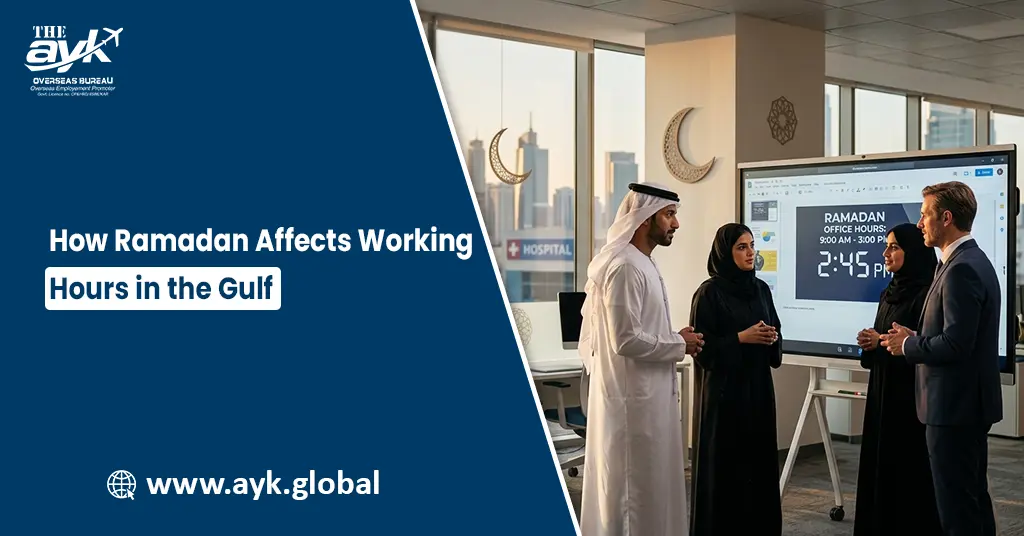 How Ramadan Affects Working Hours in the Gulf
 UAE Recruiters in Pakistan – Why AYK Overseas Recruitment Agency is Trusted
 Top Recruitment Agency in Pakistan for Bulgaria Employers, Complete Hiring Guide
 KSA Recruitment
 UAE Recruitment
 Qatar Recruitment
 Oman Recruitment
 Kuwait Recruitment
 Libya Recruitment
 Bahrain Recruitment
 Iraq Recruitment
 Malaysia Recruitment
 Malta Recruitment
 Canada Recruitment
 USA Recruitment
 Europe Recruitment
 UK Recruitment
 Romania Recruitment
 Poland Recruitment
 Bulgaria Recruitment
 Albania Recruitment
 Serbia Recruitment
 Lithuania Recruitment
 Japan Recruitment
 Turkey Recruitment
 Kyrgyzstan Recruitment
 South Korea Recruitment