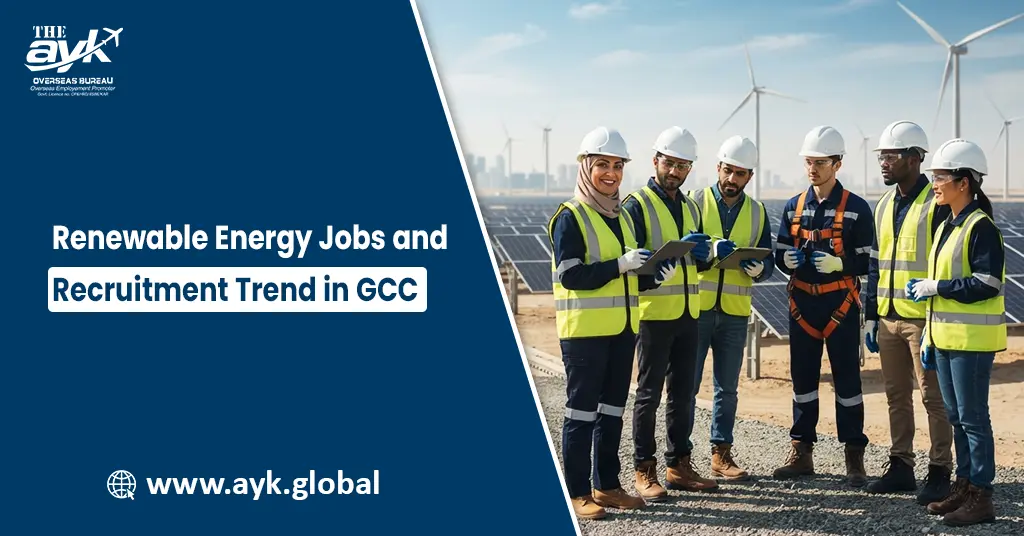
Renewable Energy Jobs and Recruitment Trends in GCC
Published: July 03, 2026 | Views: 18
Introduction
GCC countries—including Saudi Arabia, United Arab Emirates, Qatar, Kuwait, Oman, and Bahrain—are rapidly investing in renewable energy projects as part of their long-term economic diversification strategies. With global pressure to reduce carbon emissions and shift toward sustainable energy sources, governments in the region are launching massive solar, wind, and green hydrogen projects.
These developments are creating thousands of new jobs across engineering, construction, operations, maintenance, and project management sectors. Renewable energy is becoming one of the fastest-growing recruitment areas in the GCC.
This guide explains renewable energy job trends, recruitment patterns, and workforce demand in GCC countries.
Expansion of Solar Energy Projects in GCC
Solar energy is the leading renewable energy source in GCC countries due to abundant sunlight and large desert areas suitable for solar farms. Mega projects like solar parks and photovoltaic plants require a large workforce for installation, operation, and maintenance.
These projects create demand for both skilled engineers and semi-skilled technicians, especially during construction and commissioning phases.
Key solar energy roles include:
- Solar panel installation technicians
- Electrical engineers and site supervisors
- Project managers and planners
- Maintenance and operations staff
- Safety officers for solar farms
Growth of Wind and Clean Energy Projects
Although solar dominates, wind energy projects are also expanding in selected GCC regions. Wind farms require specialized technical staff for turbine installation, monitoring systems, and maintenance operations.
These projects are highly technical and require skilled engineers familiar with renewable energy systems and electrical grid integration.
Key wind energy roles include:
- Wind turbine technicians
- Electrical and mechanical engineers
- Maintenance supervisors
- Grid integration specialists
- Environmental safety officers
Rising Demand for Green Hydrogen and Clean Fuel Experts
One of the most advanced trends in GCC renewable energy is investment in green hydrogen projects. These projects aim to produce clean fuel using renewable energy sources and are part of long-term sustainability goals.
This sector requires highly specialized engineers, chemical experts, and energy analysts with advanced technical knowledge.
Key roles include:
- Chemical and process engineers
- Energy analysts and researchers
- Hydrogen plant operators
- Project development specialists
- Sustainability consultants
Recruitment Strategies for Renewable Energy Projects
Recruitment for renewable energy projects in GCC countries is highly specialized because these projects require a mix of engineering expertise, technical skills, and safety awareness. Employers often use international recruitment networks and licensed agencies to source qualified professionals from countries with strong engineering talent pools.
Most hiring is project-based, meaning companies recruit large teams during construction and commissioning phases, followed by smaller teams for operations and maintenance.
Key recruitment strategies include:
- Bulk hiring for solar and wind farm construction
- Targeted hiring of experienced engineers
- Use of pre-screened technical talent databases
- Fast-track recruitment for project deadlines
Technical Skills and Qualification Requirements
Renewable energy jobs require strong technical knowledge in electrical systems, mechanical engineering, and energy management. Candidates must understand modern energy technologies, grid systems, and safety protocols.
Employers prefer candidates with prior experience in power plants, EPC projects, or large-scale industrial installations.
Key skill requirements include:
- Electrical and mechanical engineering knowledge
- Experience in power or energy projects
- Understanding of solar PV and wind systems
- Ability to work in harsh outdoor environments
- Strong safety compliance awareness
Documentation and Visa Processing
Like other GCC sectors, renewable energy recruitment requires strict documentation and visa compliance. Candidates must provide verified educational certificates, experience letters, and medical fitness reports.
Visa processing may take longer for highly technical roles due to additional verification requirements for engineering qualifications.
Required documents include:
- Valid passport
- Engineering degree or technical certification
- Experience certificates from previous projects
- Medical fitness report
- Employment contract
Cost Trends in Renewable Energy Hiring
Recruitment costs in renewable energy projects can be higher compared to general labor hiring due to the need for specialized skills. However, long-term cost savings are achieved through efficient energy production and reduced operational risks.
Companies often reduce hiring costs through bulk recruitment, long-term contracts, and hiring experienced professionals who require minimal training.
Cost factors include:
- Technical recruitment premiums
- Training and onboarding costs
- Visa and relocation expenses
- Project-based hiring efficiency
Future Workforce Trends in GCC Renewable Energy Sector
The future of renewable energy recruitment in GCC is highly promising. Governments are investing heavily in sustainability initiatives, leading to continuous job creation in solar, wind, and hydrogen energy sectors.
There will be increasing demand for engineers, technicians, researchers, and environmental specialists over the next decade as GCC countries move toward cleaner energy systems.
Conclusion
Renewable energy recruitment in GCC countries is rapidly growing due to large-scale solar, wind, and hydrogen projects. The sector requires skilled engineers, technicians, and specialists with strong technical backgrounds and safety awareness.
With ongoing investments in sustainable energy, this industry will continue to create long-term employment opportunities across the region.
 Why Continuous Learning Matters for Overseas Workers
 Warehouse Jobs in Europe for International Workers
 Hire Pakistani Workers for Czech Republic – Complete Employer Guide
 KSA Recruitment
 UAE Recruitment
 Qatar Recruitment
 Oman Recruitment
 Kuwait Recruitment
 Libya Recruitment
 Bahrain Recruitment
 Iraq Recruitment
 Malaysia Recruitment
 Malta Recruitment
 Canada Recruitment
 USA Recruitment
 Europe Recruitment
 UK Recruitment
 Romania Recruitment
 Poland Recruitment
 Bulgaria Recruitment
 Albania Recruitment
 Serbia Recruitment
 Lithuania Recruitment
 Japan Recruitment
 Turkey Recruitment
 Kyrgyzstan Recruitment
 South Korea Recruitment