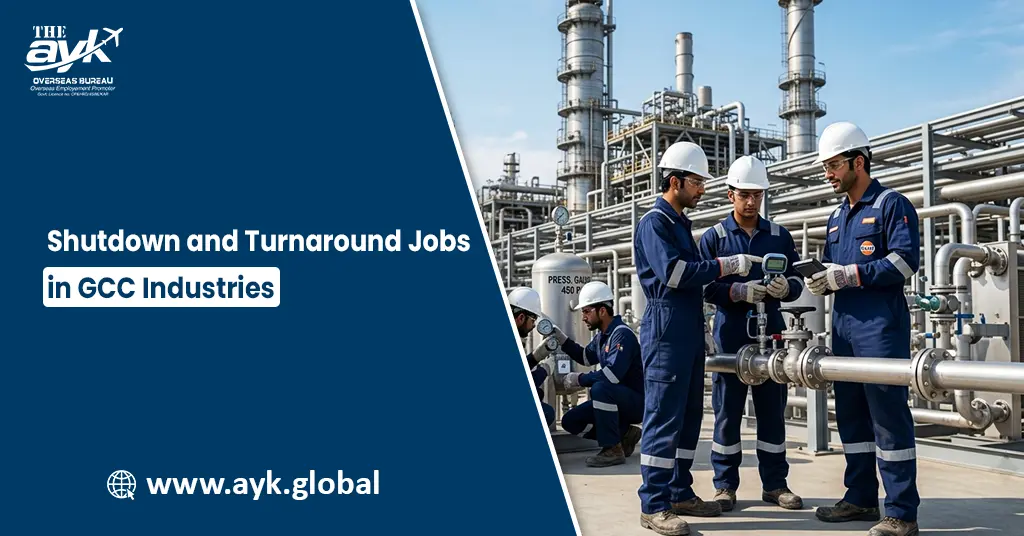
Shutdown and Turnaround Jobs in GCC Industries
Published: July 02, 2026 | Views: 38
Introduction
Shutdown and turnaround (S&T) jobs in GCC countries such as Saudi Arabia, United Arab Emirates (UAE), Qatar, Kuwait, Oman, and Bahrain are among the highest-demand short-term industrial employment opportunities in 2026. These jobs are mainly connected to oil and gas plants, refineries, petrochemical industries, power plants, and large industrial facilities.
Shutdown refers to the planned stopping of a plant or refinery for maintenance, inspection, repair, or upgrade work. Turnaround refers to the complete maintenance cycle where entire systems are overhauled to ensure safe and efficient operations.
For Pakistani skilled workers, shutdown and turnaround jobs are highly attractive because they offer high daily wages, overtime income, free accommodation, and short-term intensive earning opportunities.
Paragraph 1: Importance of Shutdown and Turnaround Projects in GCC
Shutdown and turnaround projects are extremely important in GCC industrial sectors because oil refineries, petrochemical plants, and power stations cannot operate continuously without maintenance. These facilities must be shut down periodically to ensure safety, efficiency, and long-term operational stability.
Countries like Saudi Arabia, Qatar, and UAE have massive oil and gas infrastructure, and even a small technical issue can cause major production losses. Therefore, scheduled shutdowns are planned months in advance and require thousands of skilled workers from different countries.
These projects are usually time-sensitive, meaning work must be completed within strict deadlines, often ranging from a few days to several weeks.
Paragraph 2: Demand for Workers in Shutdown Projects
The demand for workers in shutdown and turnaround projects in GCC countries is very high but temporary and project-based. Companies hire thousands of skilled technicians, engineers, and laborers for short periods during plant maintenance cycles.
Workers are needed in multiple categories including mechanical, electrical, welding, piping, scaffolding, instrumentation, and safety roles. Each shutdown project requires a large workforce working around the clock in shifts.
Because of the urgent nature of these projects, companies often offer higher wages compared to regular construction jobs to attract experienced workers quickly.
Paragraph 3: Types of Shutdown and Turnaround Jobs
Shutdown jobs in GCC industries include a wide range of technical and skilled positions depending on the plant requirements.
Mechanical technicians handle equipment repair and maintenance. Pipe fitters work on piping systems installation and modification. Welders perform high-precision welding tasks under strict quality standards. Electricians manage electrical systems shutdown and restoration. Scaffolders build temporary structures for safe access to industrial equipment. Safety officers ensure compliance with strict industrial safety rules.
Each role is critical to completing shutdown work efficiently and safely within the deadline.
Paragraph 4: Skills Required for Shutdown Jobs
Shutdown and turnaround jobs require strong technical skills, experience, and the ability to work under pressure. Workers must understand industrial systems, safety procedures, and technical drawings.
Important skills include mechanical knowledge, welding or electrical expertise, teamwork coordination, safety awareness, and ability to work in high-pressure environments. Workers must also be physically fit because shutdown projects often involve long shifts and continuous work schedules.
Experience in oil and gas or industrial plants is highly preferred by GCC employers.
Paragraph 5: Experience Requirements
Most shutdown jobs in GCC countries require at least 3 to 5 years of relevant industrial experience. Employers prefer candidates who have previously worked in refineries, power plants, or large industrial facilities.
Experienced workers are trusted more because shutdown projects involve high-risk environments and expensive equipment. Mistakes can lead to financial loss or safety hazards.
However, some helper-level roles may be available for semi-skilled workers under supervision, especially in large manpower shutdown projects.
Paragraph 6: Salary and Benefits in Shutdown Jobs
Shutdown and turnaround jobs offer some of the highest short-term earnings in GCC industrial sectors. Workers are usually paid on a daily or hourly basis, and overtime rates are significantly higher than normal jobs.
In addition to high wages, workers often receive free accommodation, transport, meals, and safety equipment during project duration. Some companies also provide completion bonuses if work is finished on time.
Because shutdown projects require continuous work, overtime opportunities are very high, allowing workers to earn significantly more in a short period.
Paragraph 7: Work Environment and Conditions
Shutdown work environments are highly demanding and fast-paced. Workers often operate in refineries, petrochemical plants, and power stations where safety regulations are extremely strict.
Work is usually done in shifts, including day and night operations, to complete projects within deadlines. The environment may include confined spaces, high temperatures, and industrial hazards.
Despite challenges, GCC companies enforce strict safety protocols and provide protective equipment such as helmets, gloves, safety suits, and respiratory protection.
Paragraph 8: Safety Importance in Shutdown Projects
Safety is the most critical factor in shutdown and turnaround jobs. Since work is performed in high-risk industrial environments, strict safety rules must be followed at all times.
Workers must undergo safety training, follow permit-to-work systems, use protective equipment, and follow supervisor instructions carefully. Any violation of safety rules can result in immediate removal from the site.
Safety officers continuously monitor work activities to prevent accidents and ensure compliance with international standards.
Paragraph 9: Career Growth Opportunities
Shutdown jobs provide excellent short-term income opportunities and also help workers build strong industrial experience. Skilled workers who perform well in shutdown projects often get repeated contracts for future shutdowns.
With experience, workers can move into higher positions such as senior technician, supervisor, safety coordinator, or team leader.
Shutdown experience is highly valued in international oil and gas markets, which opens doors for global employment opportunities beyond GCC countries.
Paragraph 10: Why Pakistani Workers Are Preferred
Pakistani workers are highly preferred in shutdown and turnaround jobs due to their strong technical background, experience in industrial sectors, physical endurance, and ability to work in challenging environments.
Many Pakistani workers have experience in welding, mechanical work, electrical systems, and scaffolding, making them suitable for shutdown projects.
Their discipline and ability to work under pressure make them valuable assets for GCC industrial companies.
Conclusion
Shutdown and turnaround jobs in GCC countries are among the most profitable short-term industrial opportunities for Pakistani workers in 2026. These jobs offer high wages, overtime earnings, accommodation, and exposure to advanced industrial environments.
Although the work is physically demanding and time-sensitive, it provides excellent earning potential and career growth for experienced workers.
For skilled Pakistani technicians and laborers, shutdown projects in Saudi Arabia, UAE, Qatar, Kuwait, Oman, and Bahrain represent a strong opportunity to earn quickly and gain valuable international experience.
 Benefits of Hiring Through Government Licensed Recruitment Agencies
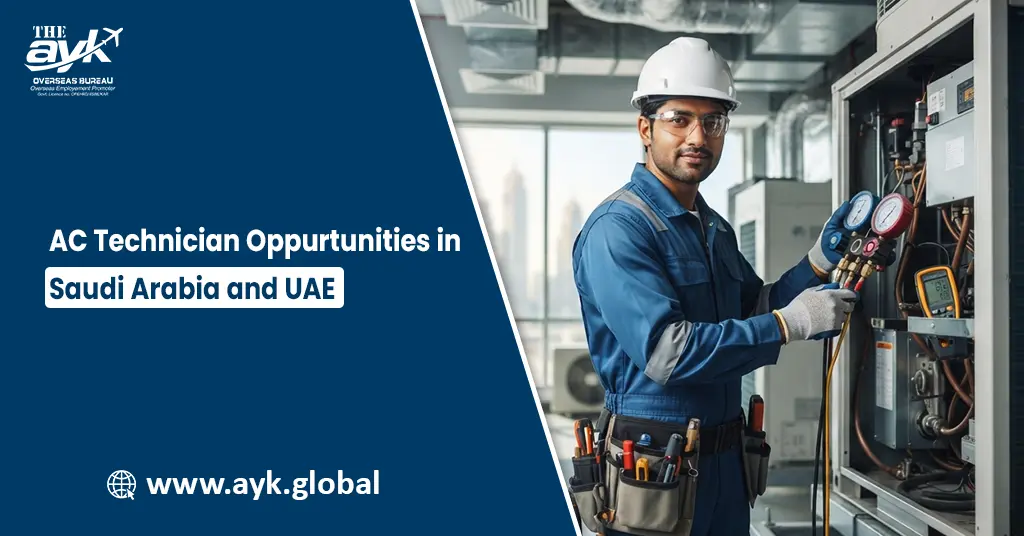 AC Technician Opportunities in Saudi Arabia and UAE
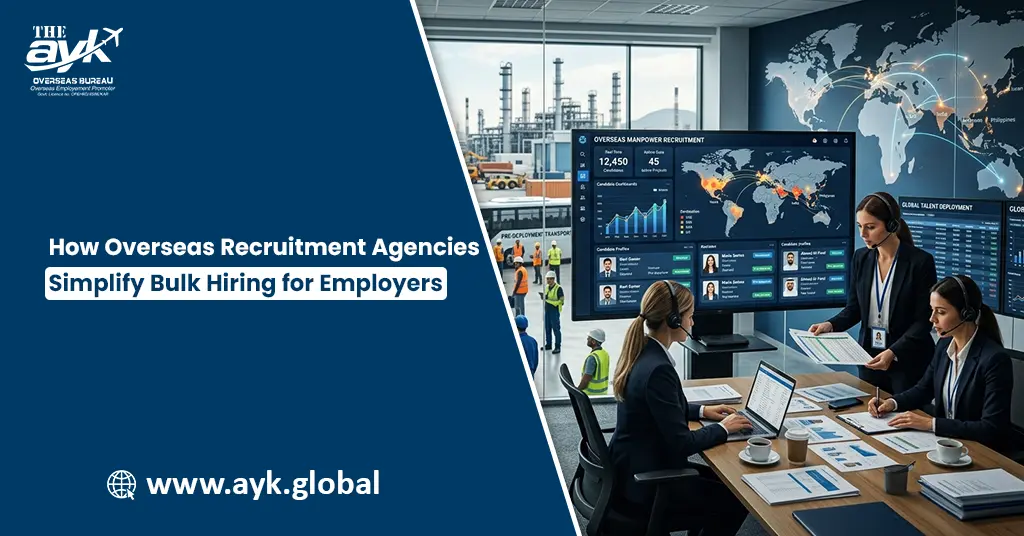 How Overseas Recruitment Agencies Simplify Bulk Hiring for Employers
 KSA Recruitment
 UAE Recruitment
 Qatar Recruitment
 Oman Recruitment
 Kuwait Recruitment
 Libya Recruitment
 Bahrain Recruitment
 Iraq Recruitment
 Malaysia Recruitment
 Malta Recruitment
 Canada Recruitment
 USA Recruitment
 Europe Recruitment
 UK Recruitment
 Romania Recruitment
 Poland Recruitment
 Bulgaria Recruitment
 Albania Recruitment
 Serbia Recruitment
 Lithuania Recruitment
 Japan Recruitment
 Turkey Recruitment
 Kyrgyzstan Recruitment
 South Korea Recruitment