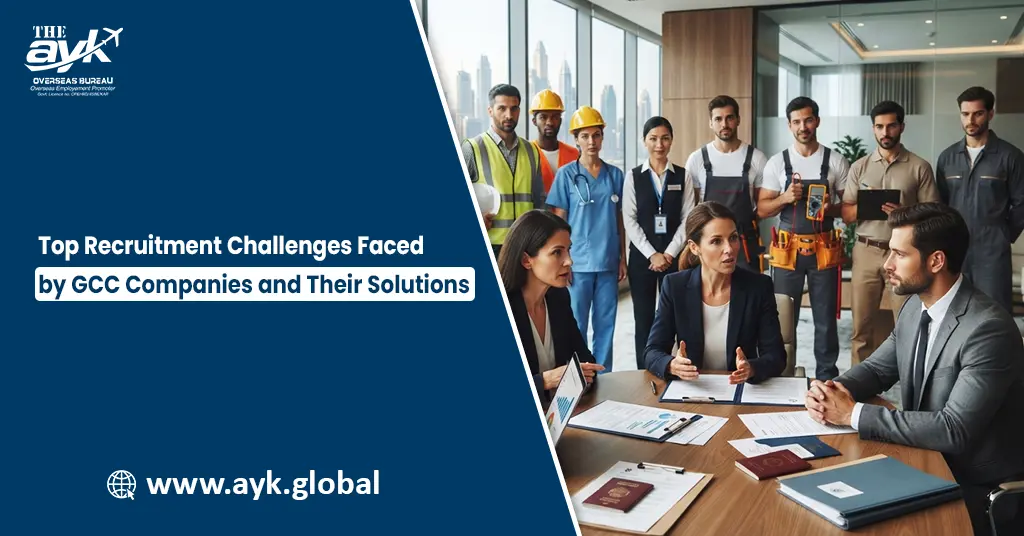
Top Recruitment Challenges Faced by GCC Companies and Their Solutions
Published: July 03, 2026 | Views: 13
Introduction
Recruitment in the Gulf Cooperation Council (GCC) region is a highly dynamic and complex process due to the scale of development projects, strict labor regulations, and increasing demand for skilled and semi-skilled manpower. Countries such as Saudi Arabia, the United Arab Emirates, Qatar, Kuwait, Oman, and Bahrain are continuously investing in mega infrastructure, construction, oil and gas, hospitality, logistics, healthcare, and industrial projects. These ambitious developments require a constant inflow of qualified workers from international labor markets, making recruitment one of the most critical functions for GCC employers.
However, despite strong demand and well-established recruitment systems, companies still face multiple challenges in sourcing, hiring, and deploying manpower efficiently. These challenges include skill shortages, visa delays, documentation issues, high recruitment costs, candidate turnover, and compliance requirements. Understanding these problems and their solutions is essential for employers who want to maintain productivity, reduce delays, and build a stable workforce capable of supporting long-term project success. This article explores the major recruitment challenges faced by GCC companies and practical solutions to overcome them effectively.
Skill Shortages in the Labor Market
One of the biggest recruitment challenges in the GCC is the shortage of highly skilled workers, especially in specialized fields such as engineering, oil and gas operations, advanced manufacturing, healthcare, and modern construction technologies. As projects become more technologically advanced, the demand for skilled professionals increases faster than the available supply in many labor-exporting countries.
This gap often forces employers to extend recruitment timelines or compromise on candidate quality. To address this issue, companies need to invest in strategic sourcing from multiple countries, develop long-term talent pipelines, and partner with recruitment agencies that specialize in skilled manpower. Additionally, offering competitive salary packages and career growth opportunities helps attract more qualified professionals from global markets.
Visa Processing Delays
Visa processing delays are a frequent issue that can significantly impact project timelines. Each GCC country has its own immigration policies, approval systems, and documentation requirements, which can sometimes lead to slow processing or unexpected rejections. These delays often occur due to incomplete documentation, government workload, or regulatory changes.
To overcome this challenge, employers should ensure that all documentation is accurate, complete, and submitted early in the recruitment cycle. Working with experienced recruitment agencies that understand GCC visa procedures can also help speed up approvals. Maintaining close coordination with immigration authorities and tracking application status regularly further reduces the risk of delays.
High Recruitment Costs
Recruitment costs can escalate quickly when hiring large numbers of workers for GCC projects. Expenses such as advertising, sourcing, interviews, trade testing, documentation, visa fees, medical examinations, travel arrangements, and onboarding can significantly impact budgets if not properly managed.
The best solution is to adopt cost-effective recruitment strategies such as bulk hiring, long-term agency partnerships, and digital recruitment tools. Bulk recruitment reduces per-hire costs by consolidating processes, while experienced agencies help optimize sourcing and documentation efficiency. Proper workforce planning also prevents unnecessary hiring expenses and reduces financial waste.
Candidate Turnover and Retention Issues
High employee turnover is another major challenge faced by GCC employers. Workers may leave due to job dissatisfaction, better salary offers, poor working conditions, or mismatched expectations. This leads to repeated recruitment cycles, increasing costs and causing project disruptions.
To reduce turnover, employers should focus on better job matching during recruitment, transparent communication about job roles, and improved onboarding processes. Providing safe working environments, competitive benefits, and career development opportunities also helps improve employee satisfaction and long-term retention.
Documentation Errors and Compliance Issues
Incorrect or incomplete documentation is a common cause of recruitment delays and visa rejections. Missing certificates, invalid passports, mismatched job details, or incomplete employment contracts can create serious compliance problems for employers.
The solution is to implement strict document verification procedures before submission. Recruitment agencies should thoroughly check all candidate records and ensure compliance with GCC labor laws. Using digital documentation systems and standardized checklists also helps reduce human error and improve accuracy.
Key documentation practices include:
- Early passport verification
- Certificate validation
- Proper contract preparation
- Digital record maintenance
- Regular compliance checks
Competition for Skilled Talent
GCC companies often face strong competition for highly skilled workers, especially in industries like oil and gas, construction engineering, healthcare, and advanced manufacturing. As global demand for skilled labor increases, employers must compete with other international markets offering attractive salaries and benefits.
To stay competitive, companies should improve their employer branding, offer better compensation packages, and create positive workplace environments. Partnering with international recruitment agencies also helps access broader talent pools and secure skilled candidates faster than competitors.
Cultural and Workplace Adaptation Challenges
Workers coming from different countries may face difficulties adapting to GCC workplace culture, language barriers, and working conditions. This can affect productivity, communication, and teamwork if not managed properly.
Employers can solve this issue by providing pre-departure orientation programs, cultural awareness training, and clear communication of job expectations. Encouraging a multicultural and inclusive work environment also helps employees adapt quickly and perform more effectively.
Last-Minute Candidate Withdrawals
Candidate withdrawals after selection or even after visa approval can cause major disruptions in recruitment plans. This often happens due to better job offers, personal reasons, or delays in processing.
To minimize this issue, employers should maintain backup candidate pools, improve communication during recruitment, and finalize contracts early. Providing clear job benefits and maintaining regular contact with selected candidates also reduces the likelihood of dropouts.
Lack of Reliable Recruitment Partners
Choosing the wrong recruitment agency can lead to poor-quality candidates, delays, and compliance issues. Some agencies may lack proper licensing, experience, or international sourcing capabilities, resulting in inefficient hiring processes.
Employers should carefully evaluate recruitment partners based on their experience, client feedback, legal compliance, and ability to handle large-scale hiring. Long-term partnerships with trusted agencies ensure better coordination and more reliable workforce supply.
Slow Hiring Processes
Traditional recruitment methods can be slow, especially when dealing with large-scale projects. Manual screening, lengthy interviews, and paperwork-heavy processes often delay workforce deployment.
To overcome this, companies should adopt digital recruitment tools, automate screening processes, and use Applicant Tracking Systems (ATS). Streamlining communication between departments and recruitment agencies also helps speed up hiring cycles significantly.
Conclusion
Recruitment challenges in GCC countries are inevitable due to the scale of development projects and the complexity of international hiring. However, these challenges can be effectively managed through proper planning, modern recruitment strategies, strong agency partnerships, and digital transformation. Issues such as skill shortages, visa delays, high costs, and turnover can all be minimized when employers adopt a structured and proactive recruitment approach.
By understanding these challenges and implementing practical solutions, GCC companies can significantly improve hiring efficiency, reduce operational risks, and build a stable, skilled workforce. As the region continues to grow through mega infrastructure and industrial projects, organizations that optimize their recruitment processes will gain a strong competitive advantage in the global labor market.
 Is It Still Worth Going to the Gulf in 2026?
 Currency Exchange Tips Before You Leave Pakistan
 What GCC Employers Look for Before Hiring Overseas Workers
 KSA Recruitment
 UAE Recruitment
 Qatar Recruitment
 Oman Recruitment
 Kuwait Recruitment
 Libya Recruitment
 Bahrain Recruitment
 Iraq Recruitment
 Malaysia Recruitment
 Malta Recruitment
 Canada Recruitment
 USA Recruitment
 Europe Recruitment
 UK Recruitment
 Romania Recruitment
 Poland Recruitment
 Bulgaria Recruitment
 Albania Recruitment
 Serbia Recruitment
 Lithuania Recruitment
 Japan Recruitment
 Turkey Recruitment
 Kyrgyzstan Recruitment
 South Korea Recruitment