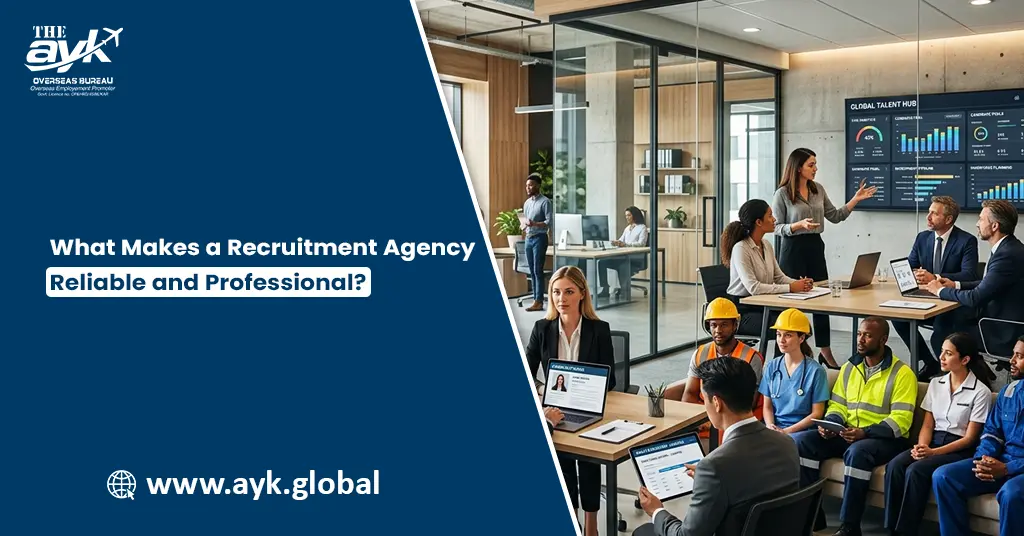
What Makes a Recruitment Agency Reliable and Professional?
Published: June 22, 2026 | Views: 20
Introduction
Choosing the right recruitment agency is one of the most important decisions an employer can make. Whether a company is hiring ten workers or one thousand employees, the quality of the recruitment partner directly influences workforce performance, productivity, project timelines, operational stability, and long-term business success. Unfortunately, not all recruitment agencies operate at the same professional standard. Some agencies focus primarily on filling vacancies quickly, while others prioritize workforce quality, compliance, long-term partnerships, and employer satisfaction.
In today's competitive labor market, recruitment agencies play a much larger role than simply sourcing candidates. Employers increasingly rely on recruitment partners to support workforce planning, talent acquisition, candidate evaluation, trade testing, compliance management, documentation processing, workforce mobilization, and employee retention. This expanded role means that selecting a reliable and professional recruitment agency has become a strategic business decision rather than an administrative task.
A reliable recruitment agency helps employers reduce hiring risks, improve workforce quality, accelerate recruitment timelines, and maintain compliance with labor regulations. A poor recruitment partner, on the other hand, can create delays, increase turnover, generate compliance issues, and damage workforce performance. Understanding the characteristics that distinguish professional agencies from less reliable providers is therefore essential for employers seeking successful recruitment outcomes.
This guide explains the key factors that make a recruitment agency reliable and professional and how organizations can evaluate potential recruitment partners effectively.
1. A Reliable Recruitment Agency Operates Legally and Transparently
One of the first indicators of professionalism is legal compliance. A reliable recruitment agency operates with proper licenses, registrations, and authorizations required by government authorities and industry regulators. Employers should never assume that an agency is legitimate based solely on marketing materials or online presence. Verification of legal credentials should always be part of the evaluation process.
Licensed agencies are generally subject to regulatory oversight and must comply with established recruitment standards. This creates accountability and provides employers with additional confidence that recruitment activities are being conducted responsibly. Legal compliance also reduces risks associated with fraudulent practices, documentation issues, and employment disputes.
Transparency is equally important. Professional agencies communicate openly about recruitment processes, timelines, fees, documentation requirements, and candidate availability. They avoid making unrealistic promises and provide accurate information throughout the hiring process. Transparent communication builds trust and supports stronger employer relationships.
Organizations should prioritize recruitment partners that demonstrate both legal compliance and operational transparency. These qualities provide a strong foundation for successful recruitment collaborations and long-term workforce success.
Why Legal Compliance Matters
Licensed agencies operate within regulated frameworks and established standards.
Transparency reduces misunderstandings and improves employer confidence.
Compliance and accountability are essential indicators of professionalism.
2. Professional Agencies Invest in Workforce Quality Rather Than Quantity
Many recruitment agencies focus on presenting large numbers of candidates. While candidate volume may appear impressive, workforce quality is far more important than quantity. Reliable recruitment agencies understand this distinction and prioritize candidate suitability over application volume.
Professional agencies invest significant resources into candidate evaluation. They assess qualifications, technical competencies, communication skills, employment history, and job readiness before presenting applicants to employers. Their objective is to identify candidates who align with workforce requirements and contribute positively to organizational success.
Workforce quality directly affects productivity, retention, and operational performance. Employees who possess the right skills and attitudes integrate more effectively into organizations and generally remain longer in their positions. As a result, employers experience lower turnover rates and stronger workforce stability.
Organizations should evaluate whether a recruitment agency emphasizes quality throughout its recruitment processes. Agencies that focus on workforce quality often deliver stronger long-term outcomes than those prioritizing candidate volume alone.
Workforce Quality Indicators
Professional agencies evaluate candidates thoroughly before submission.
Quality-focused recruitment reduces turnover and improves productivity.
Candidate suitability is more important than candidate quantity.
3. Strong Candidate Screening Processes Reflect Professionalism
Candidate screening is one of the most important responsibilities performed by recruitment agencies. Effective screening ensures that employers receive qualified applicants while minimizing hiring risks. Agencies that invest in structured screening processes typically demonstrate higher levels of professionalism and recruitment competence.
Professional screening often includes resume evaluation, interviews, qualification verification, reference checks, communication assessments, and behavioral evaluations. Depending on the role, agencies may also conduct technical assessments and trade testing. These activities help identify candidates who meet employer requirements and are prepared for workforce deployment.
Screening processes should be systematic rather than informal. Reliable agencies use consistent evaluation criteria and documented procedures to assess candidates objectively. This improves candidate quality and reduces recruitment bias.
Employers should ask recruitment agencies about their screening methodologies during the evaluation process. Agencies that can explain their assessment procedures clearly are often better positioned to deliver successful recruitment outcomes.
Why Screening Matters
Structured screening improves candidate quality.
Professional evaluation reduces hiring risks.
Effective screening contributes to stronger workforce performance.
4. Industry Experience Creates Better Recruitment Outcomes
Recruitment requirements vary significantly between industries. Hiring engineers, healthcare professionals, electricians, warehouse workers, hospitality staff, and construction laborers requires different sourcing strategies, evaluation methods, and workforce knowledge.
Reliable recruitment agencies often specialize in specific sectors and develop expertise within those industries. This specialization helps recruiters understand workforce challenges, labor market conditions, certification requirements, salary expectations, and technical competencies relevant to particular roles.
Industry experience improves recruitment effectiveness because agencies know what qualifications employers require and where suitable candidates can be found. Recruiters can evaluate applicants more accurately and provide valuable workforce insights.
Organizations should assess whether recruitment agencies possess experience relevant to their industry. Agencies with demonstrated sector expertise generally deliver stronger hiring outcomes and more reliable workforce solutions.
Benefits of Industry Expertise
Specialized knowledge improves candidate evaluation.
Industry experience supports more effective sourcing strategies.
Employers benefit from workforce insights and market intelligence.
5. Reliable Agencies Maintain Extensive Talent Networks
Access to talent is one of the most important assets a recruitment agency can possess. Professional agencies invest years building candidate databases, workforce relationships, industry connections, and sourcing networks. These resources enable them to respond quickly to recruitment requests and provide employers with greater workforce flexibility.
Large talent networks improve recruitment speed because agencies can access pre-screened candidates without starting sourcing activities from scratch. This is particularly valuable during urgent hiring projects and large-scale workforce campaigns.
Candidate networks also support workforce diversity. Agencies with broad talent pools can source professionals with varying experience levels, technical skills, and industry backgrounds. This improves hiring flexibility and expands workforce options.
Employers should evaluate the strength of an agency's talent network by discussing candidate availability, sourcing strategies, and workforce categories. Strong talent access is often a key differentiator between average agencies and highly effective recruitment partners.
Why Talent Networks Matter
Large candidate pools improve hiring flexibility and speed.
Pre-screened talent reduces recruitment timelines.
Strong networks support workforce scalability.
6. Professional Agencies Prioritize Communication and Responsiveness
Communication quality often determines the success of recruitment projects. Employers depend on recruitment agencies for updates regarding sourcing progress, candidate availability, documentation status, interview scheduling, and workforce deployment activities.
Reliable agencies maintain regular communication and provide timely updates throughout the recruitment process. They respond quickly to inquiries, address concerns professionally, and communicate recruitment challenges openly. This transparency helps employers make informed decisions and maintain confidence in recruitment activities.
Responsiveness also reflects operational efficiency. Agencies that communicate effectively often manage recruitment projects more successfully because information flows smoothly between all stakeholders. Delays caused by poor communication can affect hiring timelines and create unnecessary complications.
Organizations should evaluate communication quality from the earliest interactions with recruitment agencies. Professional communication standards frequently indicate how the agency will perform during future recruitment engagements.
Communication Best Practices
Regular updates improve transparency and trust.
Responsive agencies support smoother recruitment processes.
Effective communication strengthens employer relationships.
7. Trade Testing and Skills Verification Demonstrate Commitment to Quality
One of the strongest indicators of a professional recruitment agency is its commitment to verifying workforce skills before candidates are presented to employers. Many agencies simply collect resumes and forward them to clients without thoroughly evaluating whether candidates possess the practical abilities required for the role. Reliable recruitment agencies take a different approach by implementing structured trade testing and skills verification processes.
Trade testing is particularly important in industries such as construction, oil and gas, manufacturing, facilities management, logistics, and engineering where practical skills directly influence productivity and workplace safety. Welders, electricians, plumbers, fabricators, HVAC technicians, machine operators, and maintenance personnel should be evaluated through practical assessments whenever possible. These evaluations provide employers with confidence that workers can perform required tasks effectively.
Skills verification also helps reduce hiring risks. Employers invest significant resources in recruitment, onboarding, accommodation, transportation, and workforce deployment. Discovering skill deficiencies after employees arrive on site can create delays, increase costs, and affect project performance. Professional recruitment agencies help avoid these issues by confirming workforce competence before deployment.
Organizations should ask recruitment agencies about their testing methodologies, assessment facilities, and evaluation standards. Agencies that prioritize skills verification generally deliver stronger workforce quality and better long-term hiring outcomes.
Why Skills Verification Matters
Trade testing provides objective evidence of workforce competence.
Verified workers often perform more effectively and require less supervision.
Professional agencies reduce hiring risks through practical evaluation.
8. Compliance and Documentation Expertise Build Employer Confidence
Recruitment is not limited to sourcing candidates. Employers must also manage extensive documentation and compliance requirements throughout the hiring process. Employment contracts, identification records, qualification certificates, medical reports, labor approvals, visa applications, and onboarding documents all require careful handling.
Reliable recruitment agencies maintain dedicated compliance procedures that ensure documentation is processed accurately and efficiently. Their teams understand legal requirements and monitor changes in labor regulations that may affect recruitment activities. This expertise helps employers avoid costly mistakes and administrative complications.
International recruitment introduces additional compliance challenges because immigration laws, visa requirements, and employment regulations vary between countries. Agencies that specialize in overseas hiring often possess extensive knowledge of destination-country requirements and can guide employers through complex documentation processes.
Compliance expertise contributes significantly to recruitment success. Employers benefit from reduced legal risks, smoother workforce mobilization, and improved administrative efficiency. Recruitment agencies that prioritize compliance often demonstrate higher levels of professionalism and operational maturity.
Compliance Creates Stability
Accurate documentation reduces delays and administrative issues.
Professional agencies help employers meet legal requirements.
Strong compliance management supports efficient workforce deployment.
9. Workforce Mobilization and Deployment Capabilities Reflect Professionalism
Many employers focus primarily on candidate sourcing when evaluating recruitment agencies. While sourcing is important, recruitment success ultimately depends on workforce deployment. An agency may identify excellent candidates, but if it cannot mobilize and deploy them efficiently, recruitment outcomes will suffer.
Professional recruitment agencies possess structured mobilization processes that coordinate documentation, medical examinations, visa approvals, travel arrangements, and deployment logistics. These activities require careful planning and strong operational management. Agencies that manage mobilization effectively help employers avoid delays and maintain project schedules.
Deployment capability becomes particularly important during large-scale recruitment campaigns. Construction projects, manufacturing expansions, healthcare initiatives, hospitality openings, and industrial developments often require hundreds of workers to be deployed within strict timeframes. Agencies must possess the infrastructure and experience necessary to coordinate these activities successfully.
Organizations should evaluate recruitment agencies based on their mobilization track record and deployment experience. Reliable agencies often provide detailed timelines and demonstrate proven success managing workforce movement efficiently.
Why Deployment Capability Matters
Successful recruitment depends on more than candidate sourcing.
Efficient mobilization supports project timelines and operational continuity.
Professional agencies manage deployment activities systematically.
10. Employer References and Proven Track Records Matter
A recruitment agency's past performance provides valuable insight into its future capabilities. Reliable agencies can demonstrate successful recruitment outcomes through employer references, case studies, testimonials, and workforce placement records. These examples help employers assess whether an agency possesses the experience and expertise necessary to support their workforce requirements.
Employer references often reveal information that marketing materials cannot provide. Previous clients can discuss communication standards, workforce quality, recruitment timelines, responsiveness, and overall satisfaction. This feedback helps organizations make more informed recruitment decisions.
A strong track record is especially important when hiring for specialized positions or large-scale workforce projects. Agencies that have successfully managed similar recruitment campaigns are generally better prepared to address challenges and deliver results. Experience creates confidence and reduces uncertainty.
Organizations should always request evidence of previous recruitment success before selecting a recruitment partner. Professional agencies are typically willing to share references and discuss their accomplishments openly.
Why References Are Important
Past performance provides valuable insight into agency capabilities.
Employer feedback helps validate recruitment quality and professionalism.
Strong track records reduce hiring risks and improve confidence.
11. Reliable Recruitment Agencies Focus on Long-Term Relationships
Many recruitment agencies operate with a transactional mindset. Their primary objective is filling vacancies as quickly as possible without considering long-term workforce outcomes. Professional agencies take a different approach by focusing on building lasting relationships with employers and supporting long-term workforce success.
Long-term recruitment partnerships create significant advantages. Agencies develop a deeper understanding of organizational culture, workforce requirements, operational priorities, and business objectives. This knowledge improves candidate matching and recruitment efficiency because recruiters know exactly what employers need.
Relationship-focused agencies also invest more heavily in service quality. They understand that long-term success depends on employer satisfaction, workforce performance, and repeat business. As a result, they prioritize communication, transparency, and workforce quality throughout the recruitment process.
Organizations should look for recruitment agencies that demonstrate a genuine interest in partnership rather than simply completing transactions. Strong recruitment relationships often produce better workforce outcomes and greater long-term value.
Benefits of Long-Term Partnerships
Partnerships improve recruitment efficiency and workforce quality.
Agencies gain deeper understanding of employer requirements.
Long-term relationships create greater value than transactional hiring.
12. Why AYK Overseas Recruitment & HR Manpower Agency Stands Out
Employers seeking a reliable and professional recruitment partner often evaluate agencies based on licensing, workforce quality, industry experience, compliance capabilities, and deployment performance. AYK Overseas Recruitment & HR Manpower Agency has built its reputation by focusing on these key areas and supporting employers across multiple industries.
License No. GL-4586-KAR
The agency provides workforce solutions for construction, healthcare, logistics, hospitality, facilities management, manufacturing, engineering, and oil and gas sectors. Through structured recruitment processes, candidate screening, trade testing support, documentation management, and workforce mobilization services, AYK Overseas helps employers address complex workforce challenges efficiently.
A strong emphasis on workforce quality distinguishes professional recruitment agencies from less reliable providers. By focusing on candidate suitability, compliance, communication, and employer satisfaction, AYK Overseas aims to support long-term workforce success rather than simply filling vacancies.
Employers increasingly require recruitment partners capable of managing end-to-end hiring processes while maintaining high professional standards. Agencies that combine licensing, industry expertise, workforce quality, and operational efficiency provide significant value in today's competitive labor market.
What Employers Should Look For
Licensing, transparency, workforce quality, and compliance expertise are critical.
Strong candidate screening and mobilization capabilities improve hiring outcomes.
Long-term recruitment partnerships support workforce stability and business growth.
Conclusion
A reliable and professional recruitment agency provides far more than candidate sourcing. It serves as a strategic workforce partner that supports hiring quality, compliance management, workforce planning, candidate evaluation, and successful deployment. Employers that choose recruitment partners carefully often experience stronger workforce performance, lower turnover rates, and improved business outcomes.
The most reliable agencies share several common characteristics: legal compliance, transparency, strong candidate screening, industry expertise, workforce quality focus, mobilization capability, and commitment to long-term partnerships. These qualities help distinguish professional recruitment providers from less effective alternatives.
As workforce challenges continue evolving, selecting the right recruitment agency will remain one of the most important decisions employers make. Organizations that prioritize professionalism and reliability during the selection process are more likely to build successful, productive, and sustainable workforce teams.
 Why Al Rayyan Needs a Recruitment Partner Who Understands Its Dual Identity
 KSA Recruitment
 UAE Recruitment
 Qatar Recruitment
 Oman Recruitment
 Kuwait Recruitment
 Libya Recruitment
 Bahrain Recruitment
 Iraq Recruitment
 Malaysia Recruitment
 Malta Recruitment
 Canada Recruitment
 USA Recruitment
 Europe Recruitment
 UK Recruitment
 Romania Recruitment
 Poland Recruitment
 Bulgaria Recruitment
 Albania Recruitment
 Serbia Recruitment
 Lithuania Recruitment
 Japan Recruitment
 Turkey Recruitment
 Kyrgyzstan Recruitment
 South Korea Recruitment