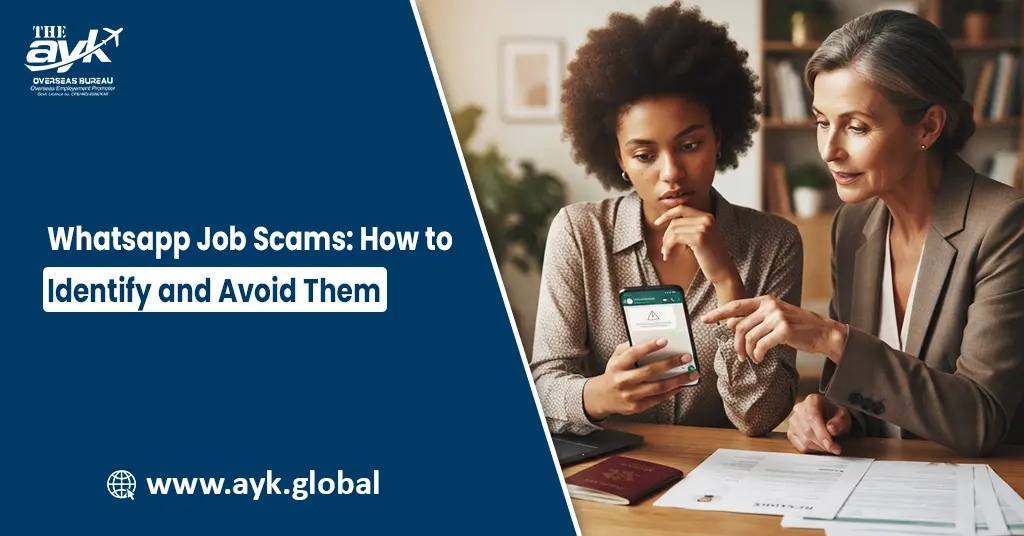
WhatsApp Job Scams: How to Identify and Avoid Them
Published: July 04, 2026 | Views: 13
Introduction
WhatsApp has become one of the most actively exploited channels for Gulf employment fraud targeting Pakistani workers, with fraudsters leveraging the platform's near-universal adoption among Pakistani mobile users, its community group sharing mechanics that allow deceptive content to spread rapidly through trusted personal networks, and its informal communication style that makes fraudulent job offers appear to come through genuine personal referrals rather than the anonymous digital advertising channels that would immediately trigger more skepticism. The particular danger of WhatsApp job scams compared to other fraud channels lies in how they exploit the trust embedded in existing personal and community relationships, with workers receiving apparently genuine job offers forwarded by family members, community contacts, or respected group administrators whose personal endorsement lowers the defensive skepticism that the same information presented through unknown digital channels would properly trigger. AYK Overseas Recruitment & HR Manpower Agency, recognized as one of Pakistan's top manpower agencies, regularly encounters workers who have already suffered financial losses from WhatsApp job scams before approaching us for legitimate employment assistance, and this guide provides the specific identification and protection knowledge that every Pakistani worker needs before encountering these increasingly sophisticated fraud approaches.
How WhatsApp Gulf Job Scams Typically Operate
WhatsApp Gulf job scams typically follow recognizable operational patterns that workers can learn to identify despite the surface variation between different specific fraud schemes, with most schemes sharing the core elements of an initial attractive job offer message circulated through community groups or sent directly to target individuals, followed by a seemingly legitimate verification or application process that ultimately requests upfront payments for visa processing, training, medical testing, or various other ostensibly legitimate expenses that the fraudster collects before disappearing without delivering any employment. The initial message often appears to come from a legitimate source through forwarding chains that make the actual fraudulent origin difficult to trace, with community group members believing they are sharing a genuine opportunity when they forward content they received from their own trusted contacts without having independently verified the opportunity's legitimacy before passing it along their personal network. Fraudsters exploit the time pressure psychology that attractive job opportunities create by emphasizing limited positions available, urgent deadlines for application submission, and the exceptional opportunity that will be lost to other applicants if the recipient delays response, deliberately creating the urgency that suppresses careful verification thinking in workers who fear missing a genuine opportunity through excessive caution.
Common Red Flags in WhatsApp Job Offer Messages
Specific characteristics of WhatsApp job offer messages should immediately trigger strong skepticism regardless of how the message reached the worker or who forwarded it, including salary figures that significantly exceed realistic market rates for the described position, minimal qualification requirements for apparently high-level employment, visa and accommodation included as automatic provisions without mentioning any employer verification process, contact information that includes only WhatsApp numbers or generic email addresses without company domain correspondence, and explicit requests to contact through WhatsApp rather than any verified official company channel. Messages containing professional-looking logos, official-seeming letterheads, or elaborate visa stamps embedded in the message images should be treated with particular caution rather than taken as legitimacy indicators, since fraudsters routinely create convincing fake official documentation imagery that exploits workers' limited familiarity with what genuine Gulf employment documentation actually looks like versus skilled graphic design forgeries. The forwarded message format itself, where workers receive content with notes like "Please share widely, genuine opportunity" or similar community sharing encouragements, represents an additional red flag since legitimate employers advertising genuine positions do not distribute their job offers through uncontrolled viral WhatsApp forwarding chains that undermine any meaningful application management.
The Upfront Payment Trap
The upfront payment request represents the core fraud mechanism that converts apparent job opportunity into financial theft, with fraudsters requesting money for visa processing fees, medical testing at specific designated clinics, training course fees, security deposits, or various other supposed legitimate employment expenses that genuine Gulf employment facilitation never actually requires workers to pay from their own funds. Workers should understand as absolute, inviolable principle that legitimate Gulf employment through properly licensed recruitment agencies never requires upfront payment from the worker at any stage of the application, selection, or visa processing sequence, with legitimate cost structures placing recruitment costs on Gulf employers rather than on workers who are the vulnerable party in the employment relationship that exploitative fraud specifically targets. The payment request typically comes after workers have invested significant emotional energy in the apparent opportunity through extended WhatsApp communication that builds artificial relationship and trust with the fraudster, with the payment request framed as a routine administrative requirement at an exciting moment when workers believe they have secured employment and do not want to let a seemingly small payment obstacle prevent them from accessing the opportunity they have emotionally committed to pursuing.
Verifying Gulf Job Offers Received Through WhatsApp
Any Gulf job offer received through WhatsApp, regardless of who forwarded it or how convincing it appears, requires independent verification through official channels before workers take any further action toward the apparent opportunity or share any personal information or financial resources with anyone associated with it. The most important verification step involves attempting to confirm the supposed employer's existence through official Gulf country business registry searches that confirm whether a company by the stated name is genuinely registered as a legal business entity in the stated country, with a missing registry result for a supposedly established Gulf company representing immediate and definitive fraud confirmation requiring no further investigation. Workers should also attempt to find the supposed employer through independent internet searches that reveal whether genuine digital presence exists beyond the WhatsApp-shared material, recognizing that legitimate established Gulf companies maintain verifiable web presence including websites, news mentions, and professional profiles that genuinely employed workers and business contacts create over time, while fraudulent fake companies typically have no verifiable presence outside the WhatsApp materials the fraudsters have themselves created and distributed.
Protecting Your Personal Information in WhatsApp Job Conversations
Workers who engage with what they initially believe might be genuine WhatsApp job opportunities before recognizing fraud indicators should apply strict personal information protection throughout the conversation, refusing to share passport copies, CNIC details, bank account information, or similar sensitive personal data with any WhatsApp contact regardless of how convincingly official their communication appears. WhatsApp communications are not secure official channels through which genuine Gulf employers or legitimate recruitment agencies would request sensitive personal documentation from candidates during initial contact, making any such request a specific fraud indicator that the worker's information is being collected for identity theft or document fraud purposes rather than genuine employment application processing. Workers who have already shared personal information with suspected WhatsApp job scammers should immediately contact their bank to flag potential account security concerns, consider registering their passport as potentially compromised with relevant Pakistani authorities, and report the fraud incident to FIA cybercrime channels providing whatever communication records they retained, recognizing that swift action following personal information exposure provides better fraud damage limitation than delayed response after fraudsters have had extended time to exploit accessed personal data.
When Trusted Contacts Share Scam Content
The particularly damaging psychological challenge of WhatsApp job scams involves receiving apparently fraudulent content forwarded by genuinely trusted contacts who themselves believed the forwarded opportunity was legitimate when they shared it through their personal network, creating a situation where exposing the scam requires workers to challenge the judgment of people they genuinely trust without that trust being a reliable indicator of the shared content's legitimacy. Workers who receive suspicious Gulf job offers forwarded by trusted contacts should separate their trust in the person forwarding the content from their assessment of the content's actual legitimacy, recognizing that even entirely well-intentioned, trustworthy people can unknowingly spread fraudulent content when they lack the specific verification knowledge needed to distinguish sophisticated fraud from genuine opportunity before passing it along their personal network. Gently informing trusted contacts who have shared suspicious content about the specific red flags that suggest the opportunity may be fraudulent serves both the immediate relationship and the broader community by interrupting the forwarding chain and raising the verification awareness of people whose own lack of fraud identification knowledge makes them vulnerable to both sharing scams and eventually responding to them directly themselves.
Reporting WhatsApp Job Scams and Protecting Others
Reporting encountered WhatsApp job scams to appropriate Pakistani authorities represents an important community protection action that helps law enforcement build awareness of specific active fraud schemes and sometimes enables intervention against fraudulent operations that continue victimizing new workers as long as they remain undetected and unreported. The Federal Investigation Agency's cybercrime reporting channels accept reports of WhatsApp-based fraud including job scams, providing workers with an official reporting mechanism that converts their negative fraud encounter experience into actionable law enforcement intelligence. Workers should preserve WhatsApp conversation records, screenshots of fraudulent messages, and any payment transaction records before reporting, providing authorities with the specific evidence that fraud investigation requires rather than simply verbal reports without documentation that limit investigators' ability to trace and act against specific fraud operations.
The Role of Community Education in Scam Prevention
Community-level education about WhatsApp Gulf job scam patterns represents one of the most effective prevention mechanisms available, as workers who understand specific fraud characteristics can protect not only themselves but also share this protective knowledge through their own community networks in ways that gradually raise the collective fraud resistance of Pakistani worker communities whose members otherwise provide an ongoing vulnerable target population for fraudsters who update their approaches incrementally while maintaining core mechanisms that educated communities can collectively recognize and resist. Workers who have developed strong WhatsApp job scam identification skills should actively share this knowledge within their community networks, family discussions, and community gatherings where overseas employment is a common topic, contributing to collective fraud awareness that serves the entire community rather than simply protecting individual workers who have personally encountered fraud education. Community religious and civic leaders whose communications reach broad audiences within Pakistani communities play particularly important roles in amplifying fraud awareness education, with their trusted authority positions enabling fraud prevention messages to reach community members who might not encounter this protective information through other channels they regularly access.
What to Do If You Have Already Sent Money to a Scammer
Workers who have already sent money to what they now recognize as a WhatsApp job scammer should take immediate action to limit further financial loss and report the fraud rather than remaining silent about the loss out of embarrassment or resignation that recovery is impossible. Immediately contacting your bank or mobile money service to report the fraudulent transaction and request transaction reversal where technically possible provides the best available chance of recovering transferred funds before the fraudster withdraws or transfers them beyond recovery reach, with speed of reporting directly affecting recovery probability since financial institutions can sometimes freeze fraudulent recipient accounts if notified before withdrawal occurs. Workers should simultaneously report the fraud to FIA cybercrime channels with all available documentation of the fraudulent communication and payment transactions, recognize that speaking openly about their experience within their community serves the important protective function of warning others against the same scheme, and approach a properly licensed recruitment agency for legitimate Gulf employment guidance that addresses their underlying overseas employment objectives through protected, verified channels.
How AYK Overseas Helps Victims of WhatsApp Job Scams
As a government-licensed international recruitment and HR manpower firm with offices in Karachi and Islamabad, AYK Overseas Recruitment & HR Manpower Agency regularly assists Pakistani workers who have encountered WhatsApp job scams by helping them understand what happened, report fraud through appropriate channels, and access genuine Gulf employment opportunities through legitimate, verified processes that provide the overseas employment they were originally seeking through the fraudulent channel that victimized them. Being recognized as one of Pakistan's top manpower agencies, we treat worker education about WhatsApp job scam identification as a genuine professional responsibility alongside our placement services, recognizing that protecting Pakistani workers from fraud serves both individual worker welfare and the broader integrity of Pakistan's overseas employment system that depends on workers being able to safely pursue genuine opportunities without the financial and personal harm that sophisticated WhatsApp fraud increasingly creates.
Conclusion
WhatsApp Gulf job scams represent one of the most significant fraud threats facing Pakistani overseas employment seekers, exploiting trusted personal networks, community group sharing mechanics, and the emotional urgency of apparent job opportunities to extract upfront payments and personal information from workers who lack specific fraud identification knowledge that distinguishes sophisticated scams from genuine employment opportunities. Workers who develop firm knowledge of specific red flags, apply independent verification to any WhatsApp job offer regardless of its apparent source, maintain absolute refusal of upfront payment requests, protect personal information through all digital channels, and report encountered scams through appropriate official channels effectively protect themselves while contributing to broader community fraud resistance that reduces the population of vulnerable targets these fraud operations continuously depend on.
 Industries in GCC with the Highest Demand for Pakistani Workers
 Hire Pakistani Workers for Scotland, A Practical Guide for Employers
 KSA Recruitment
 UAE Recruitment
 Qatar Recruitment
 Oman Recruitment
 Kuwait Recruitment
 Libya Recruitment
 Bahrain Recruitment
 Iraq Recruitment
 Malaysia Recruitment
 Malta Recruitment
 Canada Recruitment
 USA Recruitment
 Europe Recruitment
 UK Recruitment
 Romania Recruitment
 Poland Recruitment
 Bulgaria Recruitment
 Albania Recruitment
 Serbia Recruitment
 Lithuania Recruitment
 Japan Recruitment
 Turkey Recruitment
 Kyrgyzstan Recruitment
 South Korea Recruitment