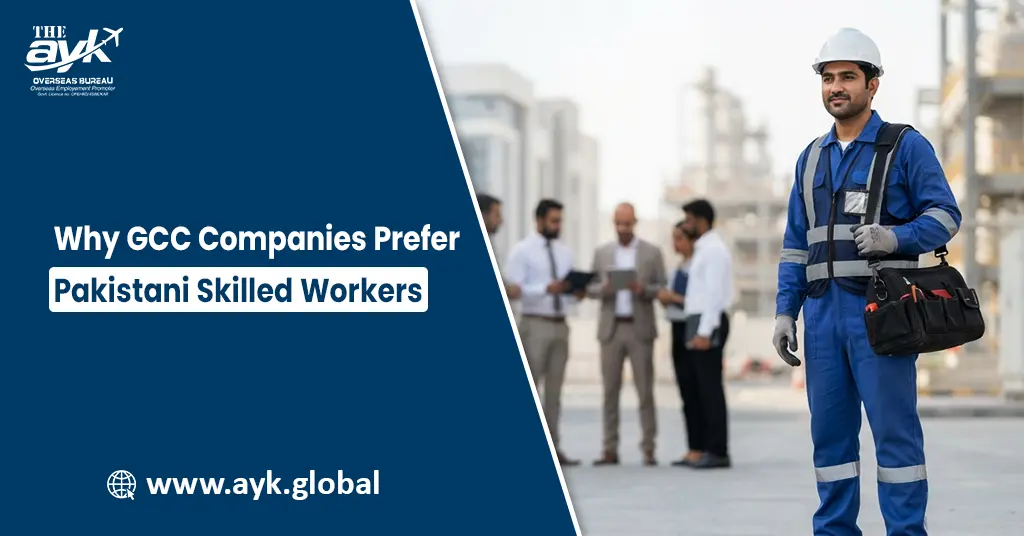
Why GCC Companies Prefer Pakistani Skilled Workers
Published: July 02, 2026 | Views: 15
Introduction
GCC countries such as Saudi Arabia, United Arab Emirates (UAE), Qatar, Kuwait, Oman, and Bahrain have one of the largest foreign workforce systems in the world. Every year, thousands of companies in these countries hire skilled workers from different nations, but Pakistani workers are consistently among the most preferred. This preference is visible across industries such as construction, engineering, oil and gas, HVAC, electrical work, welding, mechanical services, logistics, and hospitality.
The reason behind this preference is not random; it is based on years of experience, performance, technical capability, adaptability, and work ethics demonstrated by Pakistani workers in Gulf countries. From large infrastructure projects to industrial operations, Pakistani skilled workers have built a strong reputation in the GCC job market.
Understanding why GCC companies prefer Pakistani skilled workers is important for job seekers who want to improve their chances of employment and build successful international careers.
1. Strong Technical Skills and Practical Training
One of the biggest reasons GCC companies prefer Pakistani skilled workers is their strong technical background and practical training. Many Pakistani workers in fields like welding, electrical work, HVAC, plumbing, mechanical maintenance, and civil construction have hands-on experience gained through real job environments rather than only theoretical education.
Technical institutes and vocational training centers in Pakistan produce workers who are capable of handling real-world industrial tasks. Employers in GCC countries value this practical ability because their projects require workers who can start working immediately without long training periods.
For example, welders from Pakistan are often skilled in ARC, MIG, and TIG welding techniques, while electricians are familiar with wiring, installation, and troubleshooting systems. This makes Pakistani workers highly reliable in technical roles.
2. Adaptability to Harsh Working Conditions
GCC countries have extreme weather conditions, especially high temperatures in summer. Many industries such as construction, oil and gas, and outdoor maintenance require workers who can perform in challenging environments.
Pakistani workers are known for their ability to adapt to harsh working conditions. They are used to physically demanding labor and long working hours, which makes them suitable for GCC job environments.
This adaptability makes employers confident that Pakistani workers can maintain productivity even in difficult situations, such as outdoor construction sites or industrial plants with high heat exposure.
3. Strong Work Ethic and Discipline
GCC companies highly value discipline, punctuality, and work ethics. Pakistani skilled workers have built a strong reputation for being hardworking, responsible, and committed to their tasks.
Employers often report that Pakistani workers show dedication to completing tasks on time and are willing to work extra hours when required. This reliability is extremely important in industries like construction and manufacturing, where project deadlines are strict.
Good work ethic also means fewer workplace issues, better team coordination, and higher productivity, which benefits employers directly.
4. Cost-Effective Workforce for Employers
Another major reason GCC companies prefer Pakistani skilled workers is cost-effectiveness. Compared to some other international workers, Pakistani workers often accept reasonable salary packages while delivering high-quality work.
Employers in GCC countries aim to balance cost and productivity. Pakistani workers provide a strong combination of affordability and skill, making them a preferred choice for large-scale hiring.
This does not mean Pakistani workers are underpaid, but rather that their skill level matches well with competitive salary structures in the GCC labor market.
5. Large Pool of Skilled Labor in Pakistan
Pakistan has a large and continuously growing workforce in technical and vocational fields. Every year, thousands of skilled workers graduate from technical training institutes and enter industries such as construction, manufacturing, and engineering services.
This large supply of skilled labor makes it easier for GCC companies to recruit qualified candidates quickly. Recruitment agencies in Pakistan also maintain strong connections with Gulf employers, making the hiring process efficient.
Because of this strong labor pipeline, Pakistani workers remain a consistent and reliable source of manpower for GCC countries.
6. Experience in Middle Eastern Projects
Many Pakistani workers already have experience working in GCC countries. This previous exposure gives them an advantage over new international candidates. Employers prefer workers who are already familiar with Gulf workplace culture, safety standards, and project requirements.
Experienced Pakistani workers understand how to work in multinational teams, follow strict safety regulations, and operate under project-based deadlines.
This experience reduces training costs for employers and improves efficiency on job sites.
7. Ability to Work in Multicultural Environments
GCC workplaces are highly diverse, with workers from India, Bangladesh, Nepal, the Philippines, Egypt, and many other countries. Pakistani workers are known for their ability to work effectively in multicultural environments.
They can communicate, collaborate, and coordinate with international teams, which is very important for large-scale projects.
This flexibility helps maintain harmony at workplaces and improves overall productivity.
8. Strong Demand in Key Industries
Pakistani skilled workers are highly preferred in several key industries across GCC countries:
- Construction and infrastructure
- Oil and gas operations
- Electrical and mechanical maintenance
- HVAC systems
- Welding and fabrication
- Logistics and warehouse operations
- Hospitality and service industries
These industries form the backbone of GCC economies, and Pakistani workers play a crucial role in supporting their growth.
Their presence in these sectors has built trust and long-term hiring relationships between GCC employers and Pakistani labor markets.
9. Reliability in Long-Term Projects
GCC countries often run long-term infrastructure and industrial projects that require stable and consistent workforce support. Pakistani workers are considered reliable for such projects because they often stay committed for long durations.
Employers prefer workers who do not frequently change jobs or leave projects midway. Pakistani workers generally show loyalty and consistency, which helps maintain project stability.
This reliability is especially important in sectors like construction, where delays can lead to significant financial losses.
10. Government and Recruitment Channel Support
Another factor is the strong recruitment network between Pakistan and GCC countries. Licensed recruitment agencies, government agreements, and manpower export systems make it easier for GCC companies to hire Pakistani workers legally and efficiently.
This structured system ensures proper documentation, visa processing, and skill verification, making Pakistani workers more accessible to international employers.
Conclusion
GCC companies prefer Pakistani skilled workers because of their strong technical skills, adaptability, discipline, cost-effectiveness, and proven performance in international job environments. Their ability to work in harsh conditions, multicultural teams, and long-term projects makes them highly valuable in Saudi Arabia, UAE, Qatar, Kuwait, Oman, and Bahrain.
With continuous industrial growth in GCC countries, demand for Pakistani skilled labor is expected to remain strong in 2026 and beyond. Workers who improve their technical skills, gain certifications, and maintain professionalism will continue to find excellent career opportunities in the Gulf region.
 Skills Employers Are Looking for in 2026 Overseas Job Market
 Recruitment Agency in Pakistan for Iraq, Complete Employer Guide 2026
 KSA Recruitment
 UAE Recruitment
 Qatar Recruitment
 Oman Recruitment
 Kuwait Recruitment
 Libya Recruitment
 Bahrain Recruitment
 Iraq Recruitment
 Malaysia Recruitment
 Malta Recruitment
 Canada Recruitment
 USA Recruitment
 Europe Recruitment
 UK Recruitment
 Romania Recruitment
 Poland Recruitment
 Bulgaria Recruitment
 Albania Recruitment
 Serbia Recruitment
 Lithuania Recruitment
 Japan Recruitment
 Turkey Recruitment
 Kyrgyzstan Recruitment
 South Korea Recruitment