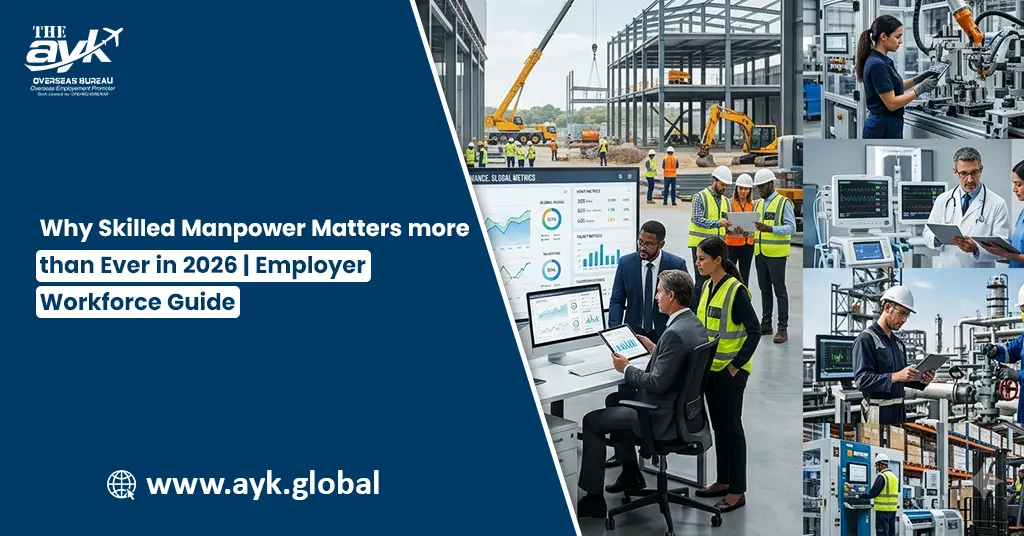
Why Skilled Manpower Matters More Than Ever in 2026
Published: June 23, 2026 | Views: 24
The global workforce landscape is changing rapidly. Businesses across construction, manufacturing, healthcare, logistics, hospitality, facilities management, engineering, transportation, and oil and gas are facing new challenges that require higher levels of workforce competence than ever before. Technological advancement, increasing customer expectations, stricter safety regulations, labor shortages, and growing competition have transformed workforce quality from a desirable advantage into a critical business requirement.
In previous decades, employers often focused primarily on workforce availability. If enough workers were available, projects could move forward and operations could continue. Today, however, workforce quality has become equally important. Companies need employees who can adapt to technology, solve problems, maintain productivity, follow safety procedures, and contribute to organizational growth.
The demand for skilled manpower continues increasing while the supply of qualified workers remains limited in many regions. As a result, employers are competing aggressively for technical specialists, experienced tradespeople, healthcare professionals, engineers, operators, and skilled support staff. Organizations that fail to secure qualified employees often experience productivity losses, project delays, operational inefficiencies, and reduced competitiveness.
Skilled manpower is no longer simply a workforce requirement. It is a strategic business asset that directly influences profitability, customer satisfaction, operational performance, and long-term growth. Employers that prioritize workforce quality are better positioned to succeed in increasingly competitive markets.
This guide explains why skilled manpower matters more than ever in 2026 and how employers can strengthen workforce quality through effective recruitment and workforce planning strategies.
1. Skilled Workers Improve Productivity
Productivity is one of the most important factors influencing business success. Organizations that complete projects efficiently, deliver services consistently, and maximize workforce output generally achieve stronger financial performance and greater customer satisfaction.
Skilled employees contribute directly to productivity because they possess the knowledge, experience, and technical capabilities required to perform tasks efficiently. They require less supervision, make fewer mistakes, and complete assignments more accurately than less experienced workers. Their expertise allows organizations to achieve better results with fewer disruptions.
In industries such as construction, manufacturing, engineering, and healthcare, productivity improvements can have substantial financial implications. Small increases in workforce efficiency often generate significant operational benefits over time. Skilled workers help organizations meet deadlines, improve service quality, and reduce waste.
Employers that invest in skilled manpower recruitment frequently experience measurable productivity gains. Workforce quality becomes a competitive advantage that supports business growth and operational excellence.
Productivity Benefits
Skilled workers perform tasks more efficiently.
Workforce quality improves operational output.
Higher productivity supports business profitability.
2. Labor Shortages Are Increasing Worldwide
One of the most significant workforce challenges facing employers in 2026 is the growing shortage of skilled labor. Many industries struggle to recruit qualified employees because workforce demand exceeds available talent supply.
Several factors contribute to this trend. Aging populations, workforce retirements, declining participation rates, changing career preferences, and rapid technological advancement have all affected labor market dynamics. As experienced workers leave the workforce, employers often struggle to replace them.
Construction companies require electricians, welders, plumbers, and technicians. Healthcare organizations need nurses and medical professionals. Manufacturers seek machine operators and maintenance specialists. Logistics companies require drivers and supply chain personnel. Demand continues increasing while talent availability remains limited.
Because skilled workers are increasingly difficult to find, organizations that develop strong workforce strategies gain significant advantages. Workforce planning, international recruitment, employee development, and recruitment partnerships become essential for addressing labor shortages.
Skilled Labor Shortage Challenges
Demand for qualified workers continues increasing.
Labor shortages affect multiple industries.
Employers must compete for limited talent resources.
3. Technology Requires Higher Workforce Competence
Technology is transforming nearly every industry. Automation, digital systems, advanced equipment, artificial intelligence, data analytics, and smart infrastructure solutions are becoming increasingly common within workplaces.
These technological changes require employees who can adapt, learn, and operate sophisticated systems effectively. Organizations can no longer rely solely on workforce availability. Employees must possess technical competencies that support evolving operational requirements.
Skilled workers are generally better prepared to embrace new technologies and contribute to innovation initiatives. Their ability to learn quickly and solve complex problems improves organizational adaptability. Employers benefit because technological investments generate stronger returns when supported by capable workforce teams.
Businesses that fail to invest in workforce quality may struggle to maximize the value of technological advancements. Skilled manpower ensures organizations remain competitive within increasingly technology-driven industries.
Technology and Workforce Skills
Modern workplaces require advanced competencies.
Skilled workers adapt more effectively to change.
Technology investments depend on workforce capability.
4. Safety Standards Continue Becoming More Important
Workplace safety is a critical concern across industries. Construction sites, manufacturing facilities, healthcare environments, logistics operations, and industrial projects all involve potential risks that must be managed carefully.
Skilled workers often contribute significantly to workplace safety because they understand procedures, equipment operation, risk management practices, and regulatory requirements. Their experience helps reduce accidents and improve compliance with safety standards.
Safety incidents can create substantial costs for employers. Medical expenses, productivity losses, project delays, legal liabilities, and reputational damage often result when safety standards are not maintained effectively. Workforce quality therefore has direct implications for risk management and operational performance.
Organizations that prioritize skilled manpower frequently experience stronger safety outcomes because employees possess the knowledge necessary to perform tasks responsibly and safely.
Safety Benefits
Skilled employees improve workplace safety.
Experience reduces operational risks.
Strong safety performance supports business success.
5. Skilled Manpower Improves Project Success Rates
Project success depends heavily on workforce quality. Whether building infrastructure, delivering healthcare services, manufacturing products, managing logistics operations, or providing hospitality services, employees play a central role in execution.
Skilled workers help projects remain on schedule, maintain quality standards, and achieve performance objectives. Their expertise reduces errors, improves coordination, and enhances problem-solving capabilities throughout project lifecycles.
Large-scale projects are particularly sensitive to workforce quality because mistakes can create significant delays and financial consequences. Employers therefore prioritize skilled manpower to improve execution reliability and reduce operational risks.
Organizations that consistently recruit qualified employees often achieve stronger project outcomes and greater customer satisfaction. Workforce quality becomes a key factor influencing organizational reputation and growth potential.
Project Success Benefits
Skilled workers improve execution quality.
Workforce expertise supports project performance.
Qualified employees reduce operational disruptions.
6. Customer Expectations Are Higher Than Ever
Customers expect higher levels of quality, reliability, responsiveness, and professionalism than in previous years. Organizations must therefore ensure that employees possess the skills required to meet these expectations consistently.
Whether interacting directly with customers or supporting operational activities behind the scenes, skilled employees contribute to service quality and customer satisfaction. Their expertise enables organizations to deliver better experiences and maintain stronger competitive positions.
Poor workforce quality often results in service errors, delays, inconsistent performance, and customer dissatisfaction. These issues can affect reputation and limit growth opportunities. Skilled manpower helps organizations avoid such challenges and maintain high service standards.
Customer expectations will likely continue increasing as markets become more competitive. Workforce quality therefore remains a critical component of long-term business success.
Customer Service Benefits
Skilled employees improve service quality.
Customer satisfaction supports business growth.
Workforce competence strengthens organizational reputation.
7. Skilled Workers Improve Profitability and Reduce Costs
Many employers focus on labor costs when evaluating workforce decisions. While compensation expenses are important, the true financial impact of workforce quality extends far beyond salaries. Skilled workers often generate significant cost savings through improved productivity, reduced errors, lower supervision requirements, and stronger operational performance.
Unskilled or poorly matched employees may require extensive training, increased supervision, and frequent corrections. Mistakes can result in rework, material waste, project delays, customer complaints, and operational inefficiencies. Over time, these costs can exceed any short-term savings associated with lower labor expenses.
Skilled workers contribute value immediately because they possess the competencies required to perform effectively. They often complete tasks faster, maintain higher quality standards, and solve problems independently. These capabilities improve profitability and support sustainable business growth.
Organizations that invest in skilled manpower recruitment frequently achieve stronger financial outcomes because workforce quality improves operational efficiency across multiple areas of the business.
Financial Benefits
Skilled workers reduce costly mistakes.
Higher productivity improves profitability.
Workforce quality supports financial performance.
8. Global Competition for Skilled Talent Is Increasing
The competition for skilled manpower has become increasingly global. Employers are no longer competing only with local organizations for talent. Businesses across countries and industries actively recruit qualified workers to address labor shortages and support growth initiatives.
This trend is particularly visible in sectors such as construction, healthcare, engineering, logistics, manufacturing, oil and gas, and technology. Skilled professionals often receive multiple employment opportunities and may relocate internationally to pursue career advancement.
As competition intensifies, employers must adopt more strategic recruitment approaches. Organizations that rely solely on traditional hiring methods may struggle to secure qualified employees. Workforce planning, employer branding, and professional recruitment partnerships become increasingly important.
Businesses that develop strong talent acquisition strategies are better positioned to compete effectively for skilled manpower and maintain workforce stability.
Talent Competition Challenges
Global demand for skilled workers continues growing.
Employers compete across international labor markets.
Strategic recruitment improves workforce acquisition.
9. International Recruitment Helps Address Skill Gaps
Many organizations are turning to international recruitment as a solution to workforce shortages and skill gaps. Local labor markets often cannot provide sufficient numbers of qualified workers, particularly for technical positions and specialized industries.
International recruitment expands access to global talent pools and allows employers to identify candidates with the skills required to support business objectives. Skilled tradespeople, healthcare professionals, engineers, technicians, drivers, and industrial specialists are frequently recruited internationally.
Professional recruitment agencies play a critical role in facilitating international hiring. They help employers source candidates, verify qualifications, manage documentation, coordinate compliance requirements, and support workforce deployment. This expertise simplifies the recruitment process and improves workforce availability.
Organizations that embrace international recruitment often gain access to talent resources that would otherwise be unavailable. This flexibility supports growth and strengthens workforce capabilities.
International Recruitment Benefits
Global talent access reduces skill shortages.
International hiring improves workforce flexibility.
Broader sourcing supports organizational growth.
10. Future Workforce Trends Will Increase Skill Requirements
Workforce requirements will continue evolving throughout the coming years. Emerging technologies, automation, sustainability initiatives, digital transformation, and changing customer expectations are reshaping industries worldwide.
As these trends accelerate, employers will require workers who possess increasingly advanced skills. Technical knowledge, adaptability, problem-solving ability, communication skills, and continuous learning will become even more valuable. Organizations must prepare for these changes by investing in workforce quality today.
Employers that neglect workforce development may struggle to remain competitive as skill requirements increase. Businesses that prioritize skilled manpower recruitment and employee training are more likely to adapt successfully to future challenges.
Future workforce success will depend heavily on the ability to attract, develop, and retain skilled employees. Workforce quality will remain a defining factor in organizational performance.
Future Workforce Considerations
Skill requirements will continue increasing.
Adaptability is becoming a critical workforce competency.
Workforce development supports long-term competitiveness.
11. Skilled Recruitment Partners Improve Hiring Outcomes
Recruiting skilled workers is often more challenging than recruiting general labor because talent pools are smaller and competition is greater. Employers therefore benefit significantly from professional recruitment partners who specialize in workforce acquisition.
Recruitment agencies maintain candidate networks, labor market knowledge, and sourcing expertise that improve access to qualified professionals. Their screening and evaluation processes help employers identify candidates who possess the competencies required for success.
Professional recruitment partners also provide workforce planning support and market intelligence. Employers gain valuable insights regarding talent availability, salary expectations, recruitment trends, and workforce challenges. This information strengthens hiring strategies and improves workforce planning.
Organizations that collaborate with experienced recruitment agencies often achieve stronger hiring outcomes and reduce recruitment risks. Skilled recruitment support contributes directly to workforce quality and organizational success.
Recruitment Partner Advantages
Specialized sourcing improves candidate access.
Professional screening enhances workforce quality.
Recruitment expertise supports hiring success.
12. Why AYK Overseas Supports Skilled Workforce Recruitment
As workforce challenges continue increasing, employers need recruitment partners capable of delivering qualified talent efficiently and reliably. Skilled manpower recruitment requires expertise, workforce networks, evaluation processes, and international sourcing capabilities.
AYK Overseas Recruitment & HR Manpower Agency
License No. GL-4586-KAR
helps employers recruit skilled and unskilled workers across industries including construction, engineering, healthcare, logistics, manufacturing, hospitality, facilities management, transportation, and oil and gas. Through workforce planning support, candidate sourcing, screening, trade testing assistance, documentation management, compliance coordination, and workforce mobilization, AYK Overseas helps organizations address workforce challenges effectively.
By connecting employers with qualified candidates and supporting international recruitment activities, AYK Overseas contributes to workforce quality, operational performance, and long-term business growth. Organizations seeking reliable manpower solutions benefit from professional recruitment partnerships that prioritize workforce excellence.
Why Skilled Recruitment Matters
Qualified workers drive business performance.
Professional recruitment improves workforce quality.
Strong workforce partnerships support organizational growth.
Conclusion
Skilled manpower has become one of the most valuable assets available to modern organizations. Workforce quality influences productivity, safety, profitability, project success, customer satisfaction, innovation, and long-term growth. As labor shortages continue increasing and industries become more complex, skilled workers will play an even greater role in business success.
Employers that prioritize workforce quality through strategic recruitment, workforce planning, employee development, and international hiring initiatives are better positioned to compete effectively in evolving labor markets. Skilled manpower is no longer simply an operational requirement. It is a strategic advantage that contributes directly to organizational performance.
Organizations that invest in attracting and retaining qualified employees today will be better prepared to achieve sustainable growth and long-term success in the future.
 BEST RECRUITMENT AGENCY FOR ENGLAND IN PAKISTAN
 How to Prepare Your CV for GCC Employers
 Steel Fixer Jobs in GCC – Career Guide
 KSA Recruitment
 UAE Recruitment
 Qatar Recruitment
 Oman Recruitment
 Kuwait Recruitment
 Libya Recruitment
 Bahrain Recruitment
 Iraq Recruitment
 Malaysia Recruitment
 Malta Recruitment
 Canada Recruitment
 USA Recruitment
 Europe Recruitment
 UK Recruitment
 Romania Recruitment
 Poland Recruitment
 Bulgaria Recruitment
 Albania Recruitment
 Serbia Recruitment
 Lithuania Recruitment
 Japan Recruitment
 Turkey Recruitment
 Kyrgyzstan Recruitment
 South Korea Recruitment