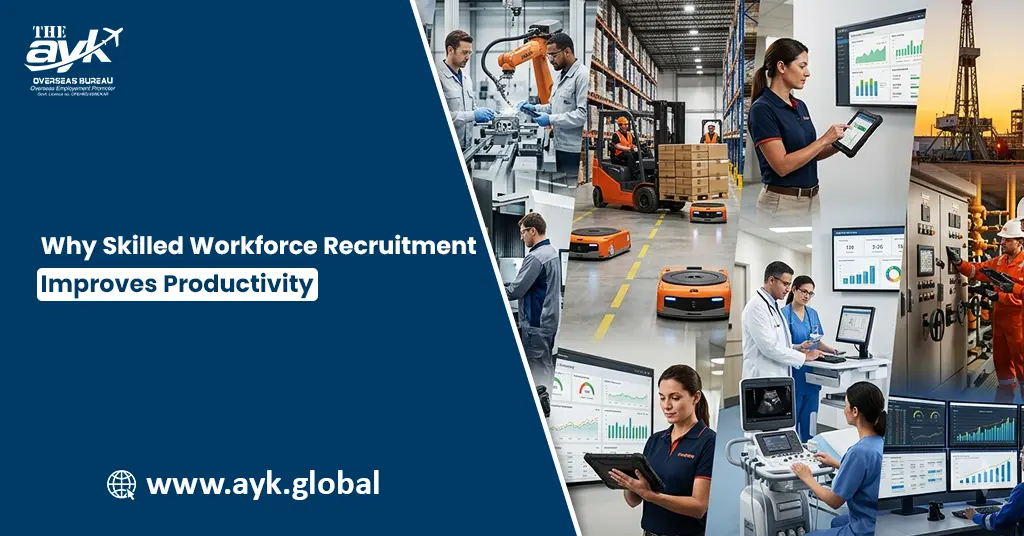
Why Skilled Workforce Recruitment Improves Productivity
Published: June 23, 2026 | Views: 31
Introduction
Productivity is one of the most important factors influencing business success. Regardless of industry, organizations depend on productive employees to complete projects, serve customers, maintain quality standards, generate revenue, and support long-term growth. While technology, equipment, systems, and processes all contribute to operational performance, workforce quality remains one of the most significant drivers of productivity.
Many employers focus heavily on reducing labor costs when making recruitment decisions. However, workforce quality often has a greater impact on profitability than workforce cost alone. Skilled employees generally complete tasks faster, make fewer mistakes, require less supervision, and contribute more effectively to organizational objectives. As a result, investing in skilled workforce recruitment often generates substantial operational and financial benefits.
Industries such as construction, manufacturing, engineering, healthcare, logistics, transportation, facilities management, hospitality, and oil and gas depend heavily on workforce productivity. Even small improvements in employee performance can significantly affect project timelines, operational efficiency, customer satisfaction, and profitability.
Recruiting skilled workers is becoming increasingly important as labor shortages continue affecting global markets. Employers that prioritize workforce quality are often better positioned to maintain productivity and compete effectively. Skilled manpower has become a strategic asset that contributes directly to business performance.
Workforce productivity is not achieved by chance. It is influenced by recruitment decisions, workforce planning, employee development, leadership practices, and organizational culture. Skilled workforce recruitment serves as the foundation upon which many productivity improvements are built.
This guide explains why skilled workforce recruitment improves productivity and how employers can strengthen workforce performance through effective hiring strategies.
1. Skilled Workers Complete Tasks More Efficiently
One of the most obvious benefits of skilled workforce recruitment is improved task efficiency. Employees who possess relevant experience, technical expertise, and practical competencies can generally perform responsibilities faster and more accurately than less experienced workers.
Skilled employees understand processes, tools, equipment, and operational requirements. They require less time to learn procedures and can often begin contributing immediately after deployment. Their familiarity with industry standards allows them to complete assignments efficiently while maintaining quality.
In industries such as construction, manufacturing, logistics, and engineering, workforce efficiency directly influences project schedules and operational output. Skilled workers help organizations achieve productivity targets and reduce delays.
Employers that recruit qualified personnel often experience stronger workforce performance because employees possess the competencies required to perform effectively from the beginning.
Efficiency Benefits
Experienced workers complete tasks faster.
Less time is spent on basic training.
Operational efficiency improves significantly.
2. Workforce Quality Reduces Errors and Rework
Mistakes are costly. Errors can affect productivity, increase expenses, delay projects, reduce customer satisfaction, and create safety concerns. Workforce quality plays a major role in determining how frequently these issues occur.
Skilled workers generally make fewer mistakes because they possess stronger technical knowledge and practical experience. They understand procedures, recognize potential problems, and apply best practices consistently. This reduces the need for corrections and rework.
Rework consumes valuable resources that could otherwise be used for productive activities. Employers may incur additional labor costs, material expenses, and schedule delays when errors occur. Reducing mistakes therefore contributes directly to productivity improvement.
Organizations that prioritize workforce quality often experience stronger operational consistency and improved business performance.
Quality Benefits
Skilled workers reduce operational errors.
Less rework improves productivity.
Workforce quality supports profitability.
3. Skilled Employees Require Less Supervision
Supervision is necessary within every organization, but excessive supervision often reduces productivity. Managers who spend significant time monitoring basic tasks have fewer opportunities to focus on strategic activities and operational improvements.
Skilled employees generally work more independently because they understand job responsibilities and possess the competencies required to perform effectively. Supervisors can delegate tasks confidently and focus on broader organizational objectives.
Reduced supervision requirements improve workforce efficiency because employees spend more time performing productive work and less time seeking assistance. Management resources can be allocated more effectively across the organization.
Businesses that recruit qualified workers often achieve stronger productivity outcomes because workforce capability supports greater operational independence.
Supervision Benefits
Experienced workers operate independently.
Managers focus on strategic priorities.
Productivity increases across teams.
4. Productivity Supports Project Success
Projects depend heavily on workforce performance. Whether constructing infrastructure, manufacturing products, delivering healthcare services, managing logistics operations, or supporting industrial activities, productivity influences project outcomes directly.
Skilled workers contribute to project success by maintaining quality standards, meeting deadlines, solving problems effectively, and adapting to changing requirements. Their expertise helps organizations achieve operational objectives more consistently.
Project delays frequently occur when workforce capability does not match project requirements. Skilled manpower helps reduce these risks because employees can perform responsibilities effectively and efficiently.
Organizations that invest in workforce quality often experience stronger project performance and improved client satisfaction.
Project Performance Benefits
Skilled manpower supports timely completion.
Workforce capability improves project outcomes.
Productivity strengthens client confidence.
5. Higher Productivity Improves Profitability
Productivity and profitability are closely connected. Organizations that achieve higher output with available resources generally experience stronger financial performance. Skilled workforce recruitment contributes directly to this objective.
Employees who perform efficiently help reduce labor costs per unit of output. Fewer mistakes, less rework, stronger quality standards, and improved operational efficiency all contribute to profitability improvements. Skilled workers often generate greater value than their compensation costs alone might suggest.
Profitability benefits extend beyond direct labor savings. Improved customer satisfaction, stronger project performance, reduced turnover, and enhanced operational reliability all support long-term financial success.
Employers that prioritize workforce quality frequently achieve stronger profitability because productivity improvements influence multiple aspects of business performance.
Profitability Benefits
Higher productivity improves financial outcomes.
Workforce quality reduces operational costs.
Skilled employees generate greater value.
6. Skilled Workers Adapt Better to Change
Modern businesses operate within rapidly changing environments. New technologies, evolving customer expectations, regulatory requirements, operational processes, and market conditions require organizations to adapt continuously.
Skilled employees often adapt more effectively because they possess stronger problem-solving capabilities and broader industry knowledge. They can learn new systems, implement process improvements, and respond to operational changes with greater confidence.
Adaptability contributes to productivity because organizations can maintain performance even as circumstances evolve. Workforce flexibility becomes increasingly valuable during periods of growth, transformation, and innovation.
Businesses that recruit skilled workers are generally better prepared to respond to change and maintain operational efficiency over time.
Adaptability Benefits
Skilled employees embrace change more effectively.
Workforce flexibility improves performance.
Adaptability supports long-term growth.
7. Workforce Productivity Improves Customer Satisfaction
Customer satisfaction is directly linked to workforce performance. Whether an organization provides construction services, healthcare solutions, manufacturing products, logistics support, hospitality experiences, or industrial services, the quality of customer interactions depends heavily on employee competence.
Skilled workers generally perform tasks accurately, communicate effectively, and maintain higher quality standards. Their ability to deliver consistent results improves customer experiences and strengthens business relationships. Customers value reliability, professionalism, and timely service delivery, all of which are influenced by workforce quality.
When productivity levels are high, organizations can meet deadlines, respond to customer requests efficiently, and maintain service standards consistently. This contributes to stronger customer loyalty and repeat business opportunities. Satisfied customers are more likely to recommend services and support long-term organizational growth.
Employers that invest in skilled workforce recruitment often experience improved customer satisfaction because workforce quality directly affects service delivery and operational performance.
Customer Satisfaction Benefits
Skilled employees improve service quality.
Reliable performance strengthens client relationships.
Higher productivity enhances customer experiences.
8. Skilled Workers Improve Workplace Safety
Safety performance is another area significantly influenced by workforce quality. Industries such as construction, manufacturing, logistics, engineering, transportation, oil and gas, and facilities management rely on employees who understand operational procedures and workplace safety requirements.
Skilled workers are generally more familiar with equipment operation, hazard identification, risk management, and compliance standards. Their experience helps reduce workplace incidents and supports safer working environments. Fewer accidents contribute to stronger productivity because operational disruptions are minimized.
Safety incidents often create financial costs, project delays, legal liabilities, and reputational damage. Organizations that prioritize workforce quality reduce these risks and improve operational stability. Productivity and safety are closely connected because safe workplaces function more efficiently.
Employers that recruit skilled manpower often experience stronger safety outcomes and improved compliance performance, both of which support long-term business success.
Safety Benefits
Workforce competence improves safety performance.
Fewer incidents reduce operational disruptions.
Safety supports productivity and profitability.
9. Skilled Workforce Recruitment Reduces Employee Turnover
Employee turnover is expensive and disruptive. Organizations invest significant resources in recruitment, onboarding, training, and workforce development. When employees leave frequently, these investments must be repeated, increasing costs and reducing productivity.
Skilled workforce recruitment often improves retention because employees are better matched to organizational requirements. Workers who possess relevant competencies generally perform more successfully and experience greater job satisfaction. Employers also benefit because workforce expectations align more closely with actual job responsibilities.
Reduced turnover improves workforce stability and preserves organizational knowledge. Experienced employees contribute more effectively than newly hired workers and require less supervision. Teams function more efficiently when workforce continuity is maintained.
Organizations that prioritize workforce quality frequently achieve stronger retention outcomes and reduced workforce-related costs.
Retention Benefits
Lower turnover improves workforce stability.
Experienced employees support productivity.
Retention reduces recruitment expenses.
10. Productivity Supports Competitive Advantages
In highly competitive industries, productivity often determines organizational success. Businesses that operate efficiently can deliver projects faster, maintain stronger quality standards, control costs more effectively, and respond to customer needs more quickly than competitors.
Skilled workforce recruitment strengthens competitive advantages because qualified employees contribute directly to operational performance. Organizations gain greater flexibility and can capitalize on growth opportunities more effectively when workforce quality remains high.
Productive employees also support innovation and continuous improvement. Their expertise often helps organizations identify process enhancements, operational efficiencies, and new business opportunities. Workforce quality therefore contributes not only to current performance but also to future success.
Employers that view workforce recruitment as a strategic investment are often better positioned to compete effectively within demanding markets.
Competitive Benefits
Productivity strengthens market positioning.
Skilled employees support innovation.
Workforce quality drives long-term success.
11. Recruitment Agencies Help Employers Build Productive Teams
Professional recruitment agencies play an important role in workforce productivity. Their expertise, candidate networks, screening capabilities, and workforce planning support help employers recruit employees who contribute effectively from the beginning.
Recruitment agencies evaluate qualifications, verify experience, coordinate trade testing, conduct screening activities, and support workforce planning initiatives. These services improve recruitment accuracy and reduce the likelihood of hiring unsuitable candidates.
Employers benefit because workforce quality improves while recruitment timelines become more efficient. Professional recruitment partners also provide labor market insights that support long-term workforce strategies.
Organizations that collaborate with experienced recruitment agencies often achieve stronger hiring outcomes and improved workforce productivity.
Recruitment Agency Benefits
Professional screening improves workforce quality.
Better hiring decisions support productivity.
Workforce planning strengthens recruitment outcomes.
12. Why AYK Overseas Provides Productive Workforce Solutions
Modern employers require workforce solutions that support productivity, operational efficiency, safety, and long-term business growth. Recruiting qualified employees has become increasingly important as labor shortages continue affecting industries worldwide.
AYK Overseas Recruitment & HR Manpower Agency
License No. GL-4586-KAR
helps employers recruit skilled and unskilled manpower across construction, healthcare, logistics, manufacturing, hospitality, engineering, facilities management, transportation, oil and gas, and industrial sectors. Through workforce planning, candidate sourcing, screening, trade testing assistance, qualification verification, documentation management, compliance support, workforce mobilization, and international recruitment services, the agency helps organizations improve workforce quality.
By connecting employers with qualified workers who possess relevant skills and experience, AYK Overseas supports productivity improvement, workforce stability, project success, and operational performance. Employers gain access to workforce solutions designed to address modern recruitment challenges effectively.
Organizations that prioritize workforce quality are generally better positioned to achieve sustainable growth and maintain competitive advantages in increasingly demanding labor markets.
Workforce Productivity Solutions
Qualified workers improve operational efficiency.
Professional recruitment supports business growth.
Workforce quality strengthens organizational performance.
Conclusion
Skilled workforce recruitment is one of the most effective investments employers can make to improve productivity and strengthen business performance. Qualified employees contribute to operational efficiency, quality improvement, customer satisfaction, workplace safety, project success, and profitability.
As labor markets become increasingly competitive and workforce shortages continue affecting industries worldwide, organizations must focus on workforce quality rather than simply workforce quantity. Skilled manpower provides the expertise, reliability, and adaptability necessary for sustainable growth.
Employers that invest in strategic recruitment, workforce planning, candidate verification, and professional recruitment partnerships are generally better positioned to achieve long-term success. Productivity begins with workforce quality, and workforce quality begins with effective recruitment.
 How to Recruit Skilled Welders for GCC Construction Projects
 Step-by-Step Overseas Recruitment Process: From CV to Visa
 How BEOE Protects Pakistani Overseas Workers
 KSA Recruitment
 UAE Recruitment
 Qatar Recruitment
 Oman Recruitment
 Kuwait Recruitment
 Libya Recruitment
 Bahrain Recruitment
 Iraq Recruitment
 Malaysia Recruitment
 Malta Recruitment
 Canada Recruitment
 USA Recruitment
 Europe Recruitment
 UK Recruitment
 Romania Recruitment
 Poland Recruitment
 Bulgaria Recruitment
 Albania Recruitment
 Serbia Recruitment
 Lithuania Recruitment
 Japan Recruitment
 Turkey Recruitment
 Kyrgyzstan Recruitment
 South Korea Recruitment