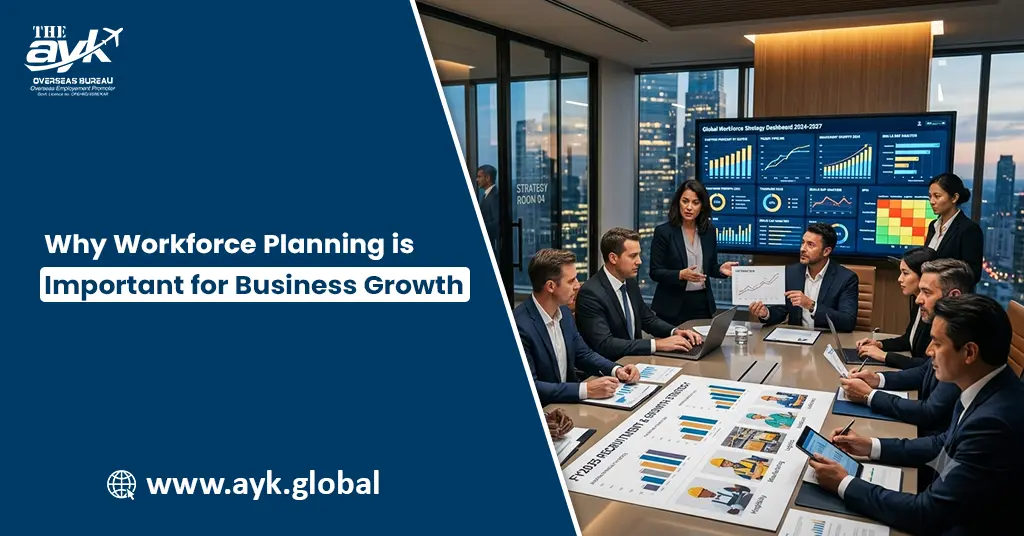
Why Workforce Planning Is Important for Business Growth
Published: June 23, 2026 | Views: 25
Introduction
Every successful business depends on people. Regardless of industry, whether construction, healthcare, manufacturing, logistics, hospitality, engineering, facilities management, transportation, or oil and gas, organizational performance is directly linked to workforce quality and availability. Companies invest heavily in equipment, technology, infrastructure, and marketing, yet many overlook one of the most important factors influencing long-term success: workforce planning.
Workforce planning is the process of analyzing current workforce capabilities, forecasting future staffing requirements, identifying skill gaps, and developing strategies to ensure the right employees are available at the right time. It allows organizations to align workforce resources with business objectives while reducing recruitment challenges and operational disruptions.
Many businesses approach hiring reactively. They recruit employees only when vacancies arise or workforce shortages become severe. While this approach may solve immediate staffing problems, it rarely supports sustainable growth. Organizations that fail to plan ahead often experience recruitment delays, productivity losses, increased labor costs, and workforce instability.
Strategic workforce planning helps employers anticipate future needs, respond to changing market conditions, and maintain a competitive advantage. It transforms recruitment from a reactive activity into a proactive business strategy that supports growth and long-term success.
This guide explains why workforce planning is essential for business growth and how organizations can benefit from implementing structured workforce strategies.
1. Workforce Planning Aligns People with Business Goals
One of the primary purposes of workforce planning is to ensure that human resources support organizational objectives. Business growth requires more than financial investment and operational expansion. Companies also need employees with the skills, experience, and capabilities necessary to execute strategic plans effectively.
Organizations frequently establish ambitious growth targets without fully considering workforce implications. Expansion into new markets, increased production capacity, infrastructure projects, service diversification, and technology adoption all require additional talent. Without proper workforce planning, companies may struggle to secure the employees needed to support these initiatives.
Workforce planning helps employers identify future staffing requirements and develop recruitment strategies aligned with business goals. This alignment ensures that workforce availability does not become a barrier to growth. Employees are viewed not simply as operational resources but as strategic assets that contribute directly to organizational success.
Businesses that integrate workforce planning into strategic decision-making often experience smoother growth and stronger workforce readiness. Planning creates a direct connection between organizational objectives and talent acquisition efforts.
Why Alignment Matters
Business growth depends on workforce availability.
Strategic workforce planning supports organizational objectives.
Aligned hiring strategies improve operational performance.
2. Reduces Labor Shortages Before They Occur
Labor shortages represent one of the most significant challenges facing employers today. Many industries struggle to recruit qualified employees due to demographic changes, economic growth, skills shortages, and increasing competition for talent. Organizations that wait until vacancies appear often find themselves reacting to workforce problems rather than preventing them.
Workforce planning helps employers anticipate staffing needs before shortages affect operations. By analyzing workforce trends and forecasting future requirements, businesses can identify potential talent gaps and take action early. Recruitment activities can begin before workforce shortages disrupt productivity.
Proactive planning also improves recruitment quality. Employers have more time to identify suitable candidates, evaluate workforce options, and develop hiring strategies. This reduces the pressure associated with urgent recruitment campaigns and improves candidate selection outcomes.
Organizations that address labor shortages proactively generally experience stronger workforce stability and fewer operational disruptions. Workforce planning transforms recruitment into a preventative strategy rather than a reactive response.
Labor Shortage Prevention
Forecasting helps identify workforce risks early.
Proactive hiring reduces staffing disruptions.
Workforce planning improves recruitment readiness.
3. Improves Recruitment Efficiency
Recruitment is more effective when organizations understand exactly what workforce resources they need. Workforce planning provides clarity regarding staffing levels, job roles, qualifications, and deployment timelines. This information improves recruitment accuracy and helps employers allocate resources more efficiently.
Without workforce planning, hiring efforts often lack direction. Recruiters may struggle to prioritize vacancies, define requirements, or identify suitable candidates. These challenges increase recruitment costs and reduce hiring effectiveness.
Structured workforce planning supports better communication between business leaders, HR teams, and recruitment partners. Everyone involved understands organizational objectives and workforce priorities. This alignment improves decision-making and accelerates recruitment activities.
Organizations that invest in workforce planning often experience shorter hiring timelines, improved candidate quality, and lower recruitment costs. Recruitment becomes more predictable and better aligned with operational needs.
Recruitment Efficiency Benefits
Clear workforce requirements improve hiring accuracy.
Planning reduces recruitment delays and confusion.
Efficient recruitment supports business growth.
4. Supports Business Expansion and New Projects
Business growth frequently involves expansion into new markets, facilities, services, or operational activities. These initiatives often require additional workforce resources and specialized skills. Workforce planning helps organizations prepare for expansion by identifying staffing needs before growth initiatives begin.
Expansion projects can fail if workforce requirements are overlooked. Companies may secure contracts, invest in infrastructure, or launch new services without ensuring sufficient workforce availability. Labor shortages can delay implementation and increase operational risks.
Workforce planning allows employers to forecast staffing requirements associated with expansion initiatives. Recruitment strategies can then be developed to support project timelines and operational goals. This proactive approach improves execution and reduces growth-related challenges.
Organizations that integrate workforce planning into expansion strategies often achieve stronger project outcomes and maintain greater operational control throughout periods of change.
Growth and Expansion Benefits
Expansion initiatives require workforce preparation.
Planning supports project execution and business growth.
Proactive recruitment improves workforce readiness.
5. Enhances Workforce Productivity
Productivity depends heavily on having the right people in the right positions. Workforce planning helps organizations allocate talent effectively and ensure that staffing levels support operational requirements. Employees can perform more efficiently when workforce structures are aligned with business needs.
Organizations experiencing workforce shortages often place additional pressure on existing employees. Increased workloads may lead to fatigue, reduced engagement, and lower productivity. Conversely, overstaffing can increase labor costs without improving performance.
Workforce planning helps employers achieve appropriate staffing levels and optimize workforce utilization. Employees receive the support needed to perform effectively while organizations maintain productivity and cost efficiency.
Improved workforce productivity contributes directly to business growth because organizations can deliver better results without unnecessary workforce disruptions or resource constraints.
Productivity Improvements
Balanced staffing levels improve operational performance.
Workforce planning supports efficient resource allocation.
Productive employees contribute to business success.
6. Helps Identify Future Skill Gaps
Technology, market conditions, and industry requirements continue evolving rapidly. Skills that are valuable today may not be sufficient tomorrow. Workforce planning helps organizations identify future competency requirements and prepare for changing workforce demands.
Skill gap analysis involves evaluating current workforce capabilities against future business needs. Employers can identify areas where additional training, recruitment, or workforce development may be required. This proactive approach helps organizations remain competitive and adaptable.
Failure to address skill gaps can limit growth opportunities and reduce organizational effectiveness. Companies may struggle to adopt new technologies, expand services, or compete within evolving markets if workforce capabilities do not keep pace with change.
Strategic workforce planning enables employers to build future-ready workforce teams capable of supporting long-term business objectives.
Why Skill Gap Analysis Matters
Future workforce requirements often differ from current needs.
Planning helps organizations prepare for change.
Skill development supports competitiveness and growth.
7. Workforce Planning Supports Effective Succession Planning
One of the most overlooked benefits of workforce planning is its role in succession planning. Many organizations focus heavily on current workforce requirements while paying little attention to future leadership and critical role replacements. However, employees retire, change careers, relocate, or pursue opportunities elsewhere. Without preparation, these departures can create significant operational challenges.
Succession planning helps organizations identify positions that are essential for business continuity and develop strategies to replace key employees when necessary. Workforce planning provides the framework required to assess future leadership requirements, identify high-potential employees, and create development pathways for future successors.
Companies that neglect succession planning often experience disruption when experienced employees leave. Valuable institutional knowledge may be lost, projects can be delayed, and operational performance may suffer. Workforce planning reduces these risks by ensuring replacement strategies are developed before vacancies occur.
Organizations that combine workforce planning with succession planning create stronger workforce resilience and long-term stability. This proactive approach supports sustainable growth and protects business continuity during periods of organizational change.
Succession Planning Benefits
Critical roles can be filled more efficiently.
Leadership continuity supports organizational stability.
Workforce planning reduces disruption caused by employee departures.
8. Improves Cost Control and Budget Forecasting
Labor costs represent one of the largest expenses for most organizations. Salaries, benefits, overtime payments, recruitment expenses, training investments, and workforce development activities all contribute significantly to operating budgets. Workforce planning helps employers manage these costs more effectively.
Without workforce planning, organizations often make hiring decisions reactively. Emergency recruitment campaigns, excessive overtime, temporary staffing arrangements, and rushed workforce expansion efforts can increase expenses substantially. These unplanned costs affect profitability and reduce financial predictability.
Strategic workforce planning enables employers to forecast future staffing requirements and budget accordingly. Recruitment activities can be scheduled proactively, workforce investments can be planned more accurately, and labor costs can be controlled more effectively. Financial planning becomes more predictable because workforce requirements are understood in advance.
Organizations that integrate workforce planning into budgeting processes often experience stronger financial performance and better resource allocation. Planning supports both operational efficiency and fiscal responsibility.
Financial Advantages
Forecasting improves workforce budgeting accuracy.
Planned recruitment reduces emergency hiring expenses.
Cost control supports long-term profitability.
9. Workforce Planning Improves Employee Retention
Employee retention is closely connected to workforce planning. Organizations that understand workforce requirements and career development needs are generally better positioned to create supportive environments where employees want to remain long term.
Many turnover problems result from inadequate workforce planning. Employees may become frustrated due to excessive workloads, limited advancement opportunities, unclear role expectations, or insufficient workforce support. These issues often develop when staffing levels and workforce structures are not aligned with operational requirements.
Workforce planning helps organizations identify potential workforce pressures before they affect employee satisfaction. Employers can adjust staffing levels, improve workload distribution, develop career pathways, and provide training opportunities that support employee engagement.
Retention improvements generate significant business value. Lower turnover reduces recruitment costs, preserves institutional knowledge, and contributes to stronger workforce stability. Organizations that prioritize workforce planning often experience higher employee satisfaction and better long-term workforce performance.
Retention Benefits
Workforce planning supports employee satisfaction.
Balanced staffing levels reduce workplace stress.
Lower turnover improves workforce stability.
10. Workforce Planning Strengthens International Recruitment Strategies
International recruitment has become an essential workforce solution for many employers. However, successful overseas hiring requires careful planning because recruitment timelines, documentation requirements, compliance obligations, and workforce mobilization activities can be complex.
Workforce planning helps employers determine when international recruitment should begin and what workforce resources will be required. By forecasting future staffing needs, organizations can avoid last-minute hiring pressures and improve international recruitment outcomes.
Planning is particularly important when recruiting large numbers of employees or sourcing specialized talent. Visa processing, travel arrangements, documentation reviews, and onboarding activities require significant coordination. Workforce planning ensures these activities align with project schedules and operational objectives.
Organizations that integrate international recruitment into workforce planning strategies often achieve stronger workforce readiness and more predictable hiring outcomes. Planning transforms international recruitment from a reactive necessity into a strategic workforce advantage.
International Recruitment Benefits
Planning improves overseas hiring efficiency.
Early preparation supports workforce mobilization.
International recruitment becomes more predictable and effective.
11. Recruitment Agencies Play an Important Workforce Planning Role
Many employers view recruitment agencies primarily as candidate sourcing providers. However, professional agencies often contribute much more value through workforce planning support and labor market expertise.
Recruitment agencies maintain extensive knowledge regarding workforce availability, hiring trends, salary expectations, labor shortages, and candidate behavior. This information helps employers make more informed workforce decisions and develop realistic recruitment strategies.
Professional agencies can assist with workforce forecasting, talent pipeline development, succession planning initiatives, and labor market analysis. Their external perspective often provides valuable insights that internal teams may not possess. These contributions improve workforce planning accuracy and support long-term business growth.
Organizations that collaborate with recruitment partners strategically often gain access to workforce intelligence that strengthens recruitment planning and workforce management efforts.
Recruitment Agency Contributions
Agencies provide labor market insights and expertise.
Workforce forecasting improves recruitment readiness.
External knowledge supports better workforce decisions.
12. Workforce Planning Creates Sustainable Business Growth
Ultimately, workforce planning is not simply an HR activity. It is a business strategy that influences productivity, profitability, workforce stability, customer satisfaction, and organizational growth. Companies that plan workforce requirements effectively are generally better positioned to achieve long-term success.
Sustainable growth requires more than increasing revenue or expanding operations. Organizations must also ensure that workforce capabilities evolve alongside business objectives. Workforce planning creates the structure needed to align talent acquisition, employee development, succession planning, and workforce management with future goals.
Businesses that neglect workforce planning often find themselves reacting to workforce challenges rather than preparing for them. Recruitment delays, labor shortages, skill gaps, turnover issues, and productivity losses can limit growth opportunities and create unnecessary risks.
AYK Overseas Recruitment & HR Manpower Agency (License No. GL-4586-KAR) works with employers to support workforce planning, manpower supply, international recruitment, and long-term workforce development. By helping organizations build proactive workforce strategies, professional recruitment partners contribute directly to sustainable business growth.
Workforce planning should be viewed as an investment in future success. Organizations that prioritize planning today are often the businesses best prepared to thrive tomorrow.
Why Workforce Planning Matters
Planning supports sustainable organizational growth.
Proactive workforce strategies reduce business risks.
Long-term success depends on workforce readiness.
Conclusion
Workforce planning is one of the most important business strategies organizations can implement. By aligning workforce resources with business objectives, anticipating labor shortages, identifying skill gaps, supporting succession planning, improving retention, and strengthening recruitment strategies, workforce planning creates a foundation for sustainable growth.
Organizations that invest in workforce planning are better prepared to manage change, respond to market opportunities, and maintain operational stability. Rather than reacting to workforce challenges after they arise, employers can anticipate needs and develop proactive solutions that support long-term success.
As labor markets continue evolving and workforce competition intensifies, strategic workforce planning will become increasingly important. Businesses that prioritize workforce readiness today will be better positioned to achieve growth and maintain competitive advantages tomorrow.
 Employer-Focused Global Supply Chain Workforce & International Hiring Guide
 Why Employers in GCC Choose Pakistani Manpower Agencies
 Step-by-Step Overseas Job Process from Pakistan – AYK Overseas Recruitment Guide
 KSA Recruitment
 UAE Recruitment
 Qatar Recruitment
 Oman Recruitment
 Kuwait Recruitment
 Libya Recruitment
 Bahrain Recruitment
 Iraq Recruitment
 Malaysia Recruitment
 Malta Recruitment
 Canada Recruitment
 USA Recruitment
 Europe Recruitment
 UK Recruitment
 Romania Recruitment
 Poland Recruitment
 Bulgaria Recruitment
 Albania Recruitment
 Serbia Recruitment
 Lithuania Recruitment
 Japan Recruitment
 Turkey Recruitment
 Kyrgyzstan Recruitment
 South Korea Recruitment