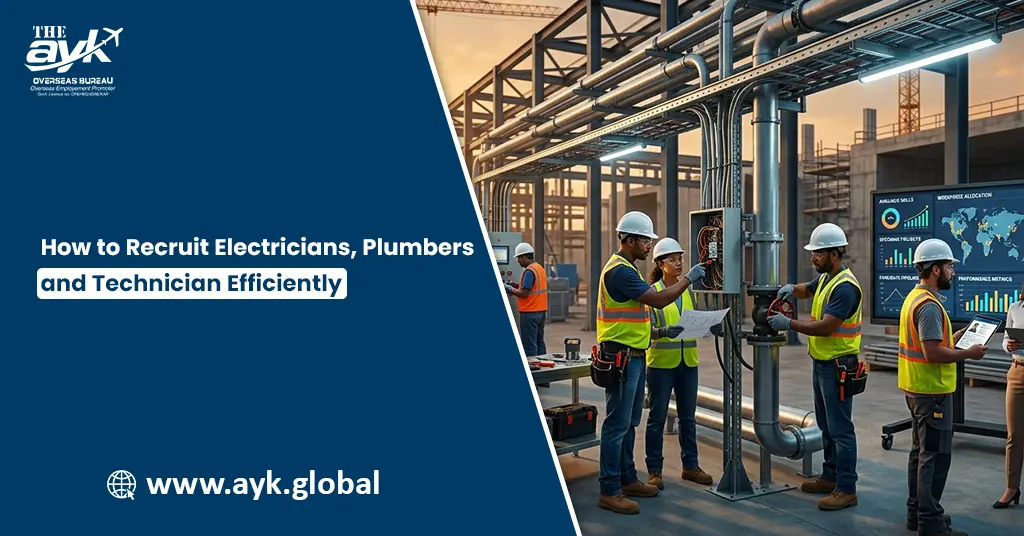
How to Recruit Electricians, Plumbers and Technicians Efficiently
Published: June 23, 2026 | Views: 27
Introduction
Electricians, plumbers, and technicians are among the most essential workforce categories across construction, manufacturing, facilities management, oil and gas, infrastructure, healthcare, hospitality, transportation, and industrial sectors. These professionals perform critical functions that directly influence productivity, safety, operational efficiency, and project success.
Despite their importance, recruiting qualified electricians, plumbers, and technicians has become increasingly difficult. Labor shortages, workforce retirements, technological advancement, growing infrastructure investments, and global competition for talent have significantly reduced the availability of skilled technical workers. Employers often struggle to fill vacancies quickly, particularly when projects require immediate workforce deployment.
Many organizations underestimate the complexity of technical recruitment. Hiring skilled tradespeople involves more than reviewing resumes and conducting interviews. Employers must verify technical competencies, assess practical abilities, confirm certifications, evaluate safety awareness, and ensure candidates possess relevant industry experience.
Recruitment delays can have serious consequences. Construction schedules may be disrupted, maintenance operations delayed, customer service affected, and operational efficiency reduced. Workforce shortages often create additional costs and limit business growth opportunities.
Employers therefore need structured recruitment strategies designed specifically for technical workforce acquisition. Effective hiring practices improve workforce quality, reduce recruitment risks, and support long-term business objectives.
This guide explains how employers can recruit electricians, plumbers, and technicians efficiently while maintaining workforce quality and operational performance.
1. Start with Workforce Planning
Successful technical recruitment begins with workforce planning. Before employers start sourcing candidates, they should clearly understand workforce requirements, project timelines, operational objectives, and future staffing needs.
Workforce planning helps organizations identify how many electricians, plumbers, and technicians will be required, when recruitment should begin, and which competencies are most important. Employers can forecast workforce demand and reduce the likelihood of staffing shortages affecting operations.
Many recruitment challenges occur because organizations wait until positions become vacant before beginning hiring activities. Technical roles often require longer recruitment timelines, making proactive planning essential.
Companies that prioritize workforce planning generally experience stronger recruitment outcomes because staffing decisions become more strategic and aligned with business goals.
Workforce Planning Benefits
Forecasting improves workforce readiness.
Recruitment becomes more proactive.
Staffing shortages are reduced.
2. Define Technical Requirements Clearly
One of the most common recruitment mistakes employers make is failing to define workforce requirements accurately. Technical positions often involve specialized responsibilities that require specific competencies, certifications, and practical experience.
Electricians may need expertise in industrial systems, commercial installations, automation technologies, or power distribution. Plumbers may require experience with residential, commercial, or infrastructure projects. Technicians may specialize in HVAC systems, maintenance operations, instrumentation, automation, or industrial equipment.
Clearly defined job requirements improve recruitment accuracy because employers can focus evaluations on relevant competencies. Candidate sourcing becomes more efficient, and unsuitable applications decrease significantly.
Organizations that establish detailed workforce specifications often achieve stronger hiring outcomes and improved workforce quality.
Requirement Definition Benefits
Clear expectations improve candidate matching.
Recruitment efficiency increases.
Workforce quality improves.
3. Focus on Skills Rather Than Titles
Job titles often vary between industries, countries, and employers. Two candidates may hold similar titles but possess very different skill sets. Employers should therefore focus on competencies rather than titles alone.
Recruitment evaluations should examine practical experience, technical capabilities, certifications, project exposure, and operational knowledge. Understanding what candidates can actually do is more important than understanding what their previous positions were called.
For example, an industrial electrician may possess skills that differ significantly from a residential electrician. Likewise, maintenance technicians may have expertise in areas that general technicians do not. Skill-based evaluations improve recruitment accuracy.
Employers that prioritize competencies over titles generally make stronger hiring decisions and build more capable workforce teams.
Skill-Based Recruitment Benefits
Competencies become the primary focus.
Candidate evaluations improve significantly.
Workforce quality increases.
4. Verify Certifications and Credentials
Technical positions often require certifications, licenses, permits, or specialized training. Employers should verify these qualifications carefully before making hiring decisions.
Certification verification confirms that candidates meet industry standards and regulatory requirements. It also provides evidence of formal training and technical competency. Employers gain greater confidence when qualifications are independently validated.
Verification activities may include reviewing trade certifications, technical licenses, educational credentials, safety training records, and professional memberships. These checks help reduce recruitment risks and improve workforce reliability.
Organizations that verify credentials thoroughly often experience stronger compliance outcomes and improved workforce performance.
Credential Verification Benefits
Qualifications are confirmed accurately.
Compliance risks are reduced.
Workforce credibility improves.
5. Conduct Technical Interviews
Technical interviews provide valuable insight into candidate capabilities. Unlike general interviews, technical evaluations focus specifically on industry knowledge, practical experience, problem-solving abilities, and job-related competencies.
Employers can ask candidates to explain technical procedures, discuss previous projects, describe troubleshooting activities, and demonstrate understanding of operational requirements. Responses reveal both technical knowledge and practical experience.
Technical interviews should be structured and consistent. All candidates should be evaluated according to predefined criteria that align with workforce requirements. This improves objectivity and supports better hiring decisions.
Organizations that conduct technical interviews effectively often achieve stronger recruitment outcomes and improved workforce quality.
Technical Interview Benefits
Industry knowledge is evaluated.
Candidate capabilities become clearer.
Hiring decisions improve.
6. Use Trade Testing to Confirm Skills
Trade testing remains one of the most effective methods for verifying technical workforce competencies. Practical assessments allow employers to evaluate actual performance rather than relying solely on candidate claims.
Electricians can demonstrate installation and troubleshooting abilities. Plumbers can perform practical plumbing tasks. Technicians can complete maintenance activities and equipment diagnostics. Employers gain objective evidence regarding workforce capability.
Trade testing reduces recruitment uncertainty because hiring decisions are based on demonstrated performance. Workers who pass practical assessments are generally more prepared to contribute effectively after deployment.
Organizations that integrate trade testing into recruitment processes often experience stronger workforce productivity, improved safety performance, and reduced hiring risks.
Trade Testing Benefits
Practical assessments verify skills.
Recruitment accuracy improves.
Workforce readiness increases.
7. International Recruitment Expands Access to Skilled Talent
One of the biggest challenges employers face today is the limited availability of skilled electricians, plumbers, and technicians in local labor markets. Infrastructure development, industrial expansion, commercial construction, manufacturing growth, and facilities management requirements have significantly increased demand for technical professionals.
International recruitment provides employers with access to larger talent pools and helps address workforce shortages more effectively. By sourcing workers from global labor markets, organizations can identify qualified candidates with the skills and experience needed to support operational requirements.
Many successful companies now integrate international recruitment into their workforce strategies because it improves staffing flexibility and reduces dependency on local labor availability. Skilled workers from international markets often bring valuable experience gained through diverse projects and industries.
Employers that embrace international recruitment are generally better positioned to maintain workforce readiness, reduce project delays, and support business growth. Access to global talent has become an important competitive advantage in increasingly challenging labor markets.
International Recruitment Benefits
Global talent pools expand workforce options.
Labor shortages become easier to manage.
International hiring supports business growth.
8. Reducing Recruitment Delays Through Better Processes
Recruitment delays can have serious consequences for businesses. Projects may fall behind schedule, maintenance activities may be postponed, production targets may be missed, and customer service quality may decline. Employers therefore need hiring processes that balance speed with workforce quality.
One of the most effective ways to reduce delays is by standardizing recruitment procedures. Employers should establish clear job requirements, structured interviews, skill assessments, trade testing processes, and candidate evaluation criteria before recruitment begins.
Maintaining candidate databases and workforce pipelines also improves hiring speed. When suitable candidates have already been identified, recruitment activities can proceed more efficiently. Organizations spend less time searching for talent and more time evaluating qualified applicants.
Employers that optimize recruitment workflows often fill technical positions more quickly while maintaining high workforce standards. Efficient hiring processes contribute directly to operational success.
Recruitment Efficiency Benefits
Structured processes reduce hiring timelines.
Candidate pipelines improve workforce availability.
Faster recruitment supports productivity.
9. Building Long-Term Technical Talent Pipelines
Technical recruitment should not be viewed as a one-time activity. Organizations that consistently require electricians, plumbers, technicians, and other skilled professionals benefit significantly from long-term talent pipeline development.
A talent pipeline is a network of qualified candidates who may be available for future opportunities. Employers can build these pipelines through recruitment partnerships, workforce databases, vocational institutions, training centers, apprenticeship programs, and international sourcing initiatives.
Long-term talent pipelines improve workforce planning because organizations have access to candidates before urgent staffing needs arise. Recruitment becomes more proactive and less dependent on emergency hiring efforts.
Businesses that invest in talent pipeline development often experience stronger workforce stability and greater flexibility when responding to growth opportunities.
Talent Pipeline Advantages
Future workforce needs are addressed proactively.
Candidate availability improves significantly.
Recruitment risks decrease.
10. Workforce Retention Supports Recruitment Success
Recruiting qualified technical workers is important, but retaining them is equally critical. High turnover rates create additional recruitment requirements, increase costs, and reduce workforce stability.
Employers can improve retention by offering competitive compensation, career development opportunities, safe working environments, recognition programs, and effective leadership. Workers who feel valued are generally more likely to remain with the organization.
Retention strategies help preserve workforce knowledge and improve operational consistency. Experienced employees contribute significantly to productivity and require less supervision than newly hired workers.
Organizations that balance recruitment and retention effectively often achieve stronger workforce performance and lower staffing costs.
Retention Benefits
Experienced workers remain productive longer.
Turnover costs decrease significantly.
Workforce stability improves performance.
11. Recruitment Agencies Improve Technical Hiring Outcomes
Professional recruitment agencies play an important role in technical workforce acquisition. Their expertise, industry knowledge, candidate networks, and workforce planning capabilities help employers overcome recruitment challenges more effectively.
Recruitment agencies maintain databases of qualified electricians, plumbers, technicians, engineers, operators, maintenance specialists, and industrial professionals. Employers benefit because candidate sourcing becomes faster and more efficient.
Agencies also support workforce screening, trade testing coordination, qualification verification, documentation management, international recruitment, and workforce mobilization activities. These services improve workforce quality while reducing administrative burdens.
Organizations that collaborate with experienced recruitment agencies often achieve stronger hiring outcomes and greater workforce readiness.
Recruitment Agency Benefits
Candidate access improves significantly.
Professional screening enhances workforce quality.
Recruitment expertise supports business objectives.
12. Why AYK Overseas Helps Employers Recruit Technical Workers
Finding qualified electricians, plumbers, and technicians requires expertise, workforce networks, technical evaluations, and international recruitment capabilities. Employers need recruitment partners who understand technical workforce requirements and can deliver qualified candidates efficiently.
AYK Overseas Recruitment & HR Manpower Agency
License No. GL-4586-KAR
helps employers recruit electricians, plumbers, HVAC technicians, maintenance specialists, machine operators, welders, industrial technicians, engineering support staff, and other technical workforce categories across multiple industries.
The agency provides workforce planning support, candidate sourcing, screening, trade testing assistance, qualification verification, compliance coordination, documentation management, workforce mobilization, and international recruitment solutions. These services help employers reduce hiring risks and improve workforce quality.
By connecting organizations with qualified technical professionals, AYK Overseas supports productivity, operational efficiency, workforce stability, and long-term business growth. Employers gain access to manpower solutions designed specifically for technical workforce requirements.
Technical Recruitment Solutions
Qualified workers improve operational performance.
Professional recruitment reduces hiring risks.
International sourcing expands workforce access.
Conclusion
Recruiting electricians, plumbers, and technicians efficiently requires a structured approach that combines workforce planning, candidate screening, certification verification, technical interviews, trade testing, talent pipeline development, retention strategies, and international recruitment solutions.
As labor shortages continue affecting technical workforce categories worldwide, employers must adopt proactive recruitment strategies that prioritize workforce quality and long-term workforce readiness. Skilled technical professionals remain essential for productivity, operational efficiency, project success, and business growth.
Organizations that invest in effective technical recruitment processes are better positioned to secure qualified talent, reduce staffing risks, and maintain competitive advantages in increasingly demanding labor markets.
 How to Choose the Best Overseas Recruitment Agency in Pakistan for International Hiring (2026 Guide)
 Healthcare Recruitment Trends in GCC Countries
 KSA Recruitment
 UAE Recruitment
 Qatar Recruitment
 Oman Recruitment
 Kuwait Recruitment
 Libya Recruitment
 Bahrain Recruitment
 Iraq Recruitment
 Malaysia Recruitment
 Malta Recruitment
 Canada Recruitment
 USA Recruitment
 Europe Recruitment
 UK Recruitment
 Romania Recruitment
 Poland Recruitment
 Bulgaria Recruitment
 Albania Recruitment
 Serbia Recruitment
 Lithuania Recruitment
 Japan Recruitment
 Turkey Recruitment
 Kyrgyzstan Recruitment
 South Korea Recruitment