Working abroad is one of the biggest career decisions a person can make. For many Pakistani workers and professionals, overseas employment is not just a job opportunity but a life-changing move that can improve their financial stability, career growth, and future security for their families.
However, the biggest challenge is not finding a job, but understanding the complete overseas recruitment process. Many applicants get confused between CV preparation,employer selection, documentation, embassy procedures, and work visa approval.This confusion often leads to delays, mistakes, or even fraud by fake agents
This guide explains the entire process step by step, from preparing your CV to receiving your work visa and traveling abroad. By following these steps, you can move forward with confidence and clarity.
Why Understanding the Process Matters
Most people fail not because they are unqualified, but because they do not understand how overseas recruitment actually works.
Common problems include:
• Submitting weak or incorrect CVs
• Applying through unverified agents
• Providing incomplete documents
• Not understanding visa requirements
• Falling victim to scams
• Traveling on visit visas instead of work visas
A clear step-by-step approach helps you avoid these risks and increases your chances of success.
Step 1: Self-Assessment and Career Planning
Before applying for overseas jobs, you must first assess yourself properly.
Ask yourself these questions:
• What is my skill level
• What experience do I have
• Which country suits my profile
• Am I ready to live abroad
• What salary do I expect
For example:
• If you are a construction worker, Gulf countries may be best.
• If you are a nurse, Germany or UK could be ideal.
• If you work in IT, Poland, Romania, or UAE might suit you.
A strong plan makes the entire recruitment journey smoother.
Step 2: Preparing a Professional CV
Your CV is your first impression to international employers. A poorly written CV can get rejected even if you are highly skilled.
A good overseas CV should include:
• Full name
• Contact details
• Professional summary
• Work experience
• Skills
• Education
• Certifications
• Passport details
• Language skills
Avoid long paragraphs. Use bullet points. Keep it simple, clear, and professional.
For skilled workers, attach certificates. For labor jobs, include experience proof such as employer letters or pictures of your work if available.
Many candidates fail at this stage simply because their CV does not match international standards.
Step 3: Finding Verified Job Opportunities
Once your CV is ready, the next step is finding legitimate overseas job opportunities.
You should:
• Avoid random Facebook ads
• Avoid unknown WhatsApp agents
• Avoid paying money before seeing a real job offer
Instead, apply through licensed recruitment agencies or official company portals.
A trusted recruitment agency connects you with real employers and ensures that the job offer is genuine.
Step 4: Job Application Submission
After selecting a job, your CV is submitted to the employer.
The employer may review your profile based on:
• Your experience
• Your skills
• Your previous work history
• Your age
• Your physical fitness, in some cases
At this stage, patience is important. Employers receive hundreds of applications, so response time may vary.
Step 5: Employer Interview
If your profile matches the job requirements, the employer will call you for an interview.
Interviews can be:
• Online via Zoom
• Over phone
• In-person through the agency
Common interview questions include:
• What is your experience
• Why do you want to work abroad
• Can you handle long working hours
• Are you comfortable with the job location
A good recruitment agency prepares you for this interview so you can perform confidently.
Step 6: Job Offer Letter
If you pass the interview, the employer issues a formal job offer letter.
• Job title
• Salary
• Working hours
• Accommodation details
• Medical coverage
• Contract duration
You should never accept a job verbally. Always demand a written contract.
A reliable agency reviews this contract to ensure fair terms before you sign.
Step 7: Document Collection and Verification
Once the job is confirmed, you must prepare all required documents for visa processing.
Common documents include:
• Valid passport
• CNIC
• Educational certificates
• Experience letters
• Police clearance certificate
• Medical report
• Passport-size photographs
Any mistake or missing document can delay your visa or cause rejection.
Step 8: Medical Examination
Most countries require a medical test before issuing a work visa.
This usually includes checks for:
• Blood pressure
• Hepatitis
• Tuberculosis
• HIV
• General physical fitness
Only approved medical centers can issue valid reports.
If you fail the medical test, your visa application may be rejected.
Step 9: Police Clearance Certificate
A police clearance certificate proves that you do not have a criminal record.
This document is mandatory for most countries, especially in Europe.
Without this certificate, your visa application cannot proceed.
Step 10: Employer Applies for Work Visa Approval
At this stage, the employer submits your details to their government immigration department.
This is where sponsorship begins.
The employer requests:
• Work permit
• Visa approval
• Employment authorization
This process may take several weeks depending on the country.
Step 11: Embassy Visa Submission
Once the employer receives approval, your documents are submitted to the relevant embassy.
You may need to:
• Visit the embassy
• Provide fingerprints
• Complete biometric verification
The embassy reviews your application before issuing the visa.
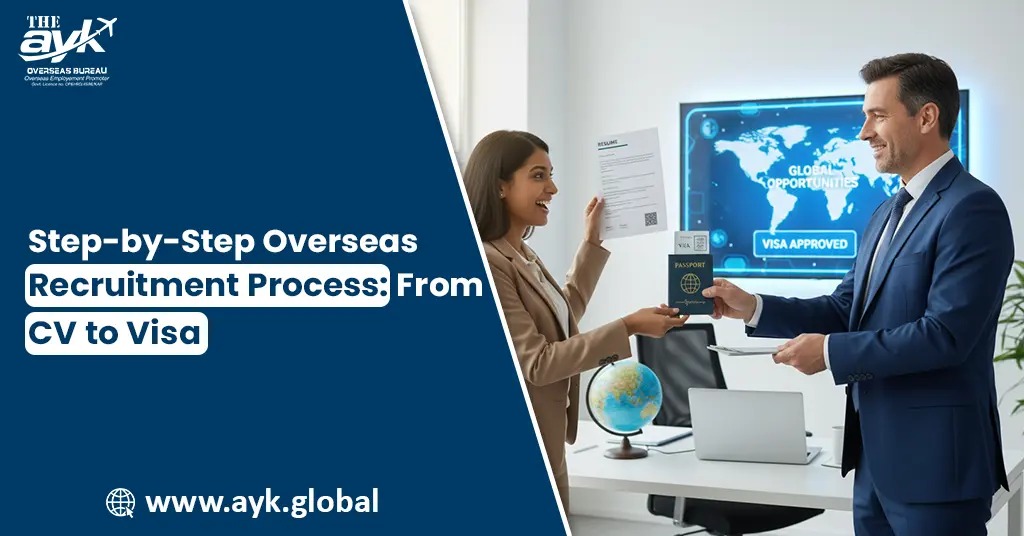
Step 12: Visa Approval and Stamping
If everything is correct, your work visa is approved and stamped in your passport.
At this point, your legal right to work abroad is confirmed.
This is one of the most important milestones in the entire recruitment process.
After visa approval, your travel is arranged.
In many cases:
• The employer provides an air ticket
• The agency arranges your flight
• You receive travel guidance
You are also given a pre-departure briefing about:
• Work culture
• Local laws
• Living conditions
• Workplace expectations
Step 14: Arrival in Destination Country
When you land in your new country, your employer or company representative usually receives you at the airport.
You are then taken to:
• Company accommodation
• Worksite
• Training center
This marks the official start of your overseas employment journey.
Step 15: Onboarding and Employment
During the first few days, you go through onboarding which includes:
• Work orientation
• Safety training
• Contract explanation
• Work schedule briefing
Your employer assigns your duties, and you begin your job.
Common Mistakes to Avoid
Many people make serious mistakes during the recruitment process.
Avoid these at all costs:
• Paying money to unregistered agents
• Traveling on visit visa for work
• Accepting verbal job promises
• Submitting fake documents
• Ignoring contract details
Always work with a licensed recruitment agency that follows legal procedures.
How a Recruitment Agency Helps
A professional recruitment agency supports you at every stage:
• CV preparation
• Job matching
• Interview coaching
• Document verification
• Medical arrangement
• Visa submission
• Travel planning
• Post-arrival support
This reduces your stress and increases your success rate.
How Long Does the Process Take
On average, the overseas recruitment process takes between 4 to 12 weeks depending on:
• Country
• Job type
• Employer requirements
• Embassy workload
Gulf visas are usually faster, while European visas take longer due to stricter checks.
Cost of Overseas Recruitment
Costs vary depending on:
• Country
• Job category
• Employer policy
Some employers cover visa and ticket costs, while others charge partial fees.
A transparent agency always explains all costs clearly before starting the process.
Final Words
The journey from CV to visa may seem long, but when done correctly, it leads to real opportunities and financial growth.
Understanding each step helps you stay confident, avoid scams, and make smart decisions.
Overseas employment is not just about leaving your country, it is about building a better future.
If you follow this step-by-step process and work with a trusted agency, your chances of success increase dramatically.