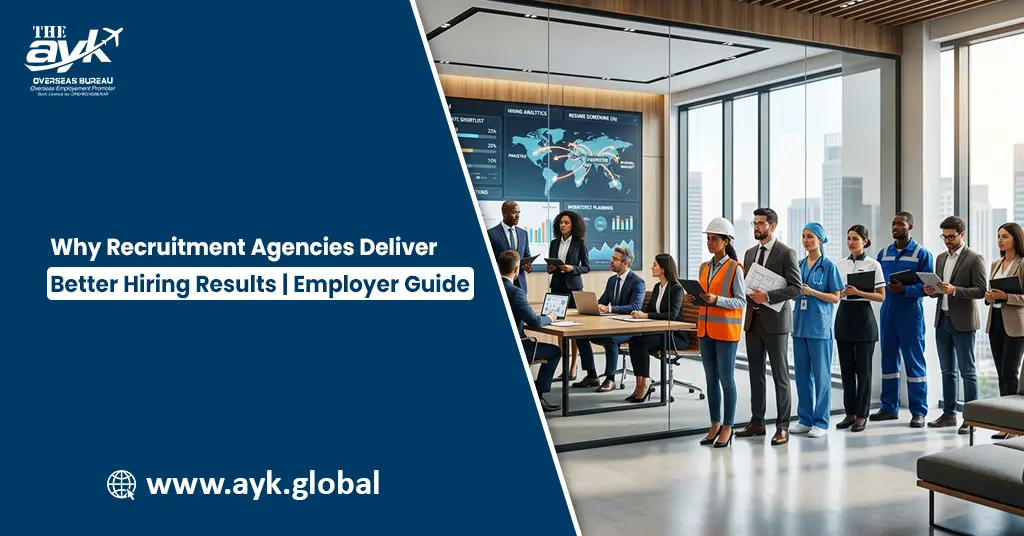
Employer Guide to Smarter Hiring, Global Talent Access & Structured Recruitment Systems
Published: June 29, 2026 | Views: 16
The Real Difference Between Direct Hiring and Agency Hiring
In international recruitment, employers often face a choice between direct recruitment and hiring through professional recruitment agencies. At first glance, direct hiring may seem more cost-effective and simple because it removes the middle layer. However, in practice, it often leads to delays, inconsistent candidate quality, higher risk, and operational inefficiencies.
Professional recruitment agencies, on the other hand, specialize in managing end-to-end hiring processes with structured systems, verified talent pools, and global sourcing networks. This results in faster hiring, better workforce quality, and reduced long-term costs.
For industries such as construction, engineering, healthcare, hospitality, logistics, manufacturing, and oil & gas, the difference between these two approaches can significantly impact project success and workforce stability.
Why Direct Recruitment Often Fails in International Hiring
Direct recruitment may work in local hiring environments, but it becomes complex and risky when applied to international workforce needs. Employers often struggle with sourcing candidates, verifying skills, managing documentation, and handling visa processes.
Without a structured system, direct recruitment becomes time-consuming and inconsistent. HR teams may also lack access to global talent pools, which limits candidate quality.
Another major issue is verification. Without proper screening infrastructure, employers may end up hiring candidates who do not fully meet job requirements.
These challenges make direct recruitment less reliable for large-scale or urgent international hiring.
How Recruitment Agencies Provide Structured Hiring Systems
Professional recruitment agencies operate through structured and well-organized systems. These systems include candidate sourcing, pre-screening, skill testing, documentation verification, and deployment coordination.
This structured approach ensures that every stage of recruitment is handled efficiently and consistently.
Instead of starting from scratch for each hiring need, agencies maintain ready-to-deploy candidate databases, which significantly reduces hiring time.
This system-driven approach improves accuracy and reduces operational risk for employers.
Access to Global Talent Pools
One of the biggest advantages of recruitment agencies is their access to global talent networks. Unlike direct hiring, which is often limited to local or internal sources, agencies operate across multiple countries and industries.
This allows employers to access a much larger and more diverse pool of skilled and semi-skilled workers.
It also increases the chances of finding candidates with the exact skill set required for specialized roles.
Global access ensures better matching between job requirements and candidate capabilities.
Faster Hiring Through Pre-Screened Candidates
Recruitment agencies maintain pre-screened candidate databases, which include workers who have already been evaluated for skills, experience, and documentation.
This eliminates the need for employers to start the hiring process from zero every time.
As a result, hiring cycles become significantly faster, especially for urgent manpower requirements.
Pre-screening also improves candidate quality because only qualified individuals are forwarded for selection.
Better Compliance and Documentation Handling
International recruitment involves complex legal and documentation requirements. These include visa processing, work permits, contracts, and regulatory compliance.
Recruitment agencies are experienced in managing these processes according to destination country regulations.
This reduces the risk of visa rejection, legal issues, or delays in deployment.
Proper documentation handling ensures smoother and safer international hiring.
Role of Recruitment Agencies in Reducing Hiring Risk
Hiring risks such as skill mismatch, fraud, or incomplete documentation are common in direct recruitment models.
Recruitment agencies reduce these risks through multi-stage verification systems and structured candidate assessments.
They ensure that only genuine, skilled, and job-ready candidates are presented to employers.
This significantly improves workforce reliability and reduces long-term operational problems.
Advanced Cultural Integration Strategies
Advanced integration strategies focus on building harmony between workers from different cultural backgrounds. This includes structured onboarding programs, workplace guidelines, and continuous training.
Companies that actively manage integration experience fewer misunderstandings and higher productivity.
This creates a more stable and efficient international workforce environment.
Leadership Role in Multicultural Teams
Leadership plays a critical role in managing culturally diverse teams. Strong leaders ensure clear communication, fair treatment, and consistent expectations across all workers.
They also act as mediators in case of misunderstandings or conflicts.
Effective leadership improves trust, cooperation, and team performance.
Conflict Management in International Workforces
Conflicts may arise due to cultural misunderstandings, communication gaps, or different work habits.
Structured conflict resolution systems help address issues quickly and fairly.
This ensures that workplace harmony is maintained and productivity is not affected.
Technology in Cross-Cultural Communication
Technology supports better communication in international teams through messaging platforms, video conferencing, and translation tools.
These tools reduce language barriers and improve coordination between teams working in different regions.
This enhances efficiency and reduces miscommunication.
Common Employer Mistakes in Cultural Management
One common mistake is ignoring cultural differences during recruitment and onboarding.
Another mistake is assuming that all workers will automatically adapt without guidance.
Lack of structured communication systems also leads to misunderstandings and inefficiencies.
Role of AYK Overseas Recruitment & HR Manpower Agency
Professional recruitment agencies help employers manage cultural differences by preparing candidates before deployment and ensuring better job-role matching.
AYK Overseas Recruitment & HR Manpower Agency provides structured recruitment solutions that support international employers in building culturally balanced and productive teams.
Conclusion
Cultural differences are a key factor in international hiring success. When managed properly through structured systems, leadership, and communication strategies, they can enhance rather than hinder workforce performance.
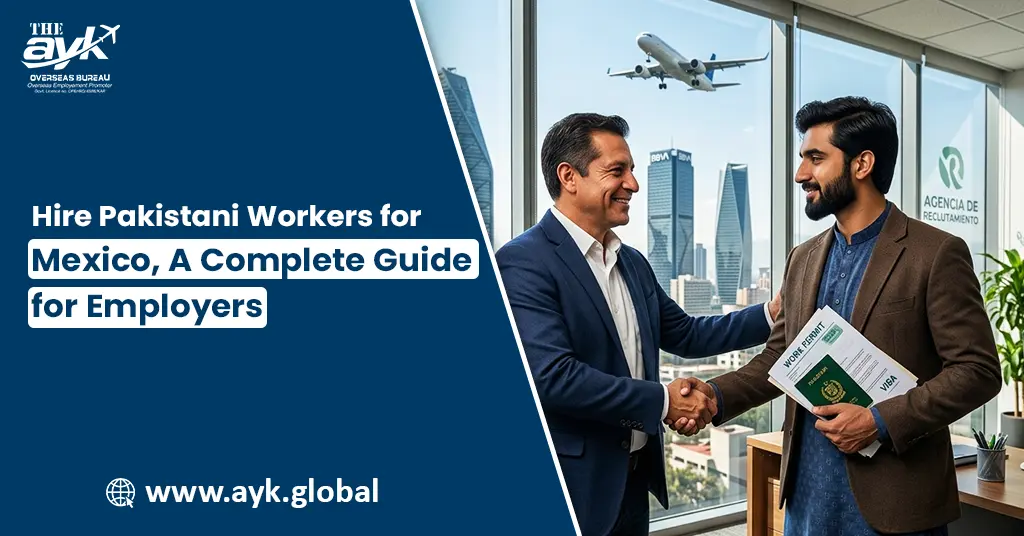 Hire Pakistani Workers for Mexico, A Complete Guide for Employers
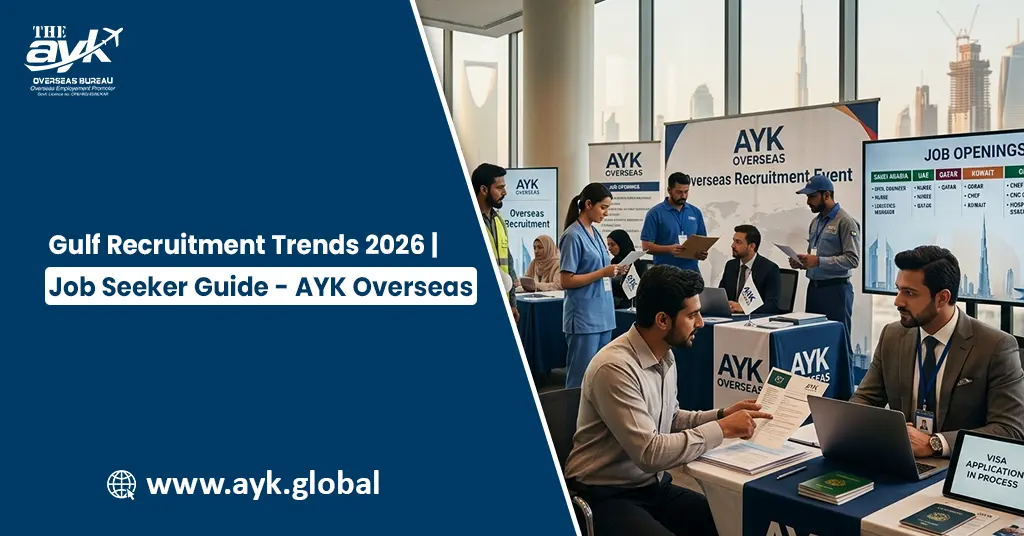 Gulf Recruitment Trends 2026: What Job Seekers Need to Know
 Recruitment Agency vs In-House Hiring: Which Is Better?
 KSA Recruitment
 UAE Recruitment
 Qatar Recruitment
 Oman Recruitment
 Kuwait Recruitment
 Libya Recruitment
 Bahrain Recruitment
 Iraq Recruitment
 Malaysia Recruitment
 Malta Recruitment
 Canada Recruitment
 USA Recruitment
 Europe Recruitment
 UK Recruitment
 Romania Recruitment
 Poland Recruitment
 Bulgaria Recruitment
 Albania Recruitment
 Serbia Recruitment
 Lithuania Recruitment
 Japan Recruitment
 Turkey Recruitment
 Kyrgyzstan Recruitment
 South Korea Recruitment