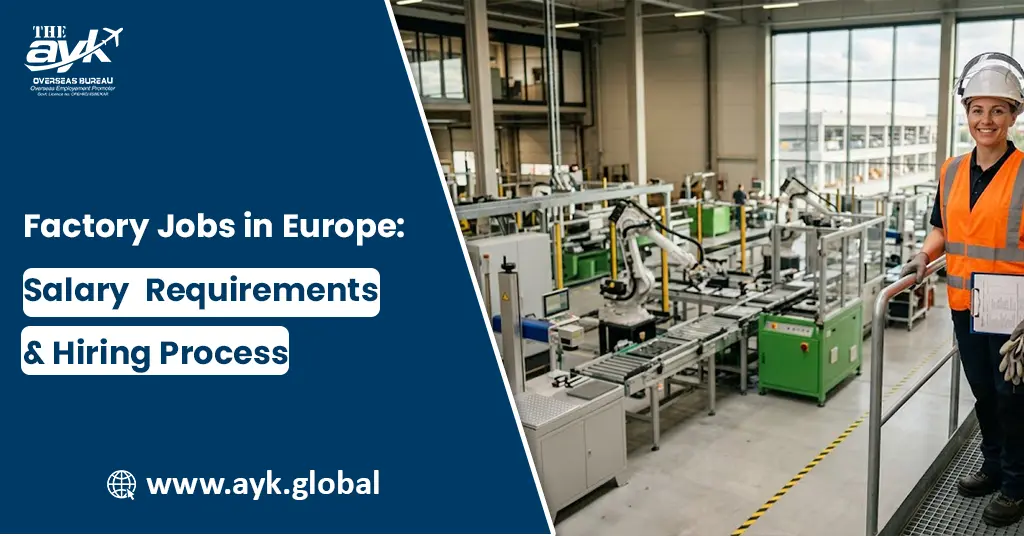
Factory Jobs in Europe: Salary, Requirements & Hiring Process
Published: July 06, 2026 | Views: 15
Factory Jobs in Europe: Salary, Requirements & Hiring Process
Factory jobs in Europe are among the most popular employment opportunities for foreign workers, especially for people from Pakistan seeking stable income, legal employment, and better living standards. In 2026, many European countries such as Germany, Poland, Romania, Hungary, Czech Republic, Italy, and Spain are actively hiring factory workers due to continuous labor shortages in manufacturing and production industries. These jobs include roles like production line worker, machine operator, quality checker, packing assistant, warehouse helper, and maintenance support staff. Factory jobs are available for both skilled and unskilled workers, making them accessible to a wide range of applicants. Employers usually offer legal work contracts, overtime pay, social benefits, and sometimes accommodation support. However, applicants must understand salary expectations, job requirements, and the hiring process before applying. This guide explains everything about factory jobs in Europe, including salaries, eligibility criteria, application process, and tips for securing employment in 2026.
1. Why Factory Jobs Are in High Demand in Europe
Factory jobs are in high demand across Europe due to the rapid growth of manufacturing, export industries, and supply chain operations. Many European countries depend heavily on industrial production for automobiles, electronics, food processing, textiles, and consumer goods. However, a large portion of the local workforce is aging or shifting toward office-based jobs, creating shortages in factory and production line work. As a result, companies rely on foreign workers to maintain production levels and meet international demand. Countries like Germany, Poland, and the Czech Republic have thousands of factories that require continuous staffing for smooth operations. Factory work is often physically demanding and involves shift-based schedules, which makes it less attractive to local workers but suitable for foreign job seekers. Governments and employers have simplified hiring procedures to attract international labor, offering legal work permits and visa sponsorship opportunities. This increasing demand ensures stable employment options for foreign workers seeking long-term job security in Europe.
2. Types of Factory Jobs Available in Europe
Europe offers a wide variety of factory jobs depending on skill level and industry. Common positions include production line workers who handle assembling and packaging tasks, machine operators who manage industrial equipment, and quality control inspectors who check products for defects. Other roles include warehouse assistants, forklift operators, packing staff, maintenance helpers, and cleaning staff within factory environments. Skilled workers may also find jobs as technicians, electricians, or mechanical operators depending on the factory type. Industries such as food processing, automotive manufacturing, electronics, textiles, and pharmaceuticals regularly hire foreign workers. Many factory jobs do not require advanced education, making them suitable for unskilled workers who are willing to perform physical labor. However, skilled positions may require technical training or prior experience. Employers often provide on-the-job training to help new workers understand safety rules, machinery operation, and production processes. This variety makes factory jobs one of the most accessible employment options in Europe for international workers.
3. Salary and Benefits for Factory Workers in Europe
Factory workers in Europe receive competitive salaries compared to many other regions, along with additional benefits that make these jobs attractive for foreign workers. Salary levels vary depending on the country, job role, experience, and shift type. Skilled machine operators and technicians usually earn higher wages than general production workers. In addition to monthly salaries, many employers offer overtime pay, night shift allowances, and performance-based bonuses. Workers may also receive benefits such as paid annual leave, health insurance, pension contributions, and workplace safety coverage under European labor laws. Some companies provide free or subsidized accommodation, transportation, and meals to support foreign employees. Factory jobs often include structured working hours, ensuring workers are protected from exploitation. With experience, employees may receive salary increases or promotions to supervisory roles. These financial and social benefits make factory jobs a stable and practical option for foreign workers seeking long-term employment in Europe.
4. Requirements for Factory Jobs in Europe
To work in factory jobs in Europe, Pakistani workers must meet certain basic requirements depending on the employer and country. Most jobs require a valid passport and a confirmed job offer from a registered employer. For unskilled factory roles, formal education is usually not necessary, but physical fitness and the ability to perform repetitive tasks are important. Skilled positions such as machine operators or technicians may require technical training or prior experience in manufacturing. Many employers require basic English communication skills to understand safety instructions and workplace guidelines. A medical fitness certificate and police clearance certificate are often needed during the visa process. Workers must also be willing to work in shift-based environments, including night shifts and weekends if required. Following workplace safety rules is mandatory in all European factories. Meeting these requirements increases the chances of getting hired and ensures smooth visa processing and legal employment in Europe.
5. Hiring Process for Factory Jobs in Europe
The hiring process for factory jobs in Europe is generally straightforward but must be followed carefully to ensure legal employment. It usually starts with submitting a professional CV to a registered employer or licensed recruitment agency. The CV should clearly mention work experience, skills, and availability for shift-based work. After shortlisting, employers may conduct an online or in-person interview to assess the applicant’s physical ability, communication skills, and understanding of job responsibilities. If selected, the employer issues a formal job offer or employment contract, which is a key document for the visa application. The employer may also apply for a work permit or provide sponsorship depending on the country’s immigration system. Once the work permit is approved, the applicant submits a visa application at the embassy along with required documents such as passport, medical certificate, police clearance, and job contract. After verification and approval, the worker receives a visa and can travel to Europe to begin employment legally.
6. Best Countries for Factory Jobs in Europe
Several European countries offer strong opportunities for factory workers due to ongoing labor shortages in manufacturing industries. Germany is one of the top destinations, offering high wages and stable employment in automotive, electronics, and machinery production. Poland and Romania are also popular because they provide easier visa processes and a large number of entry-level factory jobs. Hungary, Czech Republic, and Slovakia have growing manufacturing sectors that frequently hire foreign workers for assembly lines and packaging roles. Italy and Spain offer opportunities in food processing, textiles, and consumer goods factories, especially for seasonal and permanent positions. The Netherlands and Belgium are known for advanced manufacturing industries and better working conditions. Each country has different salary levels, language requirements, and visa rules, so applicants should choose based on their qualifications and experience. Selecting the right country improves chances of securing a stable factory job with legal work permits and good benefits.
7. Common Challenges in Factory Jobs in Europe
While factory jobs in Europe offer stability and income opportunities, foreign workers may face certain challenges. One of the most common challenges is working in shift-based schedules, which may include night shifts, long hours, and weekend work. The physical nature of factory jobs can also be demanding, as workers often perform repetitive tasks such as lifting, packing, or standing for long periods. Language barriers can create difficulties in understanding instructions or communicating with supervisors, especially in non-English-speaking countries. Adjusting to strict workplace rules and safety regulations may also take time for new workers. Additionally, living away from family and adapting to a new culture can be emotionally challenging. However, most employers provide training, safety guidance, and support to help workers adjust. With time, experience, and discipline, these challenges become easier to manage, allowing workers to build stable careers in the European manufacturing sector.
8. Tips to Get Factory Jobs in Europe Easily
Getting a factory job in Europe becomes easier with proper preparation and planning. Workers should start by creating a simple and professional CV that highlights any previous experience in manufacturing, packing, or manual labor. Even basic experience can increase chances of selection. Applying through verified recruitment agencies and official job portals is important to avoid fraud or fake job offers. Learning basic English can help in understanding instructions and improving communication with supervisors. Applicants should also be physically prepared for shift-based and physically demanding work. It is important to avoid agents who demand large upfront payments without providing verified job offers. Preparing documents such as passport, medical certificate, and police clearance in advance can speed up the process. Consistency in applying to multiple genuine job postings also increases success rates. Following these steps improves the chances of securing a legal and stable factory job in Europe.
9. Future Scope of Factory Jobs in Europe
The future of factory jobs in Europe remains strong due to continuous growth in manufacturing and industrial production. European countries are heavily investing in automation, electric vehicles, renewable energy equipment, and advanced production technologies. This expansion is expected to create more job opportunities for both skilled and unskilled workers. While automation may reduce some manual tasks, it will also increase demand for machine operators, technicians, and maintenance staff who can manage modern equipment. Foreign workers will continue to play an important role in filling labor shortages, especially in countries with aging populations. Governments are also expected to maintain or expand work visa programs to support industrial growth. This ensures that factory jobs will remain a stable employment option for international workers, including Pakistanis, offering long-term career possibilities, income stability, and opportunities for skill development in Europe’s evolving manufacturing sector.
10. Final Thoughts on Factory Jobs in Europe for Foreign Workers
Factory jobs in Europe provide a reliable opportunity for foreign workers seeking stable income and legal employment. With strong demand across countries like Germany, Poland, Romania, Czech Republic, and Italy, both skilled and unskilled workers can find suitable positions in manufacturing industries. However, success depends on proper preparation, genuine job applications, and understanding visa requirements. Workers should always apply through verified employers or licensed recruitment agencies to avoid fraud. Although factory work can be physically demanding and involves shift schedules, it offers competitive salaries, overtime pay, and valuable employee benefits under European labor laws. With experience, workers can also progress to higher positions such as machine operators or supervisors. Overall, factory jobs in Europe can provide long-term financial stability and a better future for foreign workers who are committed, disciplined, and willing to work in structured industrial environments.
 What Makes a Recruitment Agency Reliable and Professional?
 How to Build a Reliable Workforce for Long-Term Growth
 Skilled vs. Unskilled Manpower: Which One Is in Higher Demand Abroad?
 KSA Recruitment
 UAE Recruitment
 Qatar Recruitment
 Oman Recruitment
 Kuwait Recruitment
 Libya Recruitment
 Bahrain Recruitment
 Iraq Recruitment
 Malaysia Recruitment
 Malta Recruitment
 Canada Recruitment
 USA Recruitment
 Europe Recruitment
 UK Recruitment
 Romania Recruitment
 Poland Recruitment
 Bulgaria Recruitment
 Albania Recruitment
 Serbia Recruitment
 Lithuania Recruitment
 Japan Recruitment
 Turkey Recruitment
 Kyrgyzstan Recruitment
 South Korea Recruitment