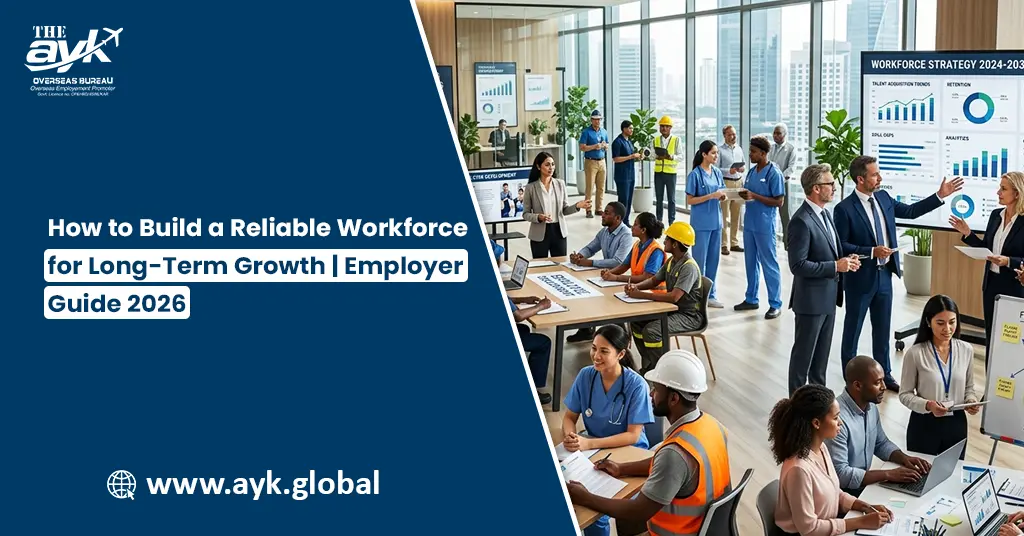
How to Build a Reliable Workforce for Long-Term Growth
Published: June 23, 2026 | Views: 22
A company's long-term success depends largely on the strength of its workforce. Regardless of industry, whether construction, healthcare, manufacturing, logistics, hospitality, facilities management, engineering, transportation, or oil and gas, organizations rely on employees to deliver services, complete projects, satisfy customers, and drive business growth. Technology, infrastructure, and financial resources are important, but people remain the foundation of sustainable business success.
Many employers focus heavily on short-term recruitment needs while overlooking the importance of building a reliable workforce capable of supporting long-term objectives. Hiring employees to fill immediate vacancies may solve current staffing problems, but long-term growth requires a broader workforce strategy that includes planning, retention, development, leadership preparation, and workforce stability.
A reliable workforce is more than a group of employees. It is a team of individuals who possess the skills, experience, commitment, and adaptability required to help an organization achieve its goals consistently over time. Reliable employees contribute to productivity, improve operational efficiency, reduce turnover costs, and strengthen business resilience.
Building such a workforce requires intentional effort. Employers must invest in workforce planning, recruitment quality, employee engagement, training, career development, and leadership succession. Organizations that prioritize these areas often experience stronger growth and greater competitiveness.
This guide explains how employers can build a reliable workforce that supports long-term business success.
1. Start with Strategic Workforce Planning
Every reliable workforce begins with a clear plan. Workforce planning helps employers understand current staffing levels, future workforce requirements, skill needs, and organizational growth objectives. Without planning, recruitment becomes reactive and workforce challenges often emerge unexpectedly.
Strategic workforce planning enables employers to forecast hiring needs before shortages occur. Businesses can identify critical roles, assess workforce risks, and develop recruitment strategies aligned with future objectives. This proactive approach improves workforce readiness and reduces disruptions.
Planning also helps organizations allocate resources effectively. Recruitment budgets, training investments, and workforce development initiatives can be aligned with business priorities. Employers gain greater control over workforce decisions and long-term staffing outcomes.
Organizations that invest in workforce planning generally experience stronger workforce stability and improved operational performance. Planning creates the foundation upon which all other workforce initiatives are built.
Why Workforce Planning Matters
Planning improves workforce readiness.
Forecasting reduces staffing disruptions.
Strategic workforce planning supports business growth.
2. Focus on Recruitment Quality, Not Just Quantity
Many employers measure recruitment success by the number of positions filled. While workforce availability is important, long-term workforce reliability depends more on employee quality than recruitment volume.
Hiring unsuitable candidates can create significant challenges. Poor performance, low engagement, increased turnover, and productivity losses often result when recruitment decisions prioritize speed over quality. Replacing employees repeatedly is expensive and disruptive.
Employers should focus on identifying candidates who possess the right skills, experience, attitude, and cultural alignment. Structured interviews, candidate screening, reference checks, and skills assessments improve recruitment accuracy and support stronger workforce outcomes.
Professional recruitment partners can also contribute by providing access to qualified candidates and helping employers evaluate workforce quality effectively. High-quality recruitment creates a stronger foundation for long-term workforce success.
Recruitment Quality Benefits
Qualified employees improve productivity.
Better hiring decisions reduce turnover.
Workforce quality supports long-term stability.
3. Develop Strong Employee Onboarding Programs
The first few weeks of employment often determine how successfully employees integrate into an organization. Effective onboarding helps workers understand expectations, workplace procedures, organizational values, and performance standards.
Many businesses underestimate the importance of onboarding. New employees may receive limited guidance and be expected to adapt independently. This can create confusion, reduce engagement, and affect productivity. Employees who feel unsupported during onboarding are also more likely to leave early.
Structured onboarding programs improve workforce reliability by helping employees become productive more quickly. Clear communication, training support, mentorship opportunities, and regular feedback contribute to stronger integration outcomes.
Organizations that invest in onboarding often experience higher retention rates and faster workforce development. Employees gain confidence and are better prepared to contribute effectively.
Onboarding Advantages
Strong onboarding accelerates productivity.
Employee confidence improves workforce performance.
Effective integration supports retention.
4. Invest in Employee Training and Development
Workforce reliability depends on continuous learning and development. Industries evolve, technologies change, customer expectations shift, and business requirements become more complex over time. Employees must develop new skills to remain effective.
Training programs help organizations improve workforce capabilities and prepare employees for future responsibilities. Technical training, leadership development, safety education, compliance instruction, and professional development initiatives all contribute to workforce growth.
Employers that invest in employee development often experience stronger engagement and retention. Workers appreciate opportunities to improve their skills and advance their careers. Training also improves productivity because employees become better equipped to perform their roles effectively.
Long-term workforce growth requires ongoing investment in employee development. Organizations that prioritize learning create more adaptable and capable workforce teams.
Training Benefits
Employee development improves workforce capability.
Training supports productivity and innovation.
Continuous learning strengthens workforce reliability.
5. Create a Positive Workplace Culture
Workplace culture influences employee behavior, engagement, collaboration, and retention. Organizations with positive cultures often attract stronger candidates and experience lower turnover rates.
A positive workplace culture is built on respect, communication, trust, fairness, and shared organizational values. Employees who feel valued and supported are generally more motivated and committed to business success. Strong cultures also improve teamwork and workplace relationships.
Negative workplace environments can undermine workforce reliability. Poor communication, inconsistent leadership, limited recognition, and workplace conflict often contribute to disengagement and turnover. These challenges affect productivity and workforce stability.
Employers should actively cultivate workplace cultures that encourage collaboration, accountability, and professional growth. Culture is a long-term workforce asset that contributes directly to organizational success.
Culture Creates Stability
Positive cultures improve employee engagement.
Strong workplace relationships support retention.
Healthy environments improve workforce performance.
6. Prioritize Employee Retention Strategies
Recruiting employees is only part of building a reliable workforce. Retaining talented workers is equally important. High turnover rates create recruitment costs, disrupt operations, and reduce workforce continuity.
Retention strategies help organizations maintain workforce stability by addressing factors that influence employee satisfaction. Competitive compensation, career development opportunities, supportive leadership, recognition programs, and work-life balance initiatives all contribute to retention.
Employers should regularly assess workforce satisfaction and identify areas where improvements can be made. Listening to employee feedback provides valuable insight into retention challenges and workforce priorities.
Organizations that prioritize retention often experience stronger workforce reliability because experienced employees remain with the business longer. Retention protects workforce investments and supports long-term growth.
Retention Advantages
Employee retention reduces workforce disruption.
Experienced workers contribute greater value.
Retention supports long-term organizational success.
7. Develop Future Leaders from Within
A reliable workforce requires strong leadership. Many organizations focus on recruiting employees for operational positions but invest little effort in preparing future managers and leaders. This approach often creates challenges when experienced supervisors or department heads leave the organization.
Leadership development should begin long before leadership positions become vacant. Employers should identify high-potential employees and provide opportunities for growth through training, mentoring, project leadership, and management responsibilities. These experiences help employees build confidence and leadership capabilities over time.
Developing leaders internally offers several advantages. Existing employees already understand organizational culture, business processes, customer expectations, and company goals. They can often transition into leadership roles more smoothly than external hires. Internal promotions also improve employee motivation because workers see clear opportunities for advancement.
Organizations that invest in leadership development create stronger workforce stability and reduce the risks associated with leadership transitions. Future leaders become prepared to support business growth and workforce continuity.
Leadership Development Benefits
Internal leaders understand company culture and objectives.
Leadership programs improve workforce stability.
Future-ready managers support long-term growth.
8. Implement Effective Succession Planning
Succession planning is closely connected to workforce reliability. Businesses often face disruptions when experienced employees retire, resign, or move into different roles. Without a clear succession strategy, organizations may struggle to fill critical positions and maintain operational performance.
Succession planning involves identifying key positions, evaluating potential successors, and preparing employees for future responsibilities. This process ensures that important knowledge and expertise remain within the organization even when workforce changes occur.
Many employers delay succession planning until a vacancy appears. Unfortunately, this reactive approach often creates unnecessary challenges. Preparing successors in advance allows organizations to manage transitions more effectively and maintain business continuity.
Reliable workforces depend on continuity. Succession planning helps preserve leadership capability, operational knowledge, and workforce stability throughout periods of organizational change.
Succession Planning Advantages
Critical positions remain protected.
Workforce transitions become smoother.
Business continuity improves significantly.
9. Build Workforce Flexibility and Adaptability
Modern businesses operate in rapidly changing environments. Economic conditions, customer expectations, technology, regulations, and market demands continue evolving. Employers therefore need workforce teams capable of adapting to change.
Workforce flexibility involves developing employees who can perform multiple responsibilities, learn new skills, and contribute across different operational areas when necessary. Flexible workforce structures improve resilience and reduce dependence on individual employees.
Cross-training programs are particularly valuable because they help employees develop broader competencies. Organizations benefit because workforce resources can be allocated more efficiently when operational priorities shift. Employees also gain additional career development opportunities.
Reliable workforces are not only stable but also adaptable. Organizations that encourage workforce flexibility are often better prepared to respond to business challenges and growth opportunities.
Flexibility Benefits
Adaptable employees improve organizational resilience.
Cross-training supports workforce efficiency.
Flexible workforce structures reduce operational risk.
10. Use Performance Management to Maintain High Standards
Building a reliable workforce requires ongoing performance management. Employers must establish clear expectations, measure performance consistently, provide feedback, and support employee improvement. Without structured performance management, workforce quality can decline over time.
Performance management helps employees understand how their work contributes to organizational objectives. Regular evaluations provide opportunities to recognize achievements, address challenges, and identify development needs. Employees perform more effectively when expectations are clear and feedback is constructive.
Performance discussions should focus on growth rather than criticism. Employees are more likely to remain engaged when they receive support and guidance that helps them succeed. Strong performance management also contributes to retention because employees understand their progress and career opportunities.
Organizations that maintain high performance standards often experience stronger productivity, workforce engagement, and long-term reliability.
Performance Management Benefits
Clear expectations improve accountability.
Regular feedback supports employee development.
High standards strengthen workforce quality.
11. Partner with Professional Recruitment Agencies
Even organizations with strong internal HR departments can benefit from professional recruitment partnerships. Recruitment agencies provide access to talent networks, workforce expertise, labor market insights, and specialized sourcing capabilities that may not exist internally.
Reliable workforce development begins with effective recruitment. Professional recruitment agencies help employers identify qualified candidates, verify credentials, conduct screening activities, and support workforce planning initiatives. These services improve hiring accuracy and reduce recruitment risks.
Recruitment partners also contribute valuable market intelligence. Employers gain insight into labor availability, salary expectations, workforce trends, and hiring challenges. This information supports strategic workforce planning and long-term recruitment success.
Organizations that collaborate with professional recruitment agencies often build stronger workforce pipelines and improve overall workforce reliability.
Recruitment Partnership Benefits
Agencies improve candidate access.
Professional sourcing supports workforce quality.
Labor market insights strengthen workforce planning.
12. Create a Long-Term Workforce Strategy
Ultimately, building a reliable workforce requires a long-term perspective. Employers must view workforce development as an ongoing strategic priority rather than a series of isolated hiring activities. Workforce planning, recruitment, onboarding, training, retention, leadership development, and succession planning should all work together as part of a comprehensive workforce strategy.
Organizations that focus only on immediate staffing needs often struggle to achieve sustainable growth. Reliable workforce development requires continuous investment and proactive management. Long-term strategies help employers anticipate challenges, prepare for change, and maintain workforce readiness.
AYK Overseas Recruitment & HR Manpower Agency (License No. GL-4586-KAR) supports employers through workforce planning, international recruitment, skilled and unskilled manpower supply, candidate screening, trade testing support, workforce mobilization, and deployment services. By helping organizations secure qualified talent and build workforce pipelines, AYK Overseas contributes to long-term workforce reliability and business growth.
The most successful organizations understand that workforce reliability is not achieved overnight. It is built through consistent planning, strong leadership, employee development, and strategic workforce management.
Long-Term Workforce Success
Reliable workforces require continuous investment.
Strategic planning supports sustainable growth.
Workforce reliability strengthens competitive advantage.
Conclusion
Building a reliable workforce is one of the most valuable investments an organization can make. Workforce reliability supports productivity, customer satisfaction, operational efficiency, innovation, and sustainable growth. Companies that prioritize workforce planning, recruitment quality, employee development, leadership preparation, and retention are often better positioned to succeed in competitive markets.
A reliable workforce does not happen by chance. It is the result of intentional planning, strategic recruitment, continuous development, and strong organizational leadership. Employers that view workforce management as a long-term business priority create stronger foundations for future success.
As workforce challenges continue evolving across industries, organizations that invest in workforce reliability today will be better prepared to achieve growth and maintain competitive advantages tomorrow.
 Complete Guide to Overseas Recruitment for Europe Jobs
.webp) Apply Now: Latest Overseas Jobs for Pakistani Workers (Updated by AYK Overseas)
Apply Now: Latest Overseas Jobs for Pakistani Workers (Updated by AYK Overseas)
 New Work Visa Regulations in Gulf Countries You Must Know
 KSA Recruitment
 UAE Recruitment
 Qatar Recruitment
 Oman Recruitment
 Kuwait Recruitment
 Libya Recruitment
 Bahrain Recruitment
 Iraq Recruitment
 Malaysia Recruitment
 Malta Recruitment
 Canada Recruitment
 USA Recruitment
 Europe Recruitment
 UK Recruitment
 Romania Recruitment
 Poland Recruitment
 Bulgaria Recruitment
 Albania Recruitment
 Serbia Recruitment
 Lithuania Recruitment
 Japan Recruitment
 Turkey Recruitment
 Kyrgyzstan Recruitment
 South Korea Recruitment