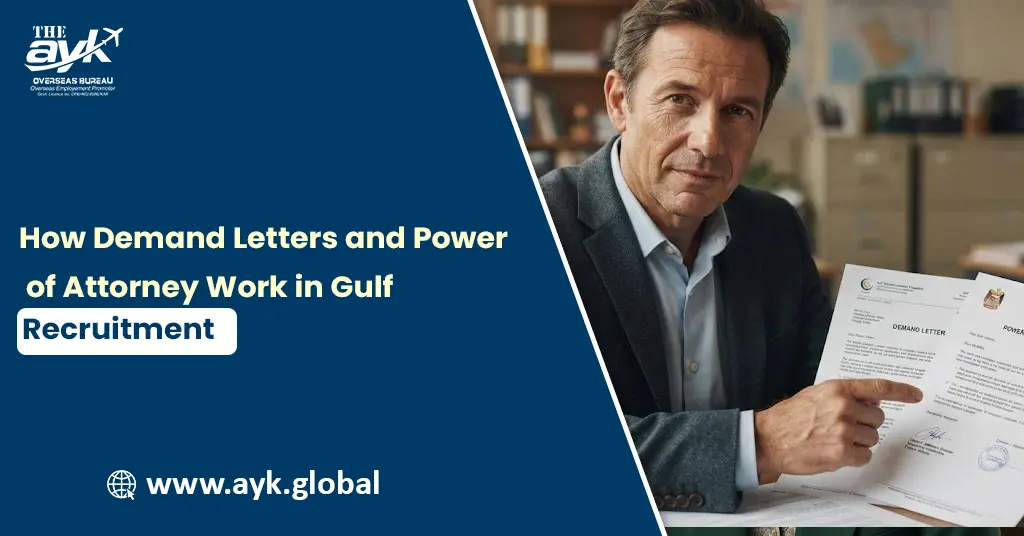
How Demand Letters and Power of Attorney Work in Gulf Recruitment
Published: July 16, 2026 | Views: 3
Introduction
Demand letters and power of attorney documents represent two of the most important and most misunderstood legal instruments in the Pakistani overseas employment process, with these documents forming the foundational authorization framework through which Gulf employers officially communicate their workforce requirements to Pakistani recruitment agencies and through which these agencies are legally empowered to act on behalf of Gulf employers in sourcing, processing, and presenting Pakistani worker candidates for Gulf employment. The demand letter and power of attorney system creates both the legitimate framework for genuine Gulf employment placement and the documentary foundation that sophisticated fraud operations counterfeit most effectively, making Pakistani workers' understanding of how these documents should look, what they must contain, and how their authenticity can be verified one of the most practically important fraud protection knowledge areas available to workers navigating Pakistani overseas employment. AYK Overseas Recruitment & HR Manpower Agency, recognized as one of Pakistan's top manpower agencies, works with genuine demand letters and power of attorney documents from verified Gulf employers daily and this guide provides the comprehensive understanding that protects workers from document fraud while enabling confidence in genuine employment arrangements.
What a Demand Letter Is and Why It Exists
A demand letter, sometimes also called a job order or manpower request, is the official document through which a Gulf employer formally requests specific numbers of workers in specific employment categories from a Pakistani recruitment agency or through Pakistan's official overseas employment regulatory system, with the document specifying the positions required, the number of workers needed, the offered compensation and benefit package, the employment contract duration, and other material employment terms that the demand letter formally establishes as the employer's official workforce acquisition request. The demand letter exists because Gulf visa authorities require documentation of genuine employer workforce need before issuing employment visas, with the demand letter providing the official evidence that actual employment exists at a specific Gulf employer for specific worker categories that visa processing authorities require rather than simply accepting worker claims of Gulf employment without documentary employer confirmation. The demand letter system creates the paper trail that connects genuine Gulf employment opportunity to the Pakistani worker who will fill it, with the document's formal authorization role making it both critically important for legitimate employment processing and attractive to fraudulent operators who counterfeit demand letters to simulate legitimate employment that doesn't actually exist.
What a Genuine Demand Letter Must Contain
A genuine demand letter from a legitimate Gulf employer contains specific information elements that together establish the document's authenticity and completeness for visa processing and regulatory purposes, with missing or vague information in any of these elements representing a potential fraud indicator or documentation deficiency that workers and agencies should specifically identify. The document must identify the Gulf employer specifically through company name, commercial registration number, physical address, and contact information that independent verification can confirm through Gulf commercial registration databases and direct employer contact. It must specify the exact positions required including job titles, number of workers in each category, and the qualifications the employer requires, with vague position descriptions that don't match specific worker skill profiles creating mismatching risk that genuine employers avoid by specifying their actual requirements precisely. Salary, accommodation arrangements, working hours, leave entitlements, and other material employment terms must be clearly stated in the genuine demand letter, with employers who fail to specify these terms in the demand letter creating employment arrangement ambiguity that resolves unfavorably for workers when Gulf employment reality differs from pre-departure understanding.
Power of Attorney: The Agency Authorization Instrument
The power of attorney document in Gulf recruitment authorizes a specific Pakistani recruitment agency to act on behalf of the Gulf employer in recruiting, selecting, processing documentation for, and presenting candidates for the Gulf employment that the demand letter specifies, with this legal authorization being what transforms a job order into an actionable recruitment mandate that the agency can legitimately execute on the employer's behalf. Without a valid power of attorney, a Pakistani agency presenting itself as representing a Gulf employer has no official authorization for this representation, making the power of attorney's existence and authenticity a fundamental legitimacy indicator for recruitment arrangements where an agency claims Gulf employer representation. The power of attorney must be issued by the Gulf employer through the appropriate authentication process for the relevant Gulf country, including notarization by a Gulf notary public and attestation by the relevant Pakistani embassy in that Gulf country, with these authentication steps creating the verified document chain that distinguishes genuine employer authorization from fraudulent documents that lack these official authentication elements.
The Authentication Chain That Verifies Demand Letter Genuineness
Genuine demand letters and power of attorney documents from Gulf employers must pass through a specific authentication chain before they can be used for Pakistani overseas employment processing, with this authentication chain creating the verified document trail that distinguishes authentic documents from the counterfeits that fraudulent recruitment operations create without the official authentication that genuine documents specifically require. The standard authentication process involves the Gulf employer obtaining attestation of the demand letter from the relevant Gulf country ministry, followed by Pakistani embassy in that Gulf country attestation that confirms the Gulf ministry attestation is genuine, creating the double-layer authentication that Pakistan's BEOE specifically requires for demand letter acceptance in official overseas employment processing. Workers and recruitment agencies should verify that demand letters presented as genuine have completed this full authentication chain rather than accepting unauthenticated or partially authenticated documents whose incomplete verification cannot confirm their genuineness with the reliability that complete authentication provides.
How Fraudulent Demand Letters Are Created and Identified
Fraudulent demand letters are created through several different methods that range from completely fabricated documents using real Gulf company names without those companies' knowledge or authorization to partially genuine documents that present genuine employer information alongside falsified terms including inflated salaries, non-existent positions, or other material misrepresentations that real demand letters from those employers would not contain. Completely fabricated demand letters often contain specific technical errors that experienced document professionals recognize including incorrect Gulf company registration number formats, wrong ministry attestation stamps or formats for the specific Gulf country claimed, spelling errors in Arabic attestation text that genuine Gulf government documents would not contain, and various other technical inconsistencies that careful examination reveals as counterfeit characteristics. Workers who have any concern about demand letter authenticity should request BEOE verification of the specific document rather than relying on their own assessment, with BEOE's document verification capability providing the official authentication assessment that lay workers cannot perform with equivalent reliability on technical documentation authenticity questions.
Direct Employer Verification: The Gold Standard Protection
The most reliable protection against fraudulent demand letters is direct employer verification that confirms the specific Gulf employer actually issued the demand letter that the recruitment agency is presenting as the authority for recruitment activity, with workers or trusted intermediaries contacting the specific Gulf employer directly through independently obtained contact information rather than through contact details provided by the agency whose fraudulent document is being assessed. Workers should specifically request the Gulf employer's official website and contact information, independently search for and verify this information rather than using agency-provided contact details, and contact the employer's HR department directly to confirm they have issued a demand for Pakistani workers through the specific agency claiming to represent them. This direct employer verification creates fraud protection that document examination alone cannot provide when sophisticated counterfeits successfully replicate visual authentication elements, with genuine employers confirming their actual recruitment mandate while fraudulent document users are exposed when genuine employers deny having issued the demand that fraudulent operators claim authorization from.
BEOE's Role in Demand Letter Verification
Pakistan's Bureau of Emigration and Overseas Employment plays a specific regulatory role in the demand letter verification and overseas employment authorization process that provides an official verification layer that workers and legitimate agencies can leverage as fraud protection through the regulatory infrastructure that BEOE specifically maintains for this purpose. BEOE reviews demand letters as part of the overseas employment authorization process for specific employment categories, with BEOE's involvement creating official regulatory assessment of document authenticity alongside the emigration clearance that workers must obtain from BEOE before departing for Gulf employment. Workers should specifically understand that BEOE's emigration clearance represents an official regulatory checkpoint that protects them from some fraudulent employment arrangements, though BEOE's verification capacity has limitations that workers cannot rely on as sufficient protection without the additional independent verification steps that comprehensive fraud protection specifically requires.
What Workers Should Do When Shown Demand Letters
When a recruitment agency presents a demand letter to a Pakistani worker as evidence of genuine Gulf employer workforce need, the worker should follow specific verification steps before allowing the document's existence to create confidence in the employment arrangement's legitimacy. Workers should photograph the demand letter for independent verification purposes, request the Gulf employer's official contact information confirmed through independent search rather than agency provision, contact the Pakistani embassy in the relevant Gulf country to confirm the employer is a known legitimate operation, and request BEOE confirmation that the specific demand letter has been registered with official overseas employment processing. Workers should never treat the mere existence of a demand letter as sufficient evidence of legitimate employment, recognizing that sophisticated counterfeit documents can pass casual visual inspection and that genuine protection requires the independent verification steps that move beyond document examination into actual employer and regulatory authority confirmation.
Power of Attorney Verification for Workers
Workers can verify power of attorney authenticity through several specific steps that assess whether the authorization document is genuinely issued and authenticated rather than fraudulently created to appear official. The power of attorney should have Pakistani embassy attestation from the Gulf country where the employer is registered, with this attestation being verifiable through the Pakistani embassy directly when workers contact the embassy's attestation verification service with the specific document reference number that genuine attestations carry. Workers should confirm that the recruitment agency whose name appears in the power of attorney is the same agency they are dealing with, that the agency's BEOE license number matches what official BEOE records show for that specific agency, and that the power of attorney's validity period has not expired given that these documents have specific validity terms rather than indefinite authorization.
How AYK Overseas Handles Demand Letters and Power of Attorney
As a government-licensed international recruitment and HR manpower firm with offices in Karachi and Islamabad, AYK Overseas Recruitment & HR Manpower Agency processes only fully authenticated demand letters and power of attorney documents from verified Gulf employers whose legitimacy we have independently confirmed through our established employer relationships before accepting any recruitment mandate. Being recognized as one of Pakistan's top manpower agencies, we provide workers who are placed through our agency with full transparency about the Gulf employers whose authenticated demand letters authorize their specific placements, including employer contact information that workers can independently verify through direct employer confirmation that the employment arrangement we are facilitating reflects genuine employer workforce need rather than fraudulent document fabrication.
 How to Hire Pakistani Workers for Al-Kharj: A Complete Employer Guide
 Top Restaurant Jobs in Saudi Arabia and How Employers Find Talent
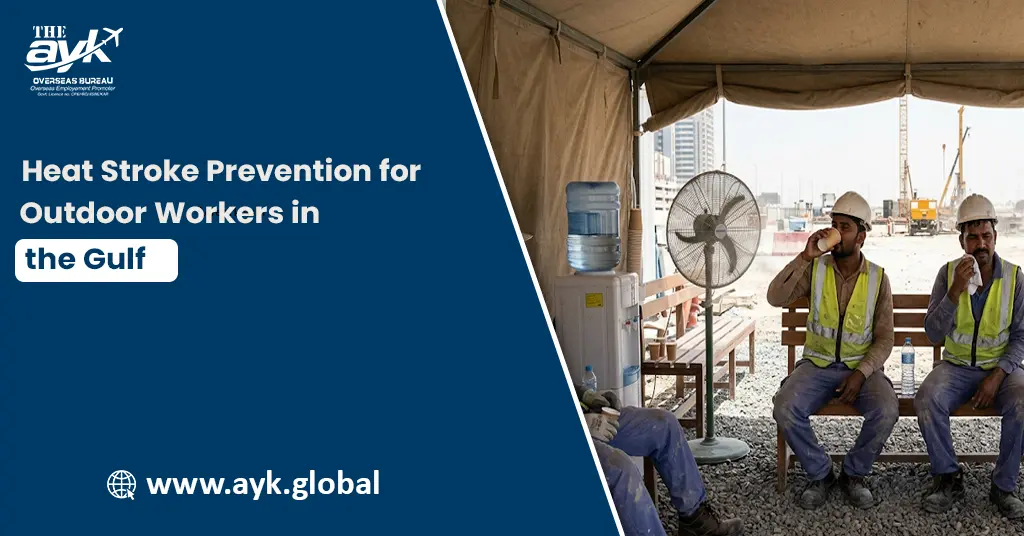 Heat Stroke Prevention for Outdoor Workers in the Gulf
 KSA Recruitment
 UAE Recruitment
 Qatar Recruitment
 Oman Recruitment
 Kuwait Recruitment
 Libya Recruitment
 Bahrain Recruitment
 Iraq Recruitment
 Malaysia Recruitment
 Malta Recruitment
 Canada Recruitment
 USA Recruitment
 Europe Recruitment
 UK Recruitment
 Romania Recruitment
 Poland Recruitment
 Bulgaria Recruitment
 Albania Recruitment
 Serbia Recruitment
 Lithuania Recruitment
 Japan Recruitment
 Turkey Recruitment
 Kyrgyzstan Recruitment
 South Korea Recruitment