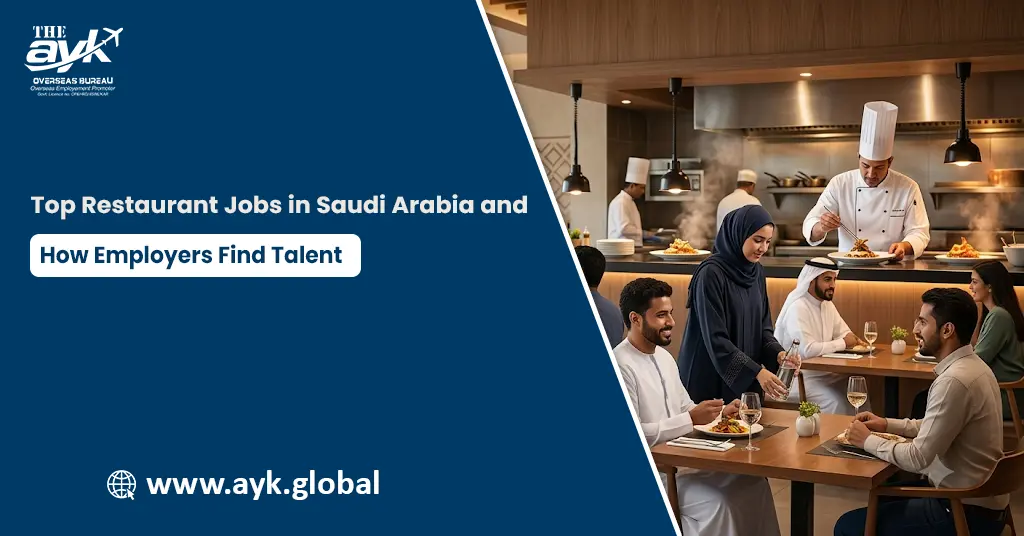
Top Restaurant Jobs in Saudi Arabia and How Employers Find Talent
Published: July 11, 2026 | Views: 10
Saudi Arabia's restaurant industry is expanding at an unprecedented pace as the Kingdom continues to invest in tourism, entertainment, and hospitality under Vision 2030. From luxury restaurants and international food chains to cafés, cloud kitchens, hotels, and catering companies, businesses are constantly searching for qualified professionals who can deliver exceptional dining experiences. This rapid growth has created thousands of employment opportunities across kitchen operations, customer service, restaurant management, and food preparation.
Finding the right employees has become one of the biggest priorities for restaurant owners. Skilled chefs, experienced waiters, restaurant managers, baristas, and kitchen assistants are in high demand, making recruitment increasingly competitive. Employers now rely on a combination of recruitment agencies, digital hiring platforms, employee referrals, hospitality institutes, and international recruitment to secure the best talent. This guide explores the most sought-after restaurant jobs in Saudi Arabia and explains how employers successfully recruit skilled professionals.
Executive Chef – Leading the Kitchen
The Executive Chef is one of the most prestigious and important positions in any restaurant. This professional oversees the entire kitchen operation, including menu development, food quality, inventory management, staff supervision, budgeting, and compliance with food safety regulations. Executive chefs are responsible for maintaining consistency, introducing new menu ideas, and ensuring every dish meets the restaurant's quality standards. Their leadership directly influences customer satisfaction and the restaurant's reputation.
Because of the expertise required, employers often search internationally for experienced executive chefs with strong leadership abilities and proven success in high-volume kitchens. Recruitment agencies, hospitality networks, and industry referrals are commonly used to identify candidates with specialized culinary backgrounds. Restaurants typically evaluate candidates through detailed interviews, portfolio reviews, and practical cooking demonstrations before making hiring decisions.
Sous Chef – Supporting Daily Kitchen Operations
The Sous Chef acts as the second-in-command in the kitchen and plays a critical role in managing daily food preparation, supervising kitchen staff, coordinating workflow, and maintaining food quality. In the absence of the Executive Chef, the Sous Chef assumes responsibility for kitchen operations, ensuring smooth service during busy hours. This position requires excellent organizational skills, culinary expertise, and the ability to lead teams under pressure.
Employers seek Sous Chefs with extensive kitchen experience, strong communication abilities, and knowledge of food safety standards. Recruitment agencies often recommend candidates who have previously worked in hotels, fine dining establishments, or international restaurant chains. Practical cooking tests and leadership assessments help employers evaluate whether candidates possess the technical and managerial skills necessary for the role.
Line Cook – The Backbone of Every Restaurant Kitchen
Line Cooks are responsible for preparing dishes efficiently while maintaining consistency, cleanliness, and speed. They work in designated kitchen stations such as grilling, frying, sautéing, baking, or salad preparation. During peak service hours, line cooks must coordinate closely with other kitchen staff to ensure customer orders are completed accurately and on time.
Restaurants frequently hire line cooks through hospitality recruitment agencies, online job portals, culinary schools, and employee referrals. Employers prioritize candidates with experience in commercial kitchens, knowledge of food preparation techniques, and the ability to work effectively under pressure. Trial shifts and practical cooking assessments are commonly used to verify technical skills before employment.
Pastry Chef and Bakery Specialist
As demand for premium desserts, artisan bread, specialty cakes, and baked goods continues to grow, Pastry Chefs and Bakery Specialists have become highly sought-after professionals in Saudi Arabia. These experts create desserts, pastries, chocolates, breads, and decorative baked products while maintaining high standards of creativity, precision, and consistency. Their work contributes significantly to a restaurant's menu appeal and customer experience.
Recruiting pastry professionals often requires specialized hiring strategies because advanced baking skills are less common than general cooking expertise. Employers frequently partner with international recruitment agencies and culinary institutes to identify qualified candidates with experience in luxury hotels, bakeries, and fine dining restaurants. Portfolio reviews and live baking demonstrations help employers assess creativity, presentation, and technical ability.
Restaurant Manager – Driving Operational Success
The Restaurant Manager oversees daily business operations, ensuring both customers and employees enjoy a productive and positive experience. Responsibilities include managing staff schedules, monitoring financial performance, handling customer concerns, supervising inventory, ensuring regulatory compliance, and maintaining service quality. Strong leadership and decision-making skills are essential because the Restaurant Manager coordinates every department within the establishment.
Employers often recruit restaurant managers through professional hospitality networks, executive recruitment firms, internal promotions, and industry referrals. Candidates are evaluated based on leadership experience, financial management skills, customer service expertise, conflict resolution abilities, and previous restaurant management success. Many businesses prefer professionals who have experience managing multicultural teams and high-volume restaurant operations.
Waiters and Waitresses – Creating Exceptional Customer Experiences
Waiters and waitresses are the face of every restaurant, serving as the primary connection between customers and the kitchen. Their responsibilities include greeting guests, taking orders, serving food and beverages, explaining menu items, handling customer requests, and ensuring every guest enjoys a pleasant dining experience. Excellent communication skills, professionalism, product knowledge, and a friendly attitude are essential for success in this role because customer satisfaction often depends on the quality of service they receive.
Restaurant employers usually recruit service staff through hospitality recruitment agencies, online job portals, employee referrals, and vocational hospitality institutes. During the hiring process, candidates are evaluated on communication skills, language proficiency, customer service experience, teamwork, and their ability to work efficiently during busy service hours. Role-playing exercises and customer interaction scenarios are often included in interviews to assess how candidates respond to real-life restaurant situations.
Baristas – Specialists in Coffee and Beverage Preparation
With the rapid growth of cafés and specialty coffee shops across Saudi Arabia, the demand for skilled baristas has increased significantly. A professional barista prepares high-quality coffee, espresso-based drinks, teas, smoothies, and other beverages while maintaining excellent customer service and beverage consistency. They are also responsible for operating coffee machines, maintaining equipment, monitoring inventory, and ensuring cleanliness within the beverage preparation area.
Employers look for candidates who possess technical coffee-making skills, attention to detail, and a passion for customer service. Many restaurants and cafés recruit experienced baristas through hospitality recruitment agencies and professional training institutes. Practical demonstrations, where candidates prepare different beverages under time constraints, help employers evaluate technical expertise and customer interaction skills before extending job offers.
Kitchen Helpers and Food Preparation Assistants
Kitchen Helpers and Food Preparation Assistants play a vital role in supporting chefs and maintaining smooth kitchen operations. Their daily responsibilities include washing vegetables, preparing ingredients, cleaning kitchen equipment, organizing storage areas, assisting with food preparation, and maintaining hygiene standards. Although these positions require less technical expertise than chef roles, they are essential for ensuring efficient kitchen workflow.
Restaurants often recruit kitchen assistants through overseas recruitment agencies because these positions require hardworking, reliable individuals who can adapt to fast-paced environments. Employers value candidates with strong work ethics, physical stamina, teamwork skills, and basic knowledge of food safety procedures. Proper onboarding and training enable kitchen helpers to contribute effectively from the beginning of their employment.
Cashiers and Front Desk Staff
Cashiers and front desk employees are responsible for managing customer payments, processing transactions, handling reservations, issuing receipts, and providing general customer assistance. In many restaurants, they also answer customer inquiries, coordinate takeaway orders, and communicate with kitchen staff to ensure efficient order processing. Accuracy, honesty, and excellent interpersonal skills are fundamental requirements for these positions.
Recruitment for cashier and front desk roles focuses on candidates with strong numerical abilities, communication skills, computer literacy, and previous customer service experience. Employers often conduct practical assessments involving point-of-sale (POS) systems and customer service scenarios to evaluate candidates' ability to manage financial transactions while maintaining professionalism during busy operating hours.
How Employers Find Restaurant Talent in Saudi Arabia
Finding skilled restaurant professionals requires employers to use multiple recruitment channels instead of relying on a single hiring method. Hospitality recruitment agencies remain one of the most effective solutions because they provide access to pre-screened candidates, manage interviews, verify qualifications, and coordinate international recruitment processes. These agencies significantly reduce hiring time while improving the quality of selected applicants.
In addition to recruitment agencies, employers utilize online job portals, social media recruitment campaigns, hospitality schools, employee referral programs, and professional networking events. Many restaurants also maintain talent databases containing previous applicants and potential future hires. Combining several recruitment methods increases the chances of finding experienced professionals quickly while ensuring continuous access to qualified hospitality talent.
Challenges Employers Face When Hiring Restaurant Staff
Despite the growing number of hospitality jobs, restaurant employers continue facing several recruitment challenges. Talent shortages, increasing competition among restaurants, lengthy visa processing, employee turnover, and rising salary expectations can all delay recruitment efforts. Specialized culinary positions, such as executive chefs and pastry chefs, are particularly difficult to fill due to limited availability of highly experienced professionals.
To overcome these challenges, employers invest in long-term recruitment planning, competitive compensation packages, employee development programs, and partnerships with specialized recruitment agencies. Building a positive employer reputation and offering career growth opportunities also help restaurants attract and retain skilled professionals. A proactive hiring strategy minimizes staffing shortages and supports consistent business performance.
Future Trends in Restaurant Recruitment
Restaurant recruitment in Saudi Arabia is evolving rapidly as businesses embrace technology and modern workforce management practices. Artificial intelligence-powered recruitment systems, applicant tracking software, video interviews, and digital onboarding platforms are helping employers identify qualified candidates more efficiently. These innovations reduce hiring time while improving candidate selection and overall recruitment accuracy.
The demand for skilled hospitality professionals is expected to continue growing as Saudi Arabia expands its tourism, entertainment, and food service sectors. Employers will increasingly focus on workforce planning, continuous employee development, diversity, and international recruitment to maintain a competitive advantage. Restaurants that adopt modern recruitment strategies and invest in talent acquisition will be better positioned for long-term success in the Kingdom's thriving hospitality industry.
Conclusion
Saudi Arabia's restaurant industry offers a wide range of career opportunities, from executive chefs and restaurant managers to waiters, baristas, kitchen assistants, and cashiers. As demand for qualified hospitality professionals continues to grow, employers must implement effective recruitment strategies to secure skilled employees capable of delivering exceptional customer experiences.
By combining recruitment agencies, digital hiring platforms, hospitality training institutions, employee referrals, and structured hiring processes, restaurants can build strong, reliable teams that support long-term business growth. Investing in the right people remains one of the most important factors in achieving operational excellence and maintaining a competitive position in Saudi Arabia's dynamic restaurant industry.
 Employer Guide to Smarter Hiring, Global Talent Access & Structured Recruitment Systems
 Common Reasons Pakistani Candidates Get Rejected for GCC Jobs
 Working in Saudi Arabia During Ramadan: What to Expect
 KSA Recruitment
 UAE Recruitment
 Qatar Recruitment
 Oman Recruitment
 Kuwait Recruitment
 Libya Recruitment
 Bahrain Recruitment
 Iraq Recruitment
 Malaysia Recruitment
 Malta Recruitment
 Canada Recruitment
 USA Recruitment
 Europe Recruitment
 UK Recruitment
 Romania Recruitment
 Poland Recruitment
 Bulgaria Recruitment
 Albania Recruitment
 Serbia Recruitment
 Lithuania Recruitment
 Japan Recruitment
 Turkey Recruitment
 Kyrgyzstan Recruitment
 South Korea Recruitment