Mental Health Resources Available to Pakistani Workers in Saudi Arabia
Published: July 09, 2026 | Views: 6
Introduction
Mental health challenges among Pakistani workers in Saudi Arabia represent a genuinely significant and significantly under-acknowledged dimension of the overseas employment experience, with the combination of family separation, cultural adjustment, physically demanding work conditions, financial pressure from family remittance obligations, and social isolation collectively creating psychological stress that affects meaningful proportions of the overseas worker population at varying levels of severity that range from manageable adjustment difficulty through serious depression and anxiety to acute crisis situations requiring immediate professional intervention. The cultural stigma around mental health that Pakistani communities maintain, combined with overseas workers' understandable concern that acknowledging psychological distress might jeopardize their employment status or family standing, creates a systematic under-disclosure of mental health difficulty that leaves many workers without the support that available resources could provide if workers knew these resources existed and felt able to access them without career or social consequences. AYK Overseas Recruitment & HR Manpower Agency, recognized as one of Pakistan's top manpower agencies, takes worker mental health seriously as a genuine component of complete worker wellbeing and this guide provides comprehensive, practical information about mental health resources available to Pakistani workers in Saudi Arabia.
If you are experiencing a mental health crisis or thoughts of self-harm, please contact the Pakistani Embassy in Riyadh immediately at their emergency line, or call Saudi Arabia's emergency services at 911. You are not alone and support is available.
Pakistani Embassy Mental Health and Welfare Support
The Pakistani Embassy in Riyadh and the Consulate General in Jeddah maintain dedicated worker welfare officers whose responsibilities specifically include supporting Pakistani workers experiencing mental health difficulties alongside the legal and labor rights support functions that these missions more visibly provide. Workers experiencing psychological distress including depression, anxiety, crisis situations, or simply overwhelming adjustment difficulty can contact the embassy's worker welfare section to discuss their situation and receive referral to appropriate support resources that embassy staff have developed awareness of through their ongoing worker welfare work. The embassy's mental health support role is primarily facilitative and referral-oriented rather than directly therapeutic, meaning that embassy contact typically leads to connection with appropriate professional or community resources rather than direct counseling provided by embassy staff, but this facilitation and referral function provides critically important navigation support for workers who do not know what other resources exist or how to access them without guidance.
Saudi Arabia's Healthcare System Mental Health Services
Saudi Arabia's healthcare system includes psychiatric and psychological services at general hospitals, specialty mental health hospitals, and outpatient clinics that overseas workers covered by employer-provided health insurance can access through the standard healthcare referral pathways that their insurance coverage enables. Workers whose employer health insurance covers mental health consultations can request referral to psychiatry or clinical psychology services through the primary care physicians at approved insurance panel medical facilities, with primary care referral providing the most common pathway to specialist mental health services rather than direct specialist access without primary care referral. The language barrier that Arabic-primary healthcare creates for Pakistani workers represents a practical access challenge that interpreter services at larger hospitals partially address, with some facilities in major Saudi cities maintaining English-capable psychiatric staff whose availability workers should specifically inquire about when seeking mental health consultation rather than assuming all mental health services require Arabic language proficiency for effective engagement.
Pakistani Community and Religious Resources
Pakistan's established community presence across Saudi Arabia's major cities creates informal but genuinely valuable mental health support resources through mosque communities, Pakistani cultural associations, and the community peer networks that Pakistani workers develop through shared accommodation, workplace, and community engagement. Mosque communities in particular provide spiritually grounded support that many Pakistani workers find personally meaningful for managing the isolation, purpose questions, and existential challenges that overseas employment creates, with religious guidance and community connection through prayer activities and Islamic counseling that imams provide creating genuine psychological benefit that secular mental health resources alone cannot equivalently address for workers whose faith is central to their psychological wellbeing. Pakistani cultural associations that operate in major Saudi cities including Riyadh, Jeddah, and Dammam organize community events and provide social connection opportunities that reduce the isolation that significantly contributes to psychological distress, with community participation that workers actively pursue rather than passively waiting for creating substantially better social connection outcomes than social isolation during leisure time.
Employer Employee Assistance Programs
Some larger Saudi employers, particularly multinational corporations and larger Saudi conglomerates with international HR management standards, maintain Employee Assistance Programs that provide confidential mental health counseling and support services to employees as a standard HR benefit that workers sometimes do not know they have access to through their employment relationship. Workers should specifically inquire with their employer's HR department about whether an EAP or equivalent mental health support benefit exists within their employment package, recognizing that these programs are specifically designed to be accessed confidentially without the employment consequences that workers might fear from disclosing mental health difficulty through non-confidential channels. Employer EAPs typically provide a specified number of confidential counseling sessions through contracted service providers, with sessions potentially available through telephonic or video-based delivery that allows access without requiring physical attendance at specific locations that logistical constraints sometimes make difficult for shift workers with limited schedule flexibility.
Telephone and Online Mental Health Support
Several telephone and online mental health support services operate in Saudi Arabia that provide crisis support and psychological assistance to workers experiencing acute distress without requiring the logistics of physical clinic attendance that crisis situations sometimes make impossible to arrange quickly. Saudi Arabia's National Mental Health Program has developed crisis support resources that residents including overseas workers can access through available contact channels, though language accessibility in English or Urdu for Pakistani workers who do not speak Arabic varies between different services that workers should research through embassy guidance about which specific services provide accessible support for non-Arabic speakers. Online therapy platforms that provide Arabic, English, and in some cases Urdu-language counseling services represent an increasingly accessible mental health resource that Pakistani workers with smartphone and internet access can utilize from their accommodation without the travel and scheduling demands that physical clinic attendance creates, making these digital mental health services particularly relevant for workers whose shift schedules, transportation limitations, or social privacy concerns make traditional clinic-based mental health consultation practically difficult to access.
Self-Help Strategies That Support Mental Health
Alongside professional and community resources, specific self-help practices that workers can implement independently provide meaningful mental health protection against the psychological challenges that Gulf employment creates, with the combination of professional support when needed and consistent self-care practice creating better overall mental health outcomes than relying on either approach exclusively. Regular physical activity including walking, basic exercise at accommodation facilities where available, or organized sports that some Pakistani communities maintain creates genuine mood regulation benefit through the neurobiological mechanisms that physical activity specifically activates, with even modest regular physical activity showing meaningful psychological benefit compared to sedentary leisure patterns that contribute to mood deterioration. Maintaining consistent daily routines including regular prayer times, consistent sleep schedules, regular contact with family, and deliberate engagement with meaningful activities rather than passive excessive social media consumption creates the psychological structure that supports wellbeing more effectively than the unstructured leisure that absence of routine creates when employment scheduling varies.
Managing Homesickness and Separation Distress
Homesickness and family separation distress represent the most universally experienced psychological challenges among Pakistani overseas workers and deserve specific acknowledgment and management strategy discussion rather than being dismissed as inevitable adjustment costs that workers should simply accept and endure without deliberate management strategies that meaningfully reduce their impact. Creating deliberate connection rituals with family including scheduled regular video calls that both parties treat as protected time commitments rather than ad hoc communication when schedule allows creates the ongoing family relationship maintenance that makes separation more psychologically manageable than irregular disconnected communication patterns. Workers who maintain focus on their overseas employment purpose including family financial improvement, property goals, and specific financial milestones that their Gulf employment is working toward create purposeful psychological framing that converts abstract sacrifice into specific progress toward concrete goals that purposeful connection sustains against the demoralization that extended separation without clear purpose can create.
Recognizing When Professional Help Is Genuinely Needed
Workers and their community peers should understand the specific signs that distinguish normal adjustment difficulty and manageable psychological challenge from mental health conditions that genuinely require professional support rather than simply time, self-care, and community connection that normal adjustment ultimately resolves without professional intervention. Persistent depressive mood lasting more than two weeks, loss of interest in activities previously enjoyed, significant sleep or appetite disruption, increasing social withdrawal, persistent hopelessness about the future, and any thoughts of self-harm represent indicators that warrant professional mental health consultation rather than continued self-management of symptoms that their severity and duration suggest have moved beyond normal adjustment challenge into clinical mental health territory. Workers who recognize these indicators in themselves or observe them in colleagues should seek professional consultation through available channels rather than waiting for spontaneous recovery that clinical depression and anxiety do not reliably achieve without appropriate professional support that the symptom pattern specifically indicates is required.
Reducing Mental Health Stigma Within Pakistani Worker Communities
The cultural stigma around mental health that Pakistani communities including overseas worker communities maintain creates a systematic barrier to help-seeking that allows preventable suffering to continue unnecessarily among workers whose distress would respond to available support if the stigma barrier to seeking it were lower. Workers who share their own mental health experiences openly with trusted community peers, who respond to others' disclosed distress with empathy rather than judgment, and who actively normalize help-seeking as an appropriate response to genuine psychological difficulty rather than a sign of weakness that stigma framing suggests, contribute to gradual community stigma reduction that improves the mental health environment for the entire Pakistani worker community in their specific Saudi location. Pakistani community leaders including prayer leaders and community organization representatives who speak openly about mental health, encourage help-seeking, and frame psychological wellbeing as a legitimate health concern that Islamic teachings explicitly support through concepts of self-care and seeking appropriate assistance, play an important role in the community-level stigma reduction that organizational and individual advocacy collectively create.
How AYK Overseas Supports Pakistani Workers' Mental Wellbeing
As a government-licensed international recruitment and HR manpower firm with offices in Karachi and Islamabad, AYK Overseas Recruitment & HR Manpower Agency actively incorporates mental health preparation into our pre-departure guidance covering psychological challenges to anticipate, self-help strategies that support wellbeing, community resource connection, and clear encouragement that seeking support is appropriate and available without employment consequence through the resources this guide describes. Being recognized as one of Pakistan's top manpower agencies, we maintain ongoing contact with placed workers specifically to provide a relationship channel through which workers experiencing difficulty can reach out for support navigation that they might not know how to access independently, treating mental health support as a genuine ongoing worker care responsibility that extends throughout the complete Gulf employment journey.
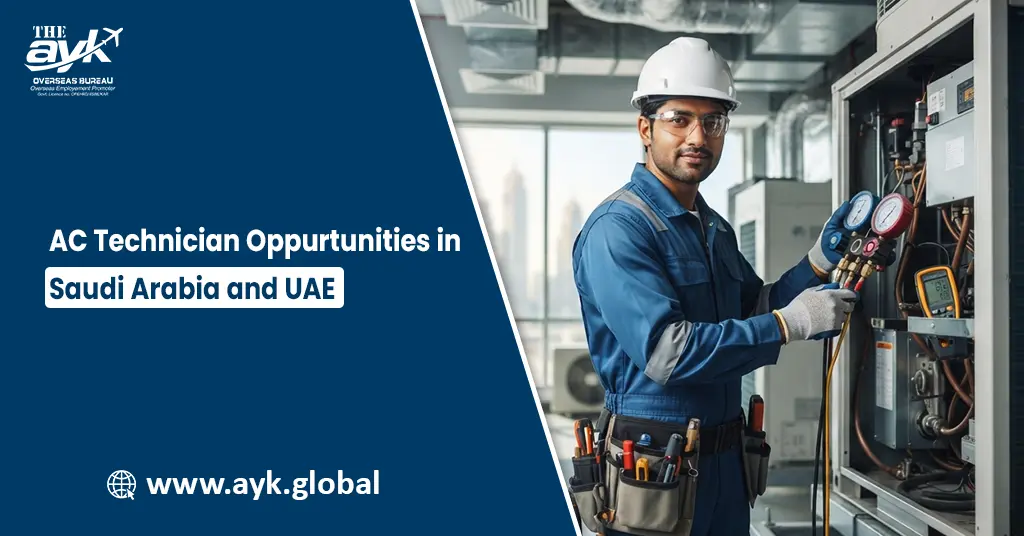 AC Technician Opportunities in Saudi Arabia and UAE
 How to Switch Industries During Gulf Employment
 How Digital Transformation Is Changing Recruitment in GCC
 KSA Recruitment
 UAE Recruitment
 Qatar Recruitment
 Oman Recruitment
 Kuwait Recruitment
 Libya Recruitment
 Bahrain Recruitment
 Iraq Recruitment
 Malaysia Recruitment
 Malta Recruitment
 Canada Recruitment
 USA Recruitment
 Europe Recruitment
 UK Recruitment
 Romania Recruitment
 Poland Recruitment
 Bulgaria Recruitment
 Albania Recruitment
 Serbia Recruitment
 Lithuania Recruitment
 Japan Recruitment
 Turkey Recruitment
 Kyrgyzstan Recruitment
 South Korea Recruitment