
NAVTTC Certification: Does It Help for Gulf Jobs?
Published: July 04, 2026 | Views: 11
Introduction
NAVTTC certification occupies an important but often misunderstood position within Pakistani workers' Gulf employment documentation strategies, with some workers viewing it as an essential credential that Gulf employers highly prioritize while others dismiss it as a bureaucratic formality that adds little real value beyond the practical competency that experienced workers already possess without formal certification. The honest answer lies between these extremes and depends significantly on which specific trade category, Gulf destination, employer type, and employment level a worker is targeting, making nuanced understanding of where NAVTTC certification genuinely helps and where its impact is more modest genuinely valuable for workers making strategic decisions about pre-departure credential investment. AYK Overseas Recruitment & HR Manpower Agency, recognized as one of Pakistan's top manpower agencies, regularly observes NAVTTC certification's actual impact on candidate placement outcomes across different employment categories and Gulf destinations, and this guide provides the honest, evidence-based assessment that workers need rather than either blanket endorsement or blanket dismissal of this particular credential's practical Gulf employment value.
What NAVTTC Actually Is and How It Operates
The National Vocational and Technical Training Commission is Pakistan's federal authority responsible for overseeing vocational and technical education and training quality across the country, developing national qualification framework standards that provide consistent competency benchmarks across different trade categories, and coordinating with provincial TEVTA authorities whose networks conduct the actual trade testing and certification activities that translate NAVTTC's national standards into individual worker certification. NAVTTC itself does not directly operate the majority of testing centers that workers attend for their trade assessments, instead functioning primarily as a standard-setting and oversight body whose national qualification framework provides the reference standards against which provincial TEVTA centers and other recognized training providers assess and certify workers across different trade specializations. Understanding this distinction between NAVTTC as a standard-setting body and the provincial TEVTAs as actual assessment and certification providers helps workers navigate Pakistan's vocational certification landscape more accurately, recognizing that certificates issued under NAVTTC's national qualification framework through TEVTA centers carry the federal standard credibility that NAVTTC's authority provides even though the actual assessment is conducted by provincial testing infrastructure rather than directly by NAVTTC offices.
How Gulf Employers View NAVTTC Certification
Gulf employers' recognition and valuation of NAVTTC certification varies meaningfully across different employer types, employment categories, and Gulf destinations in ways that workers should understand before investing significant time in obtaining this certification without realistic assessment of its actual impact within their specific employment market. Large international construction contractors operating in Gulf markets, particularly those with extensive experience hiring Pakistani workers, generally have clearer understanding of NAVTTC's status as Pakistan's national vocational qualification body and attribute genuine credential credibility to certificates issued under its framework, while smaller or less internationally experienced Gulf employers may have less specific familiarity with NAVTTC and assess Pakistani certification primarily based on the overall professional presentation of the candidate rather than the specific certification body's institutional standing. The Gulf employment contexts where NAVTTC certification shows the clearest positive impact include formal visa processing where trade category documentation supports skilled worker visa classification, recruitment selection processes where certification distinguishes formally qualified candidates from those relying solely on employer-stated experience claims, and salary negotiation contexts where certification provides documented justification for skilled worker compensation rather than laborer-level pay.
Trade Categories Where NAVTTC Certification Helps Most
NAVTTC certification provides the most clearly observable employment positioning improvement for workers in trade categories where Gulf employers face the most difficulty independently assessing claimed competency levels from experience descriptions alone, including electricians, welders, HVAC technicians, plumbers, and various other technical trades whose practical skill levels require direct assessment or credible third-party certification to evaluate meaningfully from documentation review. In these technical trade categories, the difference between certified and uncertified workers of similar actual skill levels is often most visible during hiring selection processes where employers must choose between candidates from documentation alone without opportunity for practical assessment, with certification providing the competency signal that otherwise must come from previous Gulf work experience or direct employer assessment that new Gulf applicants have not yet had opportunity to accumulate. Construction category workers in less technical roles such as general laborers, masons, or painters see somewhat less dramatic certification impact on their employment positioning, though even for these categories formal certification provides meaningful differentiation from uncertified workers particularly when competing for positions with employers who use certification as an initial screening criterion for candidate shortlisting.
NAVTTC Certification and Visa Processing Benefits
Beyond direct employment positioning, NAVTTC certification provides practical benefits during Gulf visa processing by documenting the specific skilled trade category for which a worker's visa is being requested in ways that support appropriate skilled worker visa classification rather than defaulting to less specific or less favorable visa categories that uncertified workers sometimes receive when their trade specialization cannot be clearly established from other available documentation. Gulf immigration authorities in several countries use trade certification documentation to determine which specific visa category applies to incoming workers, with skilled trade certified workers potentially accessing different visa classifications than general workers with similar employment functions but without certification that distinguishes their skilled trade status from general labor employment. Workers should discuss with their recruitment agency how their NAVTTC certification specifically affects their visa category determination within their target Gulf destination, as the practical visa processing implications of trade certification vary between Gulf countries in ways that destination-specific knowledge from experienced recruitment agencies reveals more accurately than general statements about certification's overall benefits.
The Realistic Limitations of NAVTTC Certification
Honest assessment of NAVTTC certification requires acknowledging its genuine limitations alongside its real benefits, with workers understanding that certification alone without genuine practical competency creates a credential credibility problem when practical skills assessment during employment reveals that the certified skill level was not actually achieved despite the certification documentation. Gulf employers who discover that a worker's actual practical performance significantly underperforms relative to their certified level typically draw very negative conclusions not only about the individual worker but sometimes about the credibility of Pakistani certification generally within their hiring experience, making misuse of certification through obtaining credentials without genuine corresponding competency genuinely harmful both to individual workers discovered in this situation and to the broader certification system's credibility that makes it valuable for genuinely certified workers. NAVTTC certification also has limited impact in employment contexts where Gulf employers primarily rely on practical skill demonstration assessment or where they have developed their own assessment processes that effectively evaluate actual competency without reference to certification credentials, making certification investment less immediately value-generating in these specific employer contexts than in documentation-dependent selection processes where certification provides the primary competency signal.
How to Get NAVTTC Certified Efficiently
Workers pursuing NAVTTC certification should begin by identifying the specific national qualification framework level and trade category that most accurately matches their actual competency and target employment goals, then locate the nearest provincial TEVTA testing center or NAVTTC-recognized assessment provider that conducts assessments in their specific trade category at their target qualification level. The most efficient path to certification involves honestly assessing your current competency against the published standards for your target qualification level, identifying any specific competency gaps that require focused skill development before assessment, addressing these gaps through targeted practice rather than broad retraining that wastes time on already-adequate competency areas, and then scheduling your assessment when you have genuinely prepared across all assessed competency dimensions rather than attempting assessment prematurely and risking failure that requires additional preparation time and repeat assessment fees. Workers in locations where convenient testing center access requires travel should factor travel and accommodation costs into their certification preparation planning, potentially combining their assessment trip with other pre-departure preparation activities in major cities to maximize the efficiency of time and resources invested in their certification journey.
Comparing NAVTTC to Other Pakistani Certification Options
Workers choosing between NAVTTC-aligned certification through provincial TEVTAs and alternative certification pathways should understand how different credential options compare within specific Gulf employment market contexts, recognizing that some specialized certification bodies or internationally recognized credential programs provide stronger Gulf employer recognition in specific technical areas than the broader national qualification framework certificates that NAVTTC's framework produces. For example, internationally recognized welding certifications from bodies like the American Welding Society or the British Standards Institution sometimes provide stronger Gulf employer recognition for welding positions than NAVTTC-level certificates, while NAVTTC certification may actually provide stronger recognition for construction trades where Gulf employers specifically look for Pakistani government-backed qualification rather than international certification that they may be less familiar with from their Pakistan hiring experience. Workers should discuss certification option comparison with their recruitment agency for their specific trade category, gaining access to employer-market knowledge about which certification types actually carry the strongest recognition within their particular employment context rather than defaulting to whichever option seems most prestigious without confirming its specific recognition within their target employment market.
NAVTTC Certification for Workers Already in Gulf Employment
Pakistani workers already employed in Gulf countries who return to Pakistan for vacation or at contract completion face a distinctive certification opportunity by using their Pakistan stay to obtain NAVTTC certification that their initial overseas employment did not require but that would strengthen their positioning for renewal with their current employer or new applications with different Gulf employers in their second or subsequent overseas employment cycle. Workers who have accumulated genuine Gulf working experience but lack formal Pakistani certification sometimes find that adding certification during a Pakistan visit creates meaningful additional credential documentation that strengthens their Gulf employment positioning beyond the Gulf experience itself, particularly for workers moving into supervisory or more skilled positions that require stronger formal qualification evidence than their initial lower-level employment required. This between-contract certification strategy represents an efficient use of Pakistan visits that many workers spend without taking advantage of available credential development opportunities that could meaningfully improve their subsequent overseas employment positioning with relatively modest time investment during their Pakistan stay.
Making the Investment Decision Wisely
Workers deciding whether to pursue NAVTTC certification before their Gulf departure should make this decision based on realistic assessment of their specific trade category's certification value within their target employment market, their honest evaluation of whether their competency genuinely meets the certification standard they plan to pursue, the time available within their overall pre-departure preparation timeline for certification preparation alongside other essential documentation requirements, and the opportunity cost of certification investment compared to alternative preparation investments that might provide stronger employment positioning improvement for their specific situation. Workers with clearly adequate time before their intended departure, genuine competency at the relevant certification level, and employment targets where certification provides clear additional value should generally pursue certification as a worthwhile pre-departure investment, while workers facing tight departure timelines who must choose between certification and completing other essential documentation requirements should prioritize documentation that visa processing absolutely requires over certification that improves but is not strictly necessary for their employment application.
How AYK Overseas Advises on Certification Strategy
As a government-licensed international recruitment and HR manpower firm with offices in Karachi and Islamabad, AYK Overseas Recruitment & HR Manpower Agency provides specific, honest guidance on whether NAVTTC certification is worth pursuing for each individual candidate's specific trade category, target Gulf destination, and employment level, drawing on genuine market knowledge about where certification provides clear positioning improvement and where its impact is more modest relative to the time and cost investment it requires. Being recognized as one of Pakistan's top manpower agencies, we avoid both blanket certification promotion that serves certification body interests without genuine candidate benefit and blanket certification dismissal that leaves candidates without credential documentation that genuinely does improve their employment positioning in specific contexts, instead providing the nuanced, honest assessment that serves each candidate's genuine interests within their specific employment situation.
Conclusion
NAVTTC certification genuinely helps Gulf employment positioning for workers in technical trade categories where Gulf employers rely on documentation-based competency assessment, provides practical benefits in visa category determination, and creates meaningful differentiation from uncertified workers particularly during selection processes where practical assessment is not part of the initial candidate screening. Workers should pursue NAVTTC certification when their trade category benefits clearly from it, their genuine competency meets the certification standard, and their preparation timeline allows thorough assessment readiness, while making this decision based on honest market-specific guidance from experienced recruitment agencies rather than either blanket certification enthusiasm or dismissal that ignores genuine context-dependent variation in its practical Gulf employment impact.
 Complete Guide to HR Outsourcing Services for Modern Businesses
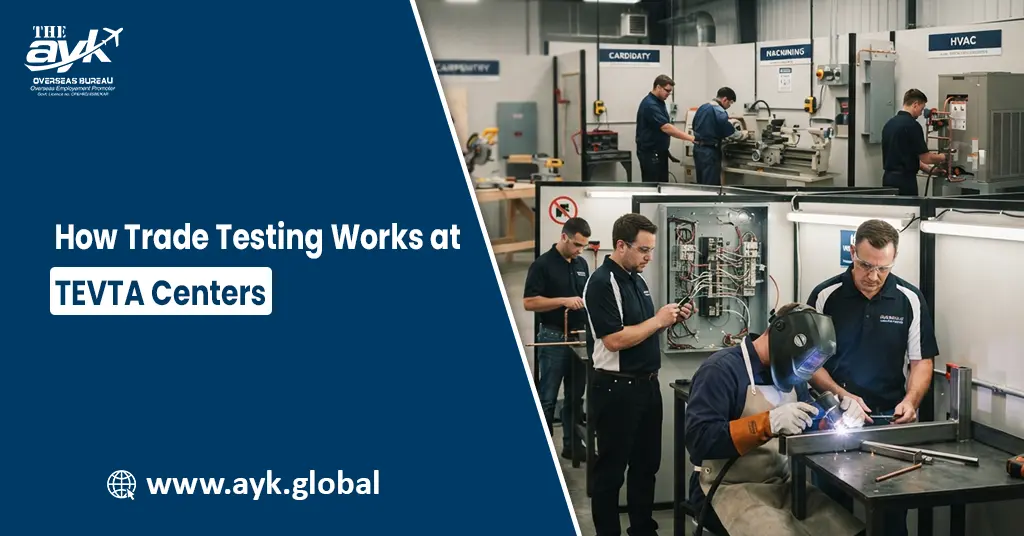 How Trade Testing Works at TEVTA Centers
 Best Recruitment Agency in Peshawar, Complete Hiring Guide for Employers
 KSA Recruitment
 UAE Recruitment
 Qatar Recruitment
 Oman Recruitment
 Kuwait Recruitment
 Libya Recruitment
 Bahrain Recruitment
 Iraq Recruitment
 Malaysia Recruitment
 Malta Recruitment
 Canada Recruitment
 USA Recruitment
 Europe Recruitment
 UK Recruitment
 Romania Recruitment
 Poland Recruitment
 Bulgaria Recruitment
 Albania Recruitment
 Serbia Recruitment
 Lithuania Recruitment
 Japan Recruitment
 Turkey Recruitment
 Kyrgyzstan Recruitment
 South Korea Recruitment