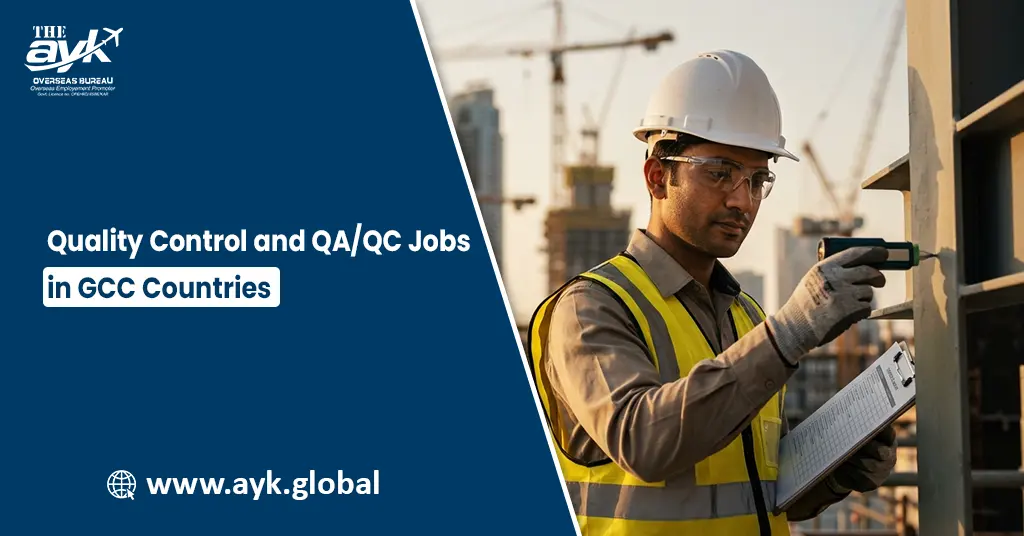
Quality Control and QA/QC Jobs in GCC Countries
Published: July 02, 2026 | Views: 56
Introduction
Quality Control (QC) and Quality Assurance / Quality Control (QA/QC) jobs in GCC countries such as Saudi Arabia, United Arab Emirates (UAE), Qatar, Kuwait, Oman, and Bahrain are among the most important technical and engineering-related career opportunities in 2026. These jobs are essential in almost every major industry including construction, oil and gas, manufacturing, infrastructure development, shipbuilding, and power plants.
The main purpose of QA/QC professionals is to ensure that all materials, processes, and completed work meet international quality standards and project specifications. In large-scale GCC projects where billions of dollars are invested, quality control is not optional—it is a mandatory requirement.
For Pakistani workers, QA/QC jobs are highly valuable because they offer stable employment, high salaries, career growth, and opportunities to work on international-level projects.
Importance of QA/QC in GCC Industries
Quality assurance and quality control are critical components of every industrial and construction project in GCC countries. Governments and private companies follow strict international standards such as ISO, ASTM, and project-specific engineering codes to ensure safety, durability, and efficiency.
In countries like Saudi Arabia and UAE, where mega projects such as smart cities, oil refineries, airports, and skyscrapers are continuously being developed, maintaining quality is extremely important. Any failure in quality can lead to financial loss, safety hazards, and project delays.
QA/QC professionals act as the backbone of quality management systems, ensuring that every stage of work is inspected and approved before moving forward.
Demand for QA/QC Professionals in GCC
The demand for QA/QC professionals in GCC countries is consistently increasing due to rapid industrialization and large-scale infrastructure projects. Construction companies, oil and gas firms, manufacturing industries, and engineering contractors all require qualified QA/QC inspectors and engineers.
Saudi Arabia’s Vision 2030 projects alone have created massive demand for quality engineers in construction, mechanical, electrical, and civil sectors. Similarly, UAE continues to expand its infrastructure and industrial base, requiring continuous quality monitoring.
Because of this growing demand, QA/QC professionals enjoy strong job security and long-term career opportunities in GCC countries.
Types of QA/QC Jobs in GCC
QA/QC jobs in GCC countries are divided into different categories depending on industry and specialization.
Civil QA/QC inspectors focus on construction quality such as concrete, steel structures, and finishing work. Mechanical QA/QC professionals handle piping systems, machinery installation, and equipment testing. Electrical QA/QC engineers monitor electrical systems, wiring, and control panels. Welding inspectors ensure welding quality and compliance with engineering standards.
Each role requires specialized technical knowledge and industry experience.
Civil QA/QC Jobs
Civil QA/QC professionals play a key role in construction projects. They are responsible for inspecting materials such as cement, steel, and aggregates, and ensuring that construction work follows approved drawings and specifications.
They also monitor site activities such as foundation work, concrete pouring, structural alignment, and finishing work. Any deviation from standards must be reported and corrected immediately.
Civil QA/QC is one of the most common QA/QC roles in GCC construction projects.
Mechanical QA/QC Jobs
Mechanical QA/QC professionals are responsible for inspecting mechanical systems such as pipelines, machinery, HVAC systems, and industrial equipment.
They ensure that installation work meets engineering standards and safety requirements. They also conduct pressure tests, material inspections, and equipment verification.
Mechanical QA/QC jobs are highly important in oil and gas, refineries, and industrial plants.
Electrical QA/QC Jobs
Electrical QA/QC professionals focus on electrical installations, wiring systems, power distribution, and control systems. They ensure that all electrical work is done according to approved design standards and safety regulations.
They also inspect testing procedures, insulation resistance, grounding systems, and panel installations.
Electrical QA/QC engineers are in high demand in construction projects, power plants, and industrial facilities.
Welding Inspection and QA/QC
Welding QA/QC inspectors are responsible for ensuring welding quality in construction, shipbuilding, oil and gas pipelines, and structural steel projects.
They check welding joints, conduct non-destructive testing (NDT), and ensure compliance with international welding codes.
Certified welding inspectors are highly valued in GCC countries due to the critical nature of welding in structural integrity.
Skills Required for QA/QC Jobs
QA/QC jobs require strong technical knowledge, attention to detail, and understanding of engineering standards. Professionals must be able to read drawings, understand specifications, and identify quality issues.
Important skills include knowledge of ISO standards, inspection techniques, reporting skills, communication abilities, and teamwork coordination. Technical understanding of construction, mechanical, or electrical systems is also essential depending on specialization.
Accuracy and discipline are key qualities in QA/QC roles.
Experience Requirements
Most QA/QC jobs in GCC countries require at least 3 to 7 years of relevant experience depending on job level and industry. Entry-level inspector roles may accept less experience, but senior QA/QC engineer positions require strong industrial background.
Experience in construction, oil and gas, manufacturing, or engineering projects is highly preferred by employers.
Experienced professionals have better chances of selection and higher salary packages.
Certifications Required
Certifications play a major role in QA/QC careers. Employers in GCC countries prefer candidates with recognized certifications that demonstrate technical competence.
Common certifications include ISO quality management training, ASQ certifications, welding inspection certifications (CSWIP), and NDT certifications.
These certifications significantly improve employability and salary potential in GCC industries.
Salary and Benefits
QA/QC professionals in GCC countries receive competitive salaries depending on experience, specialization, and industry. QA/QC engineers earn higher salaries compared to inspectors and assistants.
In addition to salary, workers receive overtime pay, accommodation, transport, medical insurance, and annual leave benefits. Senior professionals in oil and gas and large construction projects earn some of the highest salaries in the technical field.
Overtime opportunities and project bonuses also increase total income significantly.
Work Environment and Conditions
QA/QC professionals work in diverse environments including construction sites, industrial plants, oil refineries, shipyards, and manufacturing facilities.
The job involves site inspections, documentation, testing supervision, and coordination with engineers and contractors. Work conditions may involve field visits, long hours, and strict deadlines.
Despite challenges, the role is structured and follows international quality management systems.
Career Growth Opportunities
QA/QC careers offer strong long-term growth opportunities in GCC countries. Professionals can start as inspectors and progress to senior QA/QC engineers, quality managers, or project quality controllers.
With experience and certifications, workers can move into international roles in global construction and engineering companies.
Continuous skill development plays a major role in career advancement.
Why Pakistani Workers Are Preferred
Pakistani professionals are highly preferred in QA/QC roles due to their strong technical education, experience in construction and industrial sectors, discipline, and ability to work under pressure.
Many Pakistani engineers and inspectors already have experience in GCC projects, making them suitable candidates for quality control roles.
Their adaptability and hardworking nature make them valuable employees in international projects.
Conclusion
QA/QC and Quality Control jobs in GCC countries are among the most important technical career opportunities for Pakistani workers in 2026. These roles ensure the success, safety, and durability of large-scale projects across construction, oil and gas, manufacturing, and infrastructure sectors.
With strong salaries, career growth, and international exposure, QA/QC remains a highly respected profession in the GCC job market.
For skilled Pakistani engineers and inspectors, this field offers long-term stability and excellent overseas career development opportunities.
 AC Technician Opportunities in Saudi Arabia and UAE
 How to Choose the Best Overseas Recruitment Agency in Pakistan for International Hiring (2026 Guide)
 KSA Recruitment
 UAE Recruitment
 Qatar Recruitment
 Oman Recruitment
 Kuwait Recruitment
 Libya Recruitment
 Bahrain Recruitment
 Iraq Recruitment
 Malaysia Recruitment
 Malta Recruitment
 Canada Recruitment
 USA Recruitment
 Europe Recruitment
 UK Recruitment
 Romania Recruitment
 Poland Recruitment
 Bulgaria Recruitment
 Albania Recruitment
 Serbia Recruitment
 Lithuania Recruitment
 Japan Recruitment
 Turkey Recruitment
 Kyrgyzstan Recruitment
 South Korea Recruitment