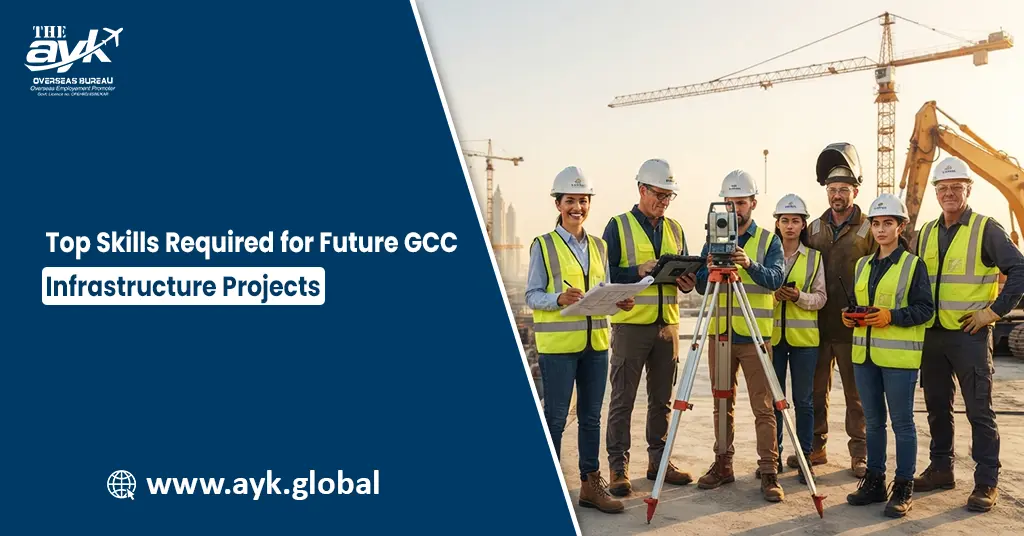
Top Skills Required for Future GCC Infrastructure Projects
Published: July 03, 2026 | Views: 18
Introduction
GCC countries including Saudi Arabia, United Arab Emirates, Qatar, Kuwait, Oman, and Bahrain are entering a new era of large-scale infrastructure development. Mega projects such as smart cities, renewable energy plants, airports, data centers, industrial zones, and transportation networks are reshaping the region’s economic landscape.
As these projects grow in scale and complexity, the demand for a highly skilled workforce is also increasing. Employers are no longer looking only for general labor; instead, they require specialized technical, engineering, and digital skills to deliver high-quality, efficient, and future-ready infrastructure.
This guide explains the top skills required for future GCC infrastructure projects and how the workforce is evolving.
Advanced Engineering and Technical Skills
Engineering remains the backbone of all GCC infrastructure projects. However, future projects require more advanced and specialized engineering capabilities due to increasing complexity in construction, energy, and industrial systems.
Civil, mechanical, electrical, and structural engineers must now work with modern technologies and large-scale integrated systems.
Key engineering skills include:
- Structural and civil engineering design
- Mechanical and electrical system integration
- Project planning and site execution
- Advanced construction techniques
- Infrastructure quality control and inspection
Digital and Smart Technology Skills
Future GCC infrastructure projects are heavily dependent on digital systems, automation, and smart technologies. From smart cities to data centers and AI-powered systems, digital literacy has become essential.
Workers and engineers must understand how physical infrastructure integrates with software systems, sensors, and real-time monitoring platforms.
Key digital skills include:
- IoT (Internet of Things) systems knowledge
- AI and automation understanding
- Data analysis and digital monitoring
- Smart infrastructure management
- Cybersecurity awareness
Construction and Site Execution Skills
Despite technological advancement, construction skills remain highly important in GCC projects. Skilled workers are needed for physical execution of infrastructure projects including roads, buildings, airports, and industrial facilities.
Workers must also understand modern safety standards and advanced construction methods.
Key construction skills include:
- Masonry, carpentry, and steel fixing
- Heavy equipment operation
- Electrical and plumbing installation
- Site supervision and coordination
- Safety and compliance practices
Project Management and Leadership Skills
Future GCC infrastructure projects are becoming larger and more complex, requiring strong project management and leadership capabilities. Companies need professionals who can manage timelines, budgets, manpower, and multi-disciplinary teams effectively.
Project managers and supervisors must coordinate between engineering, construction, procurement, and safety departments to ensure smooth execution.
Key project management skills include:
- Project planning and scheduling
- Cost and budget management
- Team leadership and coordination
- Risk assessment and mitigation
- Contract and vendor management
Renewable Energy and Sustainability Skills
With GCC countries investing heavily in renewable energy and sustainability, skills related to solar, wind, hydrogen, and green infrastructure are in high demand. Future infrastructure projects will increasingly focus on eco-friendly and energy-efficient systems.
Workers and engineers must understand sustainable construction practices and energy optimization techniques.
Key sustainability skills include:
- Solar and wind energy systems knowledge
- Energy efficiency planning
- Environmental compliance and standards
- Green building construction methods
- Carbon reduction strategies
Documentation, Compliance, and Safety Skills
Compliance with safety and regulatory standards is essential in GCC infrastructure projects. Workers must follow strict health, safety, and environmental (HSE) guidelines to ensure safe project execution.
Proper documentation and legal compliance are also critical for international recruitment and visa processing.
Key compliance skills include:
- HSE (Health, Safety, Environment) awareness
- Permit-to-work system understanding
- Documentation accuracy and verification
- Regulatory compliance knowledge
- Risk prevention and hazard control
Recruitment Trends and Workforce Adaptability
The future of GCC infrastructure projects is also shaping recruitment trends. Employers are focusing on multi-skilled workers who can adapt to different project environments such as construction, energy, and smart technology systems.
Licensed recruitment agencies play a major role in sourcing skilled manpower from countries like Pakistan, India, Philippines, Bangladesh, Nepal, and Egypt.
Key recruitment trends include:
- Demand for multi-skilled professionals
- Preference for experienced GCC workers
- Fast-track hiring for mega projects
- Increased use of digital recruitment systems
- Bulk hiring for large infrastructure developments
Conclusion
The future of GCC infrastructure projects depends on a workforce that combines technical expertise, digital knowledge, project management skills, and strong safety awareness. As projects become more advanced, employers will increasingly prioritize skilled, adaptable, and experienced professionals.
By developing these key skills, workers and organizations can successfully contribute to the region’s rapidly evolving infrastructure landscape.
 Future of GCC Job Market for Pakistani Professionals
 Why Workforce Planning Is Important for Business Growth
 KSA Recruitment
 UAE Recruitment
 Qatar Recruitment
 Oman Recruitment
 Kuwait Recruitment
 Libya Recruitment
 Bahrain Recruitment
 Iraq Recruitment
 Malaysia Recruitment
 Malta Recruitment
 Canada Recruitment
 USA Recruitment
 Europe Recruitment
 UK Recruitment
 Romania Recruitment
 Poland Recruitment
 Bulgaria Recruitment
 Albania Recruitment
 Serbia Recruitment
 Lithuania Recruitment
 Japan Recruitment
 Turkey Recruitment
 Kyrgyzstan Recruitment
 South Korea Recruitment