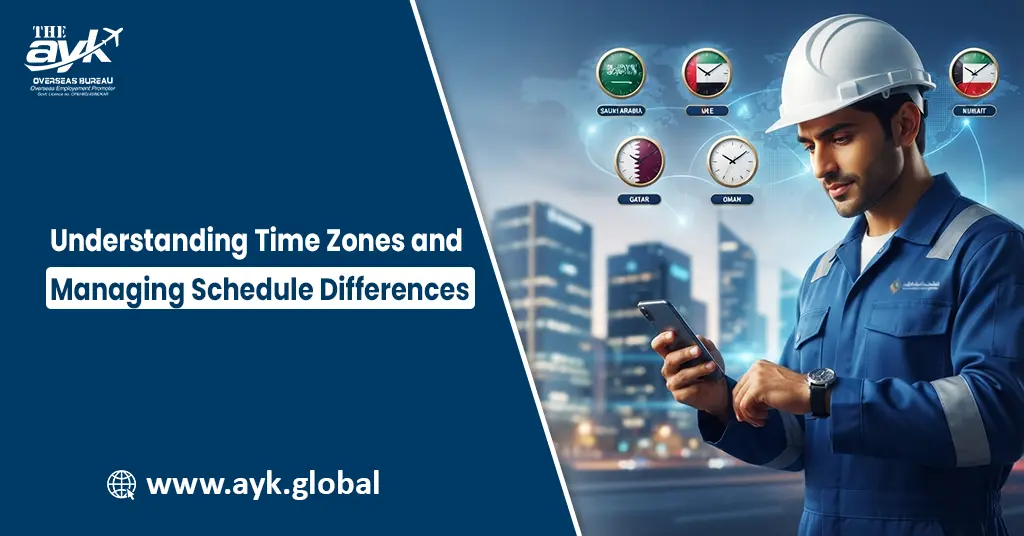
Understanding Time Zones and Managing Schedule Differences
Published: July 01, 2026 | Views: 14
Introduction
Time zone differences between Gulf countries and Pakistan represent a practical, everyday challenge that consistently affects overseas workers' ability to maintain meaningful family communication and manage their personal affairs back home throughout their entire overseas employment period. While Pakistan and most Gulf countries share relatively modest time differences compared to longer-distance international employment, these differences still create meaningful scheduling constraints that require deliberate planning to ensure workers maintain consistent, quality family connection without creating unsustainable communication demands that exhausted workers cannot reliably maintain alongside their actual employment responsibilities.
Understanding the specific time zone relationships between Pakistan and major Gulf destinations, and developing practical strategies for managing these scheduling differences effectively, provides workers with important practical preparation that significantly affects their overall overseas experience quality and family relationship sustainability throughout their employment period. This guide examines the practical realities of Gulf-Pakistan time zone differences and provides actionable strategies for managing these differences in ways that support healthy family connection alongside professional employment effectiveness. AYK Overseas Recruitment & HR Manpower Agency, recognized as one of Pakistan's top manpower agencies, provides pre-departure guidance covering these practical daily life dimensions that significantly affect the quality of candidates' overall overseas employment experience.
Understanding Gulf-Pakistan Time Zone Relationships
Pakistan operates on Pakistan Standard Time at UTC plus five hours, while most Gulf destinations maintain UTC plus three hours, creating a two-hour time difference that means Gulf workers are two hours behind Pakistan Standard Time throughout their overseas employment period. This seemingly modest two-hour difference creates meaningful practical scheduling constraints because communication windows that seem perfectly reasonable when calculated abstractly often collide with actual work schedule demands, sleep requirements, and family routine patterns that make specific theoretical communication windows practically unavailable despite appearing adequate on paper.
Workers should understand that this two-hour difference means that when it is evening in Pakistan, it is still afternoon in Gulf destinations, and when Gulf workers finish late evening shifts, their Pakistan family members are already in the late night hours that disrupt sleep schedules if communication occurs at those times. This specific time relationship affects communication planning differently for workers on different shift patterns, making it important for individual workers to calculate the specific communication windows their particular work schedule creates rather than applying generic time zone guidance that may not accurately reflect their individual scheduling reality.
Calculating Your Specific Available Communication Windows
Workers should map their specific expected daily schedule against Pakistan time equivalents to identify which specific daily windows genuinely offer quality communication opportunity without compromising either their own rest and recovery or their family members' sleep and daily routines. This specific schedule mapping exercise, conducted before departure rather than improvised after arrival, helps workers develop realistic communication plans that prove sustainable across their entire employment period rather than ambitious initial intentions that quickly become impractical against actual schedule demands.
Workers should identify two or three specific daily windows that consistently offer genuine communication opportunity across their expected weekly schedule rather than relying on ad-hoc communication that occurs whenever it happens to be convenient rather than at predictable, anticipated times. This window identification helps workers establish the reliable communication rhythm that family members particularly benefit from having as predictable connection anchors throughout separation periods that sporadic, unpredictable communication timing makes considerably more anxiety-producing for family members who cannot anticipate when reliable contact will occur.
Why Even a Two-Hour Difference Creates Real Challenges
Workers and families sometimes underestimate how significantly even a modest two-hour time difference affects practical communication scheduling when combined with typical Gulf employment shift patterns that often involve early morning starts, extended working days during peak project periods, and limited meaningful personal time during actual working days that leave evenings and rest days as the primary quality communication opportunities. When Gulf workers finish their working day in the late afternoon Gulf time, Pakistan family members are already in the early evening hours that may involve children's homework, dinner preparation, and various other family routine demands that compete with phone or video call availability.
Weekend scheduling also requires consideration, since Gulf countries typically observe Friday and Saturday as the weekly rest period while Pakistan follows Saturday and Sunday rest patterns, creating a misaligned weekend schedule that reduces the joint rest day communication opportunity that both parties having simultaneous free time would otherwise create. This weekend schedule difference means Gulf workers and Pakistan families often have their primary rest periods offset from each other, requiring deliberate schedule coordination that acknowledges this misalignment rather than assuming weekend availability aligns between both parties.
Establishing and Protecting Family Communication Schedules
The most effective approach to managing time zone scheduling differences involves establishing specific, committed regular communication schedules before departure and treating these scheduled connections with the same reliability expectation that important professional commitments receive, rather than allowing communication to become opportunistic and irregular in ways that create family anxiety and relationship drift throughout the separation period. Workers who approach family communication scheduling with genuine professional commitment rather than treating it as optional whenever convenient maintain considerably healthier family relationships throughout their overseas employment.
Workers should discuss and agree upon specific scheduled communication times with family members before departure, choosing windows that genuinely work for both sides' actual daily routines rather than imposing schedules that seem convenient for the worker but consistently interrupt important family routine moments. This mutual schedule consultation demonstrates genuine respect for family members' daily lives and creates shared ownership of the communication schedule that makes family members more likely to prioritize these scheduled connections as genuinely important relationship investments rather than simply waiting for whenever the overseas worker happens to call.
Managing Emergency Communications Across Time Zones
Family emergencies do not respect time zone scheduling convenience, requiring workers to develop clear protocols for genuine emergency communication that occurs outside normal scheduled connection times without creating the anxiety that unexpected calls might otherwise generate when family members cannot immediately distinguish between emergency and non-emergency contact attempts. Establishing clear emergency communication signals, such as specific notification patterns or agreed-upon emergency contact methods that distinguish urgent from routine communication, helps families manage genuine emergencies more effectively without creating unnecessary alarm from normal out-of-schedule contact.
Workers should ensure family members have multiple reliable contact methods for genuine emergency situations, including both direct contact information and the ability to reach their recruitment agency or employer contact if direct worker contact proves temporarily impossible during genuine emergencies. This emergency contact infrastructure, while hopefully rarely needed, provides important family security that significantly reduces separation anxiety by ensuring family members know exactly how to reach appropriate help when circumstances genuinely require urgent communication outside normal scheduled connection patterns.
Using Technology Effectively for Time Zone Management
Various smartphone applications and online tools provide simple, practical assistance for managing time zone differences by displaying the current time in multiple locations simultaneously, helping workers and family members quickly calculate the equivalent time in the other location without manual calculation that sometimes leads to errors. Workers should identify and install the specific time management tools that suit their needs before departure, testing these tools during the pre-departure period when any technical difficulties can be resolved without the additional adjustment pressure that discovering tool limitations after arrival creates.
Workers should also take advantage of messaging applications that allow asynchronous communication, enabling family members to send voice messages, video clips, or text updates during their waking hours that the overseas worker can receive and respond to during their own waking hours without requiring both parties to be simultaneously available for real-time communication. This asynchronous communication capability significantly expands the effective communication possibilities across time zone differences by allowing meaningful message exchange that enriches connection beyond the necessarily more limited real-time communication windows that time zone differences create.
Managing Work Schedule Variations That Affect Communication
Gulf employment often involves schedule variations including overtime demands, shift rotations, project deadline periods with extended working hours, and various other circumstances that periodically disrupt the regular communication schedule workers establish with family members. Developing clear protocols for communicating schedule disruptions to family in advance whenever possible, rather than simply failing to appear for expected communication without explanation, helps families maintain trust and reduce anxiety during these unavoidable disruption periods.
Workers should develop simple, reliable notification habits for expected communication disruptions, such as sending a brief message during their working day when they anticipate being unable to connect at their scheduled time, giving family members advance notice that allows them to adjust their own plans without the growing concern that missed scheduled communication otherwise creates. This advance notification habit, while requiring minimal effort, demonstrates genuine thoughtfulness about family members' emotional experience of unexpected communication gaps that can create disproportionate worry without the context that brief advance explanation provides.
Helping Children Understand Time Zone Differences
Young children's time concept is still developing, making it genuinely challenging for them to understand why their parent cannot immediately answer calls or why certain communication times have been designated as the regular connection window rather than unrestricted any-time contact. Developing age-appropriate explanations of time zone differences that children can understand and work with helps them manage their communication expectations more effectively than simple rule-based communication schedules without the underlying understanding that makes these schedules make sense from the child's perspective.
Workers can help children develop intuitive time zone understanding through simple, concrete comparisons that connect the abstract concept to their daily experience, such as explaining that when they are going to sleep at night, their parent in the Gulf is just finishing their work and getting ready for dinner. This concrete, experience-anchored explanation helps children develop genuine understanding that supports their cooperation with communication schedules rather than creating frustration and repeated requests for immediate contact that time zone realities genuinely cannot accommodate regardless of how much both parent and child desire more immediate connection.
Coordinating with Family Around Important Events
Important family events including birthdays, school performances, Eid celebrations, and various other significant occasions require particular communication advance planning that ensures the overseas worker can participate meaningfully despite the time zone and distance constraints that otherwise limit their involvement in these emotionally important family moments. Workers should maintain awareness of upcoming significant family events and proactively arrange communication around these events well in advance rather than attempting last-minute coordination that may conflict with work schedule demands during busy employment periods.
Workers should also develop creative approaches for participating meaningfully in important family events despite their physical absence, such as recording personal video messages that can be played during celebrations, arranging live video connections during key moments of significant events, or sending meaningful gifts that arrive at the right time through advance coordination. These creative participation investments demonstrate genuine emotional presence and engagement with family life despite physical separation, maintaining the worker's meaningful role in the family's important shared moments throughout the overseas employment period.
Managing Administrative and Business Matters Across Time Zones
Many administrative and business matters affecting Pakistani workers' home-country affairs, including property management, banking matters, government documentation, and various other administrative tasks that arise throughout extended overseas employment, require coordination that the two-hour time zone difference makes more complicated than domestic management would involve. Workers should develop specific protocols for managing these administrative matters remotely, including establishing trusted family management relationships and appropriate power of attorney documentation that enables family members to act on workers' behalf for various administrative matters without requiring direct worker participation in every transaction.
Workers should also research online and digital administrative service options that allow some degree of remote management capability for Pakistani affairs, recognizing that the digitization of many government and banking services has progressively expanded remote management possibilities for overseas workers that were not available in earlier overseas employment periods. This digital administrative capability research helps workers identify which specific matters they can manage directly despite their overseas location and which genuinely require family representation through appropriate authority arrangements.
Sleep Management Alongside Communication Commitments
Workers sometimes compromise their own sleep and health recovery in attempts to maximize communication with family by accepting communication schedules that extend into their own necessary sleep periods, particularly during Gulf work schedule periods that begin very early in the morning and require adequate sleep for safe, effective physical performance. This sleep sacrifice approach, while reflecting genuine family commitment, ultimately undermines workers' physical wellbeing, work performance, and long-term employment sustainability in ways that serve neither the worker nor their family's genuine interests despite apparent short-term connection benefit.
Workers should develop communication schedules that genuinely protect their necessary sleep periods rather than allowing family communication to systematically compromise rest that physically demanding Gulf employment genuinely requires for safety and performance. This sleep protection boundary, communicated honestly to family members with genuine explanation of why it matters, is far better established openly before sleep deprivation creates observable effects than only addressed after the worker's functioning is already noticeably compromised by the cumulative effects of inadequate rest across multiple days of family communication scheduled through necessary sleep periods.
Creating Shared Time Rituals Despite Distance
Beyond scheduled communication calls, workers can develop creative shared time rituals that create sense of connection and togetherness despite physical separation, including simultaneously watching a particular television program while video calling together, coordinating meal times to sometimes occur simultaneously with remote sharing across the video connection, or developing other creative shared activities that create genuine togetherness experience rather than simply exchanging information updates during scheduled check-in calls. These shared activity rituals create richer, more emotionally satisfying connection experiences than purely informational communication, building relationship warmth that sustains family bonds across extended separation periods more effectively than fact-exchange communication alone.
Workers should also develop personal rituals that maintain their own sense of family connection during the non-communication periods between scheduled calls, including sharing regular photographs of their daily environment and activities, maintaining family group messaging with daily check-ins that maintain continuous connection between scheduled video calls, and various other low-effort continuous communication approaches that maintain relationship presence across the majority of the day rather than concentrating all connection into scheduled call windows. These continuous connection habits significantly enrich the emotional quality of the family relationship throughout the separation period beyond what scheduled call rituals alone can sustain.
Long-Term Time Zone Management as Employment Extends
Workers on extended multi-year employment contracts sometimes find that their initial communication schedule discipline gradually erodes over time as both parties settle into acceptance of the separation that reduces the urgency initially motivating consistent communication investment. This communication drift, while natural in its emergence, ultimately damages family relationship quality in ways that deliberate ongoing communication investment renewal can prevent by periodically refreshing the intentionality that sustained meaningful family connection genuinely requires across extended separation periods.
Workers should periodically review and, where needed, renew their communication commitment with family members, having explicit conversations about whether current communication patterns genuinely serve everyone's connection needs or whether adjustment would better serve the family's evolving relationship requirements as circumstances on both sides naturally change across extended employment periods. This periodic communication pattern review demonstrates ongoing genuine investment in family relationship quality that prevents the gradual drift toward disconnection that extended separation without deliberate connection maintenance sometimes creates despite everyone's genuine desire for continued meaningful family relationship.
How AYK Overseas Helps You Prepare for Time Zone Management
As a government-licensed international recruitment and HR manpower firm with offices in Karachi and Islamabad, AYK Overseas Recruitment & HR Manpower Agency provides pre-departure guidance covering practical daily life dimensions including time zone management and family communication planning that significantly affect the quality of candidates' overall overseas employment experience. Being recognized as one of Pakistan's top manpower agencies, we understand that comprehensive pre-departure preparation extends beyond documentation and technical employment preparation to include the practical daily life dimensions that genuinely determine whether overseas employment feels sustainable and rewarding throughout its complete duration.
Our team discusses family communication planning considerations with candidates before departure, helping workers develop realistic communication strategies that serve both their family connection needs and their professional effectiveness requirements throughout their overseas employment period. This practical guidance has helped AYK Overseas Recruitment & HR Manpower Agency support candidates in developing more sustainable, satisfying family communication approaches that maintain relationship quality throughout their overseas employment without creating the physical and professional costs that inadequately managed time zone scheduling sometimes produces for workers who attempt unsustainable communication commitments.
Conclusion
Understanding Gulf-Pakistan time zone differences and developing practical strategies for managing communication schedules effectively across these differences represents genuinely important practical preparation that significantly affects the quality of overseas workers' family relationships and overall employment experience throughout their employment period. Workers who approach this practical dimension with deliberate planning, realistic scheduling, creative connection strategies, and genuine ongoing commitment to family relationship investment create considerably stronger foundations for both their own overseas wellbeing and their family's sustained connection than those who leave this important dimension to chance and ad-hoc management.
 Complete Guide to Trade Testing Before Overseas Recruitment
 Remote Hiring vs Overseas Recruitment: What Trending Now
 Mechanical Technician Jobs in GCC Countries
 KSA Recruitment
 UAE Recruitment
 Qatar Recruitment
 Oman Recruitment
 Kuwait Recruitment
 Libya Recruitment
 Bahrain Recruitment
 Iraq Recruitment
 Malaysia Recruitment
 Malta Recruitment
 Canada Recruitment
 USA Recruitment
 Europe Recruitment
 UK Recruitment
 Romania Recruitment
 Poland Recruitment
 Bulgaria Recruitment
 Albania Recruitment
 Serbia Recruitment
 Lithuania Recruitment
 Japan Recruitment
 Turkey Recruitment
 Kyrgyzstan Recruitment
 South Korea Recruitment