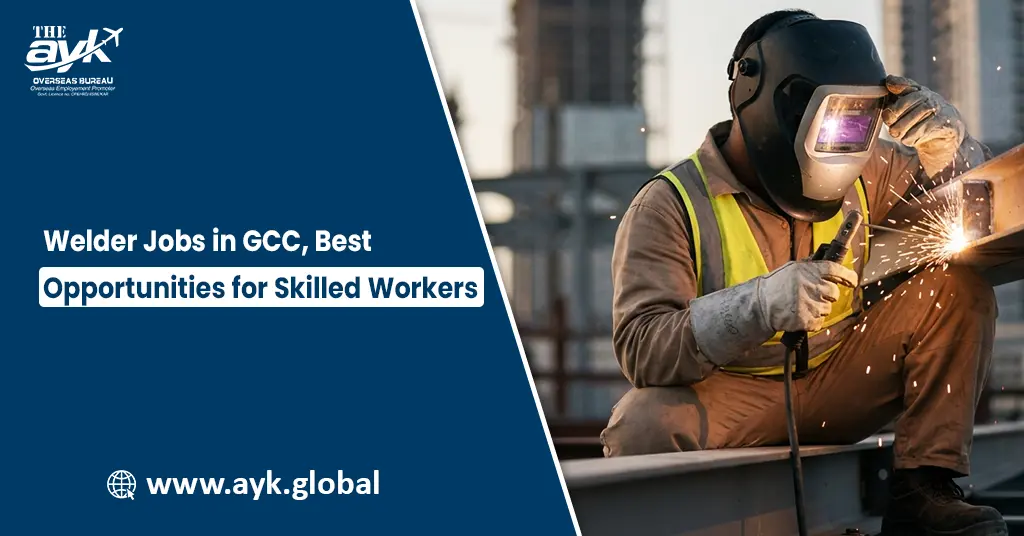
Welder Jobs in GCC, Best Opportunities for Skilled Workers
Published: July 02, 2026 | Views: 36
Welder jobs in GCC countries are among the most in-demand and highly respected skilled trade professions for Pakistani workers in 2026. Welding is a core requirement in almost every industrial sector across Saudi Arabia, United Arab Emirates (UAE), Qatar, Kuwait, Oman, and Bahrain. From oil and gas pipelines to construction projects, shipbuilding, manufacturing plants, steel fabrication, and infrastructure development, welders play a vital role in ensuring structural strength and industrial functionality.
GCC countries are experiencing rapid economic growth and large-scale development under national visions such as Saudi Vision 2030 and UAE industrial diversification plans. These mega projects include skyscrapers, airports, bridges, metro systems, oil refineries, and industrial zones, all of which require highly skilled welders. Because of this continuous development, thousands of welding jobs are created every year, offering excellent employment opportunities for Pakistani workers.
Welder jobs are especially attractive because they offer strong salaries, overtime opportunities, accommodation, transport, and long-term contracts. However, the work is highly skilled and sometimes physically demanding, requiring precision, technical knowledge, and safety awareness. Welders must be able to work in different environments such as construction sites, factories, offshore platforms, and industrial plants.
1. Types of Welder Jobs in GCC Countries
Welder jobs in GCC countries are divided into multiple categories based on welding techniques, materials, and industry requirements. The most common types include ARC welding, MIG welding, TIG welding, gas welding, pipeline welding, structural welding, and industrial fabrication welding. Each type requires different skill levels and certifications depending on job complexity.
Structural welders work on construction projects such as buildings, bridges, and steel frameworks. They are responsible for joining metal components that form the structural base of large infrastructure projects. Pipeline welders are highly specialized and work in oil and gas industries, where they weld pipes used for transporting crude oil, gas, and water. These jobs are highly paid due to technical difficulty and safety risks.
Industrial welders work in factories and manufacturing plants, handling machinery parts and production equipment. Shipyard welders work on marine vessels and offshore platforms, which require advanced skills and experience. Fabrication welders are responsible for creating metal structures, frames, and components in workshops before installation at project sites.
2. Demand for Welders in GCC Countries
The demand for welders in GCC countries is consistently high due to continuous infrastructure development and industrial expansion. Saudi Arabia has the highest demand because of its massive oil and gas sector, construction projects, and Vision 2030 initiatives. UAE also offers strong demand in construction, shipbuilding, and manufacturing industries.
Qatar requires welders for stadiums, LNG projects, and infrastructure development. Kuwait has steady demand in oil refineries and industrial maintenance projects, while Oman focuses on pipeline construction and industrial zones. Bahrain offers smaller but consistent opportunities in commercial and industrial sectors.
The expansion of oil and gas pipelines, petrochemical plants, and mega construction projects ensures that welders remain one of the most essential skilled professions in the GCC region. Automation has increased efficiency, but skilled human welders are still required for precision work and complex tasks.
3. Salary Structure for Welders in GCC
Welder salaries in GCC countries vary depending on skill level, certification, and experience. Entry-level welders typically earn moderate salaries, while certified and experienced pipeline welders earn significantly higher incomes. Countries like UAE and Qatar usually offer higher salary packages due to advanced industrial projects and international contractors.
In addition to basic salary, welders often receive overtime pay, which can significantly increase monthly earnings. Employers usually provide free accommodation, transportation, and medical insurance. Some companies also offer bonuses, annual increments, and end-of-service benefits.
Highly skilled welders working in oil and gas industries or offshore projects earn premium salaries due to the complexity and risk involved. Certifications such as TIG and pipeline welding can significantly increase earning potential.
4. Skills Required for Welder Jobs
Welder jobs in GCC countries require strong technical skills, precision, and physical endurance. Welders must understand different welding techniques such as ARC, MIG, TIG, and gas welding. They must also know how to read technical drawings, blueprints, and welding symbols used in industrial projects.
Attention to detail is extremely important because even small mistakes can affect structural safety. Physical fitness is also necessary as welders often work in extreme heat, confined spaces, or elevated platforms. Problem-solving skills are important for identifying defects and ensuring strong, durable welds.
Safety awareness is one of the most critical skills in welding jobs. Welders must follow strict safety protocols, wear protective equipment, and comply with industrial safety standards to avoid accidents.
5. Educational Requirements and Certifications
Most welder jobs in GCC countries do not require higher education, but technical training and vocational certification are highly preferred. Many employers require candidates to have welding diplomas or trade certifications from recognized institutes.
International welding certifications such as AWS (American Welding Society) or similar qualifications significantly improve job opportunities and salary packages. Employers often conduct welding tests before hiring to evaluate skill level and welding quality.
Experience in construction, industrial fabrication, or oil and gas projects is highly valued. Skilled welders with proven experience have better chances of securing high-paying jobs in GCC countries.
6. Recruitment Process for Welder Jobs in GCC
The recruitment process for welder jobs in GCC countries usually starts with applications through licensed recruitment agencies or direct company hiring. After shortlisting, candidates are required to undergo practical welding tests to demonstrate their skills in real-time conditions.
These tests may include pipe welding, structural welding, or fabrication tasks depending on job requirements. Once selected, candidates go through document verification, medical examinations, and visa processing. Employers provide work visas under sponsorship systems, allowing legal employment in GCC countries.
It is important for workers to avoid fake agents and only apply through authorized recruitment channels to ensure safe and legal employment opportunities.
7. Job Opportunities in Different GCC Countries
Each GCC country offers strong opportunities for welders based on industrial development. Saudi Arabia leads the region with the highest demand due to oil refineries, construction projects, and industrial expansion. UAE offers excellent opportunities in construction, shipbuilding, and manufacturing industries.
Qatar provides strong demand in LNG projects, stadiums, and infrastructure development. Kuwait offers stable welding jobs in oil refineries and maintenance projects, while Oman focuses on pipeline and industrial welding work. Bahrain offers smaller but consistent opportunities in commercial and industrial sectors.
Overall, welders are required in almost every industrial and construction project across the GCC region.
8. Career Growth and Future Scope
Welder jobs in GCC countries offer strong career growth opportunities for skilled workers. With experience, welders can advance to senior welder, welding inspector, supervisor, or fabrication foreman roles. Certified welders can also specialize in high-demand areas such as pipeline welding, offshore welding, and industrial fabrication.
The future scope of welding jobs remains strong due to continuous infrastructure development, oil and gas expansion, and industrial growth in GCC countries. Even with automation, skilled welders are still required for precision and complex tasks that machines cannot fully replace.
Conclusion
Welder jobs in GCC countries provide excellent opportunities for Pakistani skilled workers in 2026, offering strong salaries, high demand, and long-term career growth. With ongoing construction, oil and gas expansion, and industrial development across Saudi Arabia, UAE, Qatar, Kuwait, Oman, and Bahrain, welders remain one of the most essential skilled professions.
Although welding is a physically demanding and highly technical job, it offers attractive income, overtime benefits, accommodation, and stable employment. Skilled welders who obtain certifications and gain experience can build highly successful international careers in the GCC job market.
 Best Certifications to Boost Your Gulf Job Prospects
 Understanding Time Zones and Managing Schedule Differences
 How Licensed Recruitment Agencies Help GCC Employers Hire Better Talent
 KSA Recruitment
 UAE Recruitment
 Qatar Recruitment
 Oman Recruitment
 Kuwait Recruitment
 Libya Recruitment
 Bahrain Recruitment
 Iraq Recruitment
 Malaysia Recruitment
 Malta Recruitment
 Canada Recruitment
 USA Recruitment
 Europe Recruitment
 UK Recruitment
 Romania Recruitment
 Poland Recruitment
 Bulgaria Recruitment
 Albania Recruitment
 Serbia Recruitment
 Lithuania Recruitment
 Japan Recruitment
 Turkey Recruitment
 Kyrgyzstan Recruitment
 South Korea Recruitment