What Makes Pakistani Workers Stand Out to Gulf Employers
Published: July 04, 2026 | Views: 12
Introduction
Pakistani workers have maintained a strong and enduring presence across Gulf employment markets for more than four decades, building a collective professional reputation that reflects genuine workplace qualities that Gulf employers across construction, hospitality, healthcare, and various other sectors have consistently valued through extended hiring experience that spans multiple generations of Pakistani overseas workers. This positive collective reputation represents both a genuine competitive advantage that individual Pakistani workers inherit as part of their national professional community's accumulated standing and a responsibility that individual workers carry to maintain and strengthen through their own professional conduct, recognizing that every Pakistani worker's behavior in Gulf employment contributes to the collective reputation that helps or hinders all subsequent Pakistani workers competing for Gulf employment opportunities. AYK Overseas Recruitment & HR Manpower Agency, recognized as one of Pakistan's top manpower agencies, works daily at the intersection of Pakistani worker capabilities and Gulf employer requirements, and this guide reflects our genuine understanding of what specifically makes Pakistani workers valuable to Gulf employers alongside what workers should consciously develop to further strengthen this positive reputation.
Strong Work Ethic as Pakistan's Primary Reputation Asset
Pakistani workers' strong work ethic represents the single most consistently cited positive quality that Gulf employers across all employment categories and Gulf destinations specifically attribute to Pakistani workers when describing their workforce preferences, reflecting decades of accumulated employer experience with Pakistani workers who consistently demonstrate genuine dedication, willingness to work demanding hours, and personal ownership of their work quality that distinguishes them favorably from some other worker source country populations in Gulf employer workforce comparisons. This work ethic reputation is not simply a cultural stereotype but reflects genuine behavioral patterns that Gulf employers have directly observed across many years of Pakistani worker employment, making it one of Pakistan's most valuable overseas employment assets that individual workers should consciously understand as something they carry personal responsibility for maintaining through their own daily professional conduct throughout their Gulf employment. Workers who understand this reputation as a genuine competitive asset rather than simply an inherited characteristic they benefit from passively recognize the importance of personally demonstrating the work ethic qualities that underpin this reputation, protecting both their own individual professional standing and the collective reputation that benefits all Pakistani workers competing for Gulf employment opportunities.
Cultural and Religious Compatibility with Gulf Society
Pakistan's predominantly Muslim cultural background creates meaningful cultural and religious compatibility with Gulf societies whose Islamic foundations shape workplace practices, social norms, daily schedules, and various other aspects of the employment environment that Pakistani workers navigate with considerably greater intuitive familiarity than workers from non-Muslim backgrounds who must bridge larger cultural distances throughout their Gulf employment. Gulf employers specifically value this cultural compatibility because it reduces workplace friction around prayer time accommodation, Ramadan work schedule adjustment, halal food preference management, and various other Islamic practice dimensions that create potential workplace tension when employing workers from cultural backgrounds without this religious common ground. Pakistani workers should consciously approach this cultural compatibility as a genuine professional advantage that earns goodwill and creates connection opportunities with local supervisors and colleagues when navigated with genuine respect and authentic cultural engagement rather than treating it as simply a convenient resume talking point without the lived cultural practice that genuine cultural compatibility actually requires.
Technical Trade Skills with Established Gulf Market Recognition
Pakistani construction trade workers, particularly electricians, plumbers, welders, and various other skilled tradespeople, have built strong technical skill recognition within Gulf construction employment markets through decades of demonstrated competency that has established Pakistani tradespeople as reliably capable practitioners within their specific trade categories in ways that Gulf construction employers specifically seek out when building their project workforce teams. This technical reputation is particularly strong within construction trade categories where Pakistani workers have contributed to major Gulf infrastructure projects across multiple decades, creating accumulated employer experience that translates into active preference for Pakistani trade workers when workforce composition decisions are made by construction companies with Pakistan hiring history. Workers who understand this technical reputation as something built through generations of competent predecessors carry both the benefit of positive preconception and the responsibility of maintaining technical standards that keep this reputation genuinely deserved rather than allowing it to become a hollow historical claim that current workers fail to substantiate through actual technical performance.
Adaptability to Challenging Physical Conditions
Pakistani workers' demonstrated adaptability to Gulf construction and industrial employment's physically challenging conditions, including extreme heat during summer months, demanding physical labor requirements, and various other workplace environment challenges that workers from more comfortable domestic employment contexts sometimes struggle with more significantly, represents a genuine operational value that Gulf employers have observed directly through workforce management experience rather than simply attributing theoretically to Pakistani worker backgrounds. This physical adaptability reflects both genuine personal resilience that many Pakistani workers develop through diverse domestic work experience and the practical economic motivation that makes Gulf employment sufficiently important to workers that they invest genuine effort in adapting to physically challenging conditions rather than seeking accommodation or reduced performance that the conditions might otherwise justify. Workers who demonstrate this physical adaptability consistently rather than only during initial employment periods when motivation is highest create lasting positive impressions that contribute to the retention consideration and contract renewal recommendations that strong physical performers receive from satisfied Gulf employers at the conclusion of initial employment contracts.
Loyalty and Long-Term Employment Commitment
Gulf employers specifically value Pakistani workers' tendency toward employment loyalty and willingness to commit to extended tenure with satisfactory employers, recognizing that high worker turnover creates genuine operational and training costs that stable, loyal workforces reduce significantly compared to employment populations who move between employers frequently in pursuit of marginally better compensation offers. This loyalty disposition reflects both genuine relationship orientation within Pakistani cultural values and the practical reality that overseas employment involves significant personal and financial investment that makes stable employment more valuable to Pakistani workers than frequent job changes that create disruption without proportionate benefit. Gulf employers who recognize and appropriately reward this loyalty tendency through fair treatment, timely salary payment, and reasonable working conditions create virtuous cycles where Pakistani workers' natural loyalty orientation generates genuine retention that serves both employer operational interests and worker stability interests across extended employment relationships.
English Communication Capability Within Pakistani Worker Population
Pakistani workers' generally stronger English language foundation compared to worker populations from some other major Asian labor source countries represents a genuine practical advantage that Gulf employers value for its operational impact across workplace communication, safety instruction comprehension, quality reporting, and various other English-mediated workplace functions that require functional communication capability from workers regardless of their primary trade specialization. This English advantage reflects Pakistan's educational system's substantial English language instruction component that produces workers with more functional English than many competing source country populations, though individual Pakistani workers show considerable variation in actual English proficiency levels that makes this a population-level advantage rather than a guarantee at the individual candidate level. Workers who invest in developing their genuine English communication capability beyond whatever level Pakistani educational exposure provided create stronger individual differentiation within the Pakistani worker population itself, accessing the premium employment opportunities that demand stronger English communication from the workers who can demonstrate this capability during employer assessment processes.
Academic and Professional Credential Quality
Pakistani workers benefit from a relatively developed educational and professional credential infrastructure that produces graduates and certified professionals across engineering, medicine, nursing, accounting, teaching, and various other professional categories whose credential quality Gulf employers have developed familiarity with and generally regard positively based on accumulated professional hiring experience. The HEC's degree verification system, PMDC's medical credential management, and various other Pakistani professional regulatory bodies create formal credential quality assurance mechanisms that give Gulf professional employers confidence in Pakistani professional qualifications that less structured credential systems from other source countries cannot equivalently provide. Workers in professional employment categories should specifically leverage this credential quality advantage by ensuring their qualifications are properly verified and authenticated through the formal systems that Gulf employers specifically look to when assessing Pakistani professional credentials, making this verification investment a genuine competitive positioning tool rather than simply a bureaucratic compliance requirement.
Community and Network Strength in Gulf Markets
Pakistan's large, established community presence across all major Gulf employment markets creates social and professional network infrastructure that benefits newly arriving Pakistani workers through faster practical adjustment, community information sharing, and professional connection opportunities within established Pakistani professional communities that have built meaningful presence within Gulf employment markets across multiple decades. Gulf employers who have built Pakistani workforce communities within their organizations over extended periods recognize the positive peer culture effects that strong Pakistani worker communities create, with established Pakistani worker groups often providing informal integration support for newly arriving colleagues and maintaining professional culture standards that benefit entire workforce teams rather than simply individual community members. Workers who actively contribute to and benefit from these Pakistani professional community networks create compound value that serves both their own practical adjustment and the broader community reputation that makes these networks genuinely valuable resources for the ongoing stream of Pakistani workers who benefit from the welcome that established community presence provides in Gulf employment markets.
How AYK Overseas Helps Pakistani Workers Leverage Their Strengths
As a government-licensed international recruitment and HR manpower firm with offices in Karachi and Islamabad, AYK Overseas Recruitment & HR Manpower Agency helps Pakistani workers understand, articulate, and effectively present the genuine strengths that make them valuable to Gulf employers, ensuring that these authentic competitive advantages are clearly communicated through application materials, interview preparation, and professional presentation that allows Gulf employers to specifically recognize the qualities they are looking for within Pakistani worker candidates. Being recognized as one of Pakistan's top manpower agencies, we build our placement approach around genuine understanding of both Pakistani worker strengths and Gulf employer priorities, creating the match quality that serves both parties' genuine interests rather than simply facilitating placement transactions without the quality matching that produces sustainable, mutually beneficial employment relationships.
Conclusion
Pakistani workers stand out to Gulf employers through a combination of genuine strengths including established work ethic reputation, cultural and religious compatibility, recognized technical trade skills, physical adaptability, employment loyalty, English communication capability, credential quality, and established community network infrastructure that collectively create a positive employment proposition that Gulf employers across multiple decades and employment categories have consistently valued within their workforce composition decisions. Individual Pakistani workers who consciously understand, develop, and authentically demonstrate these genuine strengths through their own professional conduct maintain and strengthen the collective reputation that benefits the entire Pakistani overseas worker community, creating lasting positive reputation capital that sustains Pakistani workers' competitive positioning within Gulf employment markets across the coming generations.
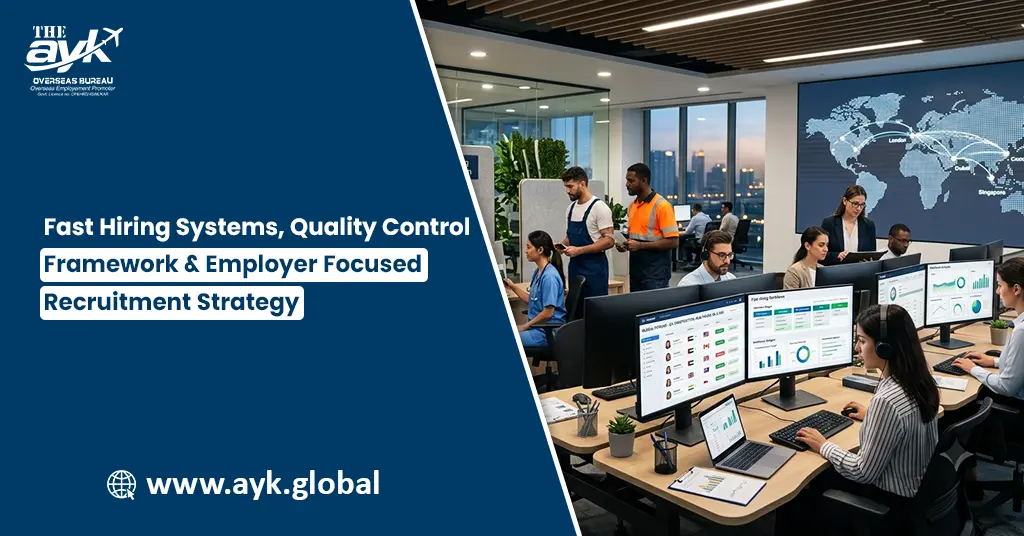 Fast Hiring Systems, Quality Control Framework & Employer-Focused Recruitment Strategy
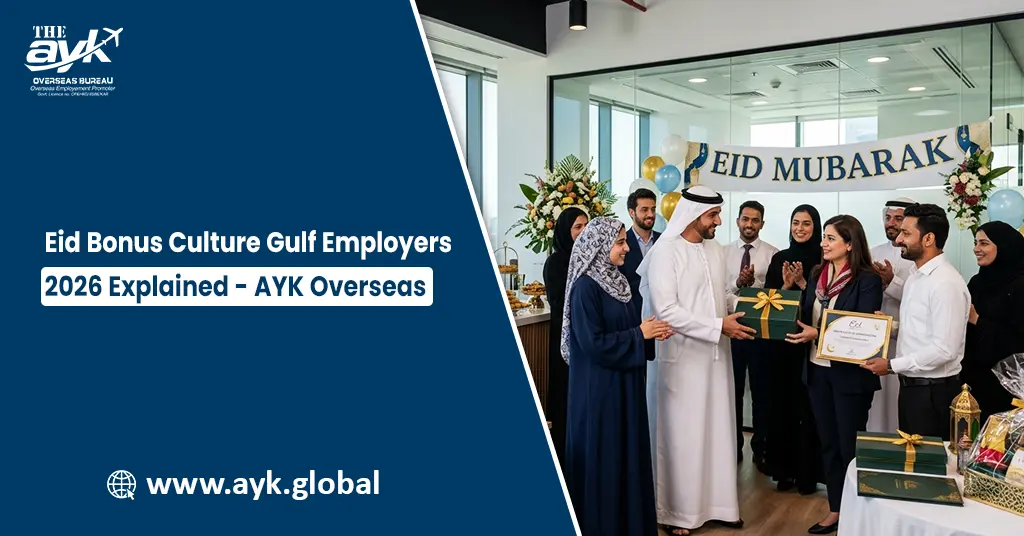 Eid Bonus Culture: What Gulf Employers Actually Offer
 KSA Recruitment
 UAE Recruitment
 Qatar Recruitment
 Oman Recruitment
 Kuwait Recruitment
 Libya Recruitment
 Bahrain Recruitment
 Iraq Recruitment
 Malaysia Recruitment
 Malta Recruitment
 Canada Recruitment
 USA Recruitment
 Europe Recruitment
 UK Recruitment
 Romania Recruitment
 Poland Recruitment
 Bulgaria Recruitment
 Albania Recruitment
 Serbia Recruitment
 Lithuania Recruitment
 Japan Recruitment
 Turkey Recruitment
 Kyrgyzstan Recruitment
 South Korea Recruitment