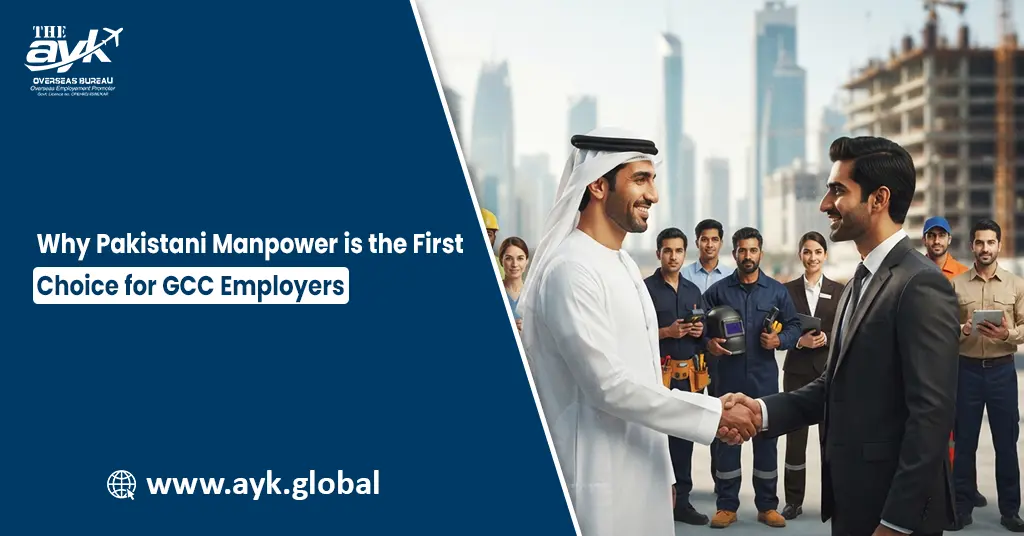
Why Pakistani Manpower Is the First Choice for GCC Employers
Published: July 03, 2026 | Views: 13
Introduction
The Gulf Cooperation Council (GCC) countries have become one of the world's largest employment destinations for foreign workers, offering countless opportunities across industries such as construction, oil & gas, manufacturing, healthcare, hospitality, logistics, facility management, and infrastructure development. As these economies continue investing in ambitious mega projects and economic diversification initiatives, the demand for reliable, skilled, and dedicated workers continues to grow. Among the many international labor markets supplying talent to the GCC, Pakistani manpower has consistently earned a strong reputation for professionalism, technical competence, adaptability, and commitment to delivering quality work.
For decades, employers across Saudi Arabia, the United Arab Emirates (UAE), Qatar, Kuwait, Oman, and Bahrain have relied on Pakistani workers to support both large-scale infrastructure projects and everyday business operations. From highly qualified engineers and healthcare professionals to experienced electricians, welders, drivers, plumbers, technicians, and general laborers, Pakistani manpower has demonstrated the ability to perform efficiently in diverse working environments. This article explores the key reasons why Pakistani manpower remains the first choice for many GCC employers and how businesses benefit from recruiting talent from Pakistan.
A Long-Standing Reputation for Reliability and Hard Work
One of the biggest reasons Pakistani manpower enjoys a strong reputation across the GCC is its long history of dependable performance. Pakistani workers have been contributing to Gulf economies for several decades, helping build roads, airports, commercial towers, industrial facilities, hospitals, ports, and residential communities. This long-standing presence has created trust between employers and Pakistani professionals, making them a preferred workforce for both public and private sector projects.
Employers value workers who are committed to meeting deadlines, maintaining productivity, and performing their responsibilities with dedication. Pakistani employees are widely recognized for their willingness to work in demanding environments, including extreme weather conditions, rotational shifts, and large-scale industrial sites. Their ability to remain focused under pressure makes them valuable assets for companies aiming to complete projects on time without compromising quality or workplace standards.
Availability of Skilled, Semi-Skilled, and Unskilled Workforce
Pakistan offers one of the largest labor pools in South Asia, providing employers with access to professionals across a wide range of industries and experience levels. Whether a company requires highly qualified engineers, certified technicians, healthcare professionals, heavy equipment operators, electricians, or general laborers, Pakistan has a diverse workforce capable of meeting different recruitment needs. This broad availability allows employers to recruit complete project teams from a single talent market rather than sourcing workers from multiple countries.
Technical education institutes, vocational training centers, apprenticeship programs, and professional certification organizations continue producing thousands of skilled workers every year. Many candidates also possess international work experience, particularly in GCC countries, giving them familiarity with regional work environments, safety standards, and employer expectations. This combination of education, practical experience, and technical expertise makes Pakistani manpower highly attractive for businesses seeking reliable and productive employees.
Some of the most in-demand Pakistani professionals include:
- Civil Engineers
- Mechanical Engineers
- Electrical Engineers
- Welders
- Fabricators
- Electricians
- Plumbers
- HVAC Technicians
- Scaffolders
- Heavy Equipment Operators
- Drivers
- Nurses
- Hospitality Staff
- Warehouse Workers
- General Laborers
Strong Technical Skills Across Multiple Industries
Pakistani professionals have built a reputation for technical excellence across numerous industries operating in the GCC. Construction companies regularly recruit Pakistani electricians, steel fixers, masons, carpenters, painters, plumbers, and welders because of their practical knowledge and ability to perform according to international standards. Likewise, oil & gas companies employ experienced technicians, mechanical fitters, pipeline specialists, safety officers, and maintenance personnel who contribute to safe and efficient operations.
The manufacturing sector also benefits significantly from Pakistani manpower. Production operators, quality inspectors, CNC machine operators, industrial mechanics, maintenance technicians, and warehouse professionals possess the technical knowledge required to maintain productivity in modern manufacturing facilities. Their adaptability to advanced machinery and industrial processes enables employers to maintain operational efficiency while minimizing downtime caused by skill shortages.
Cost-Effective Recruitment Without Compromising Quality
Every employer aims to achieve the right balance between recruitment cost and workforce quality. Pakistani manpower offers excellent value because businesses can recruit experienced, capable workers at competitive salary levels while maintaining high productivity standards. This cost-effectiveness allows companies to optimize project budgets without sacrificing operational performance or service quality.
Lower recruitment costs also extend beyond employee salaries. Pakistan has an established recruitment infrastructure with licensed manpower agencies, technical testing centers, documentation specialists, and government-approved recruitment procedures. These systems simplify international hiring while reducing administrative expenses, recruitment delays, and operational risks. As a result, employers receive qualified workers more efficiently, helping projects remain within budget and on schedule.
Adaptability to GCC Work Culture and Environment
Another major reason Pakistani manpower is highly valued throughout the GCC is its remarkable adaptability. Many Pakistani workers have previous employment experience in Gulf countries, making them familiar with local workplace cultures, employer expectations, safety regulations, and project management systems. Even first-time overseas workers generally adapt quickly because of cultural similarities, strong work ethics, and comprehensive pre-departure orientation programs provided by recruitment agencies.
Working in multicultural environments requires flexibility, teamwork, and respect for different nationalities and professional backgrounds. Pakistani employees are known for integrating well into diverse teams consisting of workers from Asia, Africa, Europe, and the Middle East. Their willingness to cooperate, communicate effectively, and support organizational objectives contributes to healthier workplace relationships and improved project performance across industries.
When employers recruit Pakistani manpower, they often benefit from:
- Faster workplace adaptation
- Strong teamwork abilities
- Respect for organizational hierarchy
- Commitment to safety regulations
- Positive workplace attitude
- Flexibility in shift-based operations
- Ability to work in multicultural teams
- Strong problem-solving mindset
High Demand in Construction and Infrastructure Projects
The construction industry remains the largest employer of Pakistani manpower across GCC countries. Mega infrastructure projects involving highways, bridges, airports, railways, residential communities, industrial facilities, commercial towers, hospitals, educational institutions, and smart cities require thousands of skilled workers throughout different phases of development. Pakistani professionals have consistently played a vital role in delivering these projects through their technical expertise and dedication.
Construction employers particularly value Pakistani workers because of their experience in labor-intensive environments where quality, productivity, and safety are equally important. Skilled trades such as masonry, steel fixing, plumbing, electrical installation, carpentry, welding, scaffolding, HVAC installation, painting, and heavy equipment operation require precision and practical knowledge. Pakistani workers have repeatedly demonstrated their ability to perform these tasks efficiently while maintaining high construction standards and meeting strict project deadlines.
Strong Communication Skills and Professional Behavior
Effective communication is an essential factor in the success of any project, especially in the multicultural work environments found across GCC countries. Pakistani manpower is widely appreciated for its ability to communicate with supervisors, clients, and coworkers in a professional manner. While many workers are fluent in Urdu and regional languages, a significant number also possess working knowledge of English and Arabic, allowing them to understand instructions, follow safety protocols, and coordinate effectively with multinational teams. This communication ability minimizes misunderstandings and contributes to smoother project execution.
In addition to communication skills, Pakistani workers are known for their respectful and disciplined professional behavior. They understand the importance of punctuality, accountability, and following organizational procedures. Employers often report that Pakistani employees demonstrate loyalty, honesty, and a willingness to learn, which strengthens long-term employer-employee relationships. Their professional attitude not only improves workplace harmony but also reduces management challenges, making them a dependable choice for businesses operating in competitive industries.
Commitment to Workplace Safety and Quality Standards
Safety is a top priority for every GCC employer, particularly in industries such as construction, oil & gas, manufacturing, and heavy engineering. Pakistani manpower has earned recognition for following workplace safety procedures and adapting to international health and safety standards. Many skilled workers receive formal safety training before deployment, while others gain practical experience by working on projects that require strict compliance with safety regulations. This awareness helps reduce workplace accidents and ensures that projects continue without unnecessary disruptions.
Quality is another area where Pakistani workers consistently perform well. Whether they are installing electrical systems, operating heavy machinery, fabricating steel structures, or managing warehouse operations, they understand the importance of completing tasks accurately and according to project specifications. Employers value this attention to detail because it reduces rework, improves operational efficiency, and enhances customer satisfaction. Workers who combine safety awareness with quality workmanship contribute significantly to the long-term success of any organization.
Government Support and Organized Recruitment System
Pakistan has developed a structured overseas employment system that supports both employers and workers throughout the recruitment process. Licensed manpower recruitment agencies operate under government regulations, ensuring ethical recruitment practices and compliance with international employment standards. These agencies assist employers with candidate sourcing, interviews, technical trade testing, documentation, visa processing, medical examinations, and worker mobilization, creating a streamlined recruitment experience.
Government institutions and vocational training organizations also play an important role by promoting skill development and preparing workers for international employment opportunities. Training programs focus on technical expertise, workplace safety, communication skills, and professional ethics, enabling candidates to meet the expectations of GCC employers. This organized recruitment framework increases employer confidence and makes Pakistan one of the most reliable manpower sourcing destinations in the region.
Ability to Meet Large-Scale Recruitment Demands
One of Pakistan's greatest strengths is its ability to supply manpower on a large scale. Mega infrastructure and industrial projects often require hundreds or even thousands of employees within a limited timeframe. Pakistani recruitment agencies possess extensive talent databases and nationwide sourcing networks, allowing them to identify qualified candidates quickly and efficiently. This capability is particularly valuable for employers working on projects with strict deadlines where workforce shortages can lead to costly delays.
The country's large population and growing workforce provide employers with access to professionals across virtually every occupation. Whether a business requires engineers, technicians, machine operators, healthcare professionals, hospitality staff, logistics personnel, or general laborers, recruitment campaigns can be organized to meet both immediate and future workforce requirements. This scalability enables companies to expand operations confidently without worrying about labor availability.
Some of the positions commonly recruited in bulk include:
- Civil Engineers
- Mechanical Engineers
- Electrical Technicians
- Welders
- Pipe Fitters
- Electricians
- Plumbers
- Heavy Equipment Operators
- Drivers
- Safety Officers
- Warehouse Staff
- Hotel Employees
- Healthcare Professionals
- Factory Workers
- General Laborers
Positive Employer Feedback and Long-Term Workforce Retention
Employer satisfaction plays a major role in shaping recruitment decisions, and Pakistani manpower has consistently received positive feedback across various GCC industries. Companies frequently recognize Pakistani workers for their reliability, productivity, adaptability, and willingness to contribute beyond their assigned responsibilities. Positive experiences encourage employers to continue recruiting from Pakistan for future projects, creating long-term partnerships with recruitment agencies and workforce providers.
Employee retention is another important advantage. Recruiting and training new employees requires time and financial investment, making workforce stability a valuable asset. Pakistani workers often build long-term careers with GCC employers because of their dedication, strong work ethic, and commitment to organizational success. Higher retention rates reduce recruitment costs, improve team cohesion, and allow businesses to maintain experienced workforces capable of supporting ongoing operations and future expansion.
The Future of Pakistani Manpower in GCC Countries
The future of Pakistani manpower in the GCC remains highly promising as Gulf economies continue investing in infrastructure, tourism, renewable energy, manufacturing, logistics, healthcare, and technology-driven industries. National development strategies such as Saudi Arabia's Vision 2030 and similar economic diversification initiatives across the GCC are creating thousands of new employment opportunities for skilled international workers. Pakistani professionals are well-positioned to meet this growing demand because of their technical capabilities, industry experience, and proven track record.
Looking ahead, employers are expected to prioritize workers who possess specialized technical skills, digital literacy, safety certifications, and the ability to adapt to modern workplace technologies. Pakistan's continued investment in vocational education, professional training, and workforce development will further strengthen its position as a trusted manpower supplier. By focusing on continuous skill enhancement and maintaining high professional standards, Pakistani workers will remain among the preferred choices for GCC employers for many years to come.
Conclusion
Pakistani manpower has earned its reputation as the first choice for many GCC employers through decades of consistent performance, technical expertise, adaptability, and dedication. From construction and oil & gas to healthcare, hospitality, logistics, manufacturing, and engineering, Pakistani professionals have contributed significantly to the growth and success of numerous industries across Saudi Arabia, the UAE, Qatar, Kuwait, Oman, and Bahrain. Their ability to work efficiently under challenging conditions while maintaining quality and safety standards has established lasting trust with employers throughout the region.
As GCC economies continue expanding through ambitious development projects and economic diversification programs, the demand for skilled and dependable workers will continue to rise. Pakistan's large talent pool, organized recruitment system, vocational training initiatives, and experienced workforce make it a reliable source of manpower for businesses seeking long-term success. Employers who invest in recruiting Pakistani professionals gain access to motivated, capable, and loyal employees who can support organizational growth while helping projects achieve their goals efficiently and cost-effectively.
 Workforce Solutions for Fast-Growing Companies
 Complete Guide to Getting an Overseas Job from Pakistan in 2026
 New Work Visa Regulations in Gulf Countries You Must Know
 KSA Recruitment
 UAE Recruitment
 Qatar Recruitment
 Oman Recruitment
 Kuwait Recruitment
 Libya Recruitment
 Bahrain Recruitment
 Iraq Recruitment
 Malaysia Recruitment
 Malta Recruitment
 Canada Recruitment
 USA Recruitment
 Europe Recruitment
 UK Recruitment
 Romania Recruitment
 Poland Recruitment
 Bulgaria Recruitment
 Albania Recruitment
 Serbia Recruitment
 Lithuania Recruitment
 Japan Recruitment
 Turkey Recruitment
 Kyrgyzstan Recruitment
 South Korea Recruitment