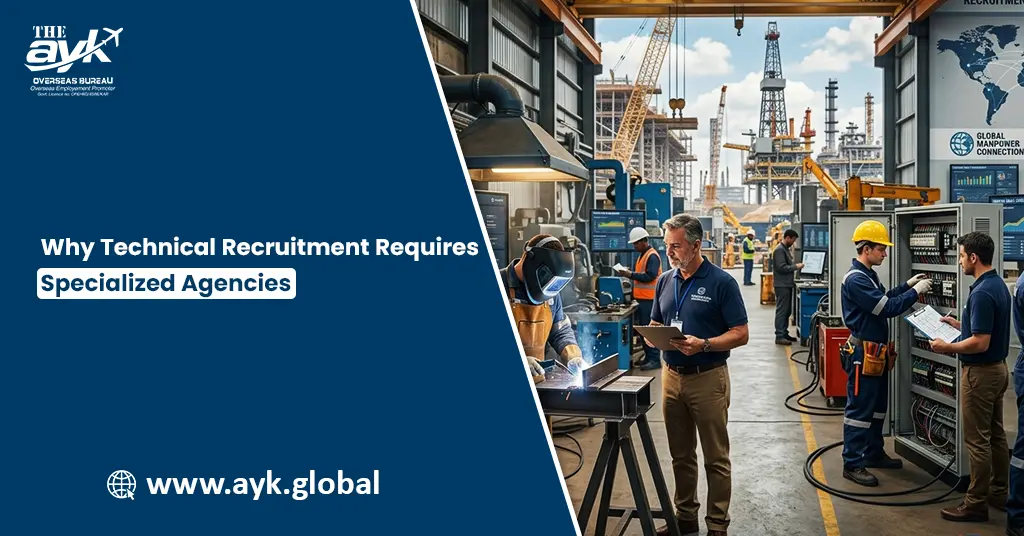
Why Technical Recruitment Requires Specialized Agencies
Published: June 23, 2026 | Views: 18
Introduction
Technical recruitment has become one of the most challenging areas of workforce acquisition in today's global labor market. Employers across construction, engineering, manufacturing, oil and gas, logistics, healthcare, energy, facilities management, and industrial sectors are facing increasing difficulty finding qualified technical professionals.
Unlike general recruitment, technical hiring requires a deeper understanding of workforce competencies, certifications, industry requirements, safety standards, and practical skills. Employers are not simply looking for employees who can fill vacancies. They need individuals who possess specialized expertise and can contribute effectively from the first day of employment.
As labor shortages continue affecting technical professions worldwide, competition for talent has become more intense. Engineers, electricians, welders, plumbers, technicians, HVAC specialists, machine operators, maintenance professionals, and industrial supervisors are increasingly difficult to recruit. Traditional hiring methods often fail to produce satisfactory results because technical workforce acquisition requires specialized knowledge and recruitment strategies.
Many organizations attempt to manage technical recruitment internally. While this approach may work for some positions, it often becomes difficult when hiring large numbers of workers or recruiting highly specialized talent. Internal recruitment teams may lack industry-specific expertise, candidate networks, workforce databases, and technical evaluation capabilities.
Specialized recruitment agencies help bridge these gaps by providing workforce expertise, technical screening processes, candidate sourcing networks, trade testing support, and international recruitment solutions. Their services improve workforce quality while reducing hiring risks and recruitment timelines.
This guide explains why technical recruitment requires specialized agencies and how employers can benefit from professional recruitment partnerships.
1. Technical Recruitment Is Different from General Hiring
Technical recruitment involves unique challenges that are rarely encountered during general workforce acquisition. Employers must evaluate practical competencies, technical knowledge, certifications, industry experience, and workforce suitability before making hiring decisions.
For example, recruiting an electrician requires an understanding of electrical systems, certifications, installation practices, troubleshooting procedures, and safety standards. Hiring a technician requires evaluating technical competencies that may vary significantly depending on the industry and equipment involved.
General recruitment processes often focus on resumes and interviews. Technical recruitment requires deeper workforce assessments that verify actual skills and practical abilities. Employers need confidence that candidates can perform effectively within complex operational environments.
Organizations that recognize the specialized nature of technical recruitment are generally better positioned to build stronger workforce teams and achieve better hiring outcomes.
Technical Recruitment Challenges
Specialized skills require specialized evaluation.
Technical competencies must be verified carefully.
Hiring decisions involve greater complexity.
2. Specialized Agencies Understand Technical Roles
One of the biggest advantages of working with specialized recruitment agencies is their understanding of technical workforce requirements. These agencies work closely with industries that depend on skilled labor and develop expertise regarding workforce competencies, certifications, and operational needs.
Recruitment specialists understand the differences between industrial electricians and residential electricians, HVAC technicians and maintenance technicians, welders and fabricators, or mechanical engineers and maintenance engineers. This knowledge improves candidate evaluations and workforce matching.
Employers benefit because recruitment processes become more accurate and efficient. Agencies can identify suitable candidates more quickly and reduce the likelihood of hiring individuals who lack required competencies.
Industry expertise remains one of the most valuable assets specialized agencies provide during technical recruitment activities.
Industry Expertise Benefits
Recruiters understand technical workforce requirements.
Candidate matching improves significantly.
Hiring accuracy increases.
3. Access to Larger Technical Talent Networks
Technical workforce shortages have made candidate sourcing increasingly difficult. Many qualified professionals are already employed and may not actively search for new opportunities through traditional job platforms.
Specialized recruitment agencies maintain extensive candidate databases and industry networks that provide access to both active and passive job seekers. Employers gain access to talent pools that may otherwise remain unavailable.
These networks often include engineers, technicians, electricians, welders, machine operators, maintenance specialists, industrial workers, healthcare professionals, and other skilled workforce categories. Broader access improves workforce availability and recruitment success.
Organizations that leverage specialized talent networks often fill vacancies more efficiently and reduce staffing challenges.
Talent Network Benefits
Broader candidate access improves recruitment.
Passive candidates become more accessible.
Workforce availability increases.
4. Faster Candidate Sourcing
Recruitment speed has become increasingly important as labor shortages continue affecting industries worldwide. Project delays, operational disruptions, and workforce gaps can create significant business challenges when positions remain vacant.
Specialized agencies accelerate candidate sourcing because they maintain ready-to-access workforce databases and recruitment networks. Employers spend less time searching for talent and more time evaluating qualified candidates.
Speed does not necessarily mean sacrificing quality. Professional recruitment agencies combine efficient sourcing processes with workforce verification activities to ensure candidates meet organizational requirements.
Organizations that require rapid workforce deployment often benefit significantly from specialized recruitment support.
Recruitment Speed Benefits
Candidate sourcing becomes more efficient.
Vacancies are filled more quickly.
Operational disruptions are reduced.
5. Better Candidate Screening and Evaluation
Technical workforce quality depends heavily on candidate screening and evaluation processes. Employers must verify that workers possess the competencies required to perform effectively within specific roles.
Specialized agencies use structured evaluation methods that may include technical interviews, certification verification, employment history reviews, practical assessments, reference checks, and trade testing coordination. These activities provide valuable insight into workforce capabilities.
Comprehensive screening improves recruitment accuracy because hiring decisions are based on verified information rather than assumptions. Employers gain greater confidence in workforce quality and suitability.
Organizations that prioritize candidate evaluation generally experience stronger productivity, reduced turnover, and improved operational performance.
Screening Benefits
Workforce quality improves significantly.
Technical competencies are verified.
Recruitment risks decrease.
6. Trade Testing Supports Better Hiring Decisions
Trade testing remains one of the most effective methods for evaluating technical workforce capabilities. Practical assessments allow employers to verify skills directly rather than relying solely on resumes or interviews.
Specialized recruitment agencies often coordinate trade testing activities through dedicated assessment centers and technical evaluators. Electricians, welders, plumbers, technicians, machine operators, and other skilled workers can demonstrate practical competencies before deployment.
Trade-tested workers generally perform more effectively because employers have already confirmed workforce readiness. Productivity improves while recruitment uncertainty decreases.
Organizations that incorporate trade testing into recruitment processes often achieve stronger workforce quality and project outcomes.
Trade Testing Benefits
Practical skills are verified directly.
Hiring confidence increases significantly.
Workforce readiness improves.
7. International Recruitment Expertise Creates Better Hiring Outcomes
Many employers today cannot rely solely on local labor markets to meet technical workforce requirements. Labor shortages, infrastructure expansion, industrial growth, and increasing demand for specialized skills have made international recruitment an essential workforce strategy for many organizations.
Specialized recruitment agencies possess experience managing international hiring activities. They understand global labor markets, workforce availability trends, sourcing strategies, and international workforce requirements. This expertise helps employers access qualified candidates beyond domestic talent pools.
International recruitment often involves challenges related to candidate sourcing, qualification verification, cultural adaptation, workforce mobilization, and deployment planning. Specialized agencies help manage these complexities efficiently while ensuring workforce quality remains high.
Employers that leverage international recruitment expertise generally gain access to broader talent pools and improve workforce availability significantly. This flexibility supports project success and long-term business growth.
International Recruitment Benefits
Global talent pools improve workforce access.
Labor shortages become easier to address.
International hiring supports business growth.
8. Compliance and Documentation Require Professional Management
Technical recruitment often involves extensive documentation and compliance requirements. Employers must verify certifications, licenses, educational qualifications, employment records, and legal eligibility before candidates can begin work.
International recruitment adds further complexity because visa processing, work permits, contract documentation, medical requirements, and government approvals may also be necessary. Managing these processes internally can consume significant time and resources.
Specialized recruitment agencies provide administrative support and compliance expertise that help employers navigate these requirements more effectively. Documentation is organized, verified, and processed according to relevant regulations and project needs.
Employers benefit because workforce mobilization becomes more efficient and compliance risks are reduced. Professional management helps ensure technical workers are prepared for deployment without unnecessary delays.
Compliance Benefits
Documentation processes become more efficient.
Regulatory requirements are managed effectively.
Workforce deployment delays are reduced.
9. Specialized Agencies Help Reduce Recruitment Costs
Some employers assume that managing recruitment internally is always more cost-effective than partnering with a specialized agency. However, recruitment expenses extend beyond advertising costs and interview activities.
Organizations must consider candidate sourcing expenses, screening activities, verification processes, staff time, productivity losses associated with vacancies, onboarding costs, and potential hiring mistakes. Technical recruitment failures can become particularly expensive because workforce shortages often affect operational performance directly.
Specialized agencies help reduce these costs by improving recruitment accuracy and workforce quality. Better candidate matching reduces turnover, minimizes hiring mistakes, and improves productivity after deployment.
Employers that invest in professional recruitment support often achieve stronger workforce outcomes while controlling long-term recruitment expenses more effectively.
Cost Reduction Benefits
Hiring mistakes become less common.
Recruitment efficiency improves significantly.
Long-term workforce costs decrease.
10. Long-Term Workforce Partnerships Support Business Growth
Technical recruitment should not be viewed as a one-time transaction. Organizations that consistently require skilled workers benefit significantly from establishing long-term recruitment partnerships.
Specialized agencies develop a deeper understanding of employer workforce requirements over time. They learn organizational preferences, project demands, operational objectives, and workforce expectations. This knowledge improves future recruitment activities and strengthens candidate matching.
Long-term partnerships also support workforce planning because recruitment efforts can begin before staffing shortages become urgent. Candidate pipelines, workforce databases, and sourcing strategies can be developed proactively.
Organizations that establish strong recruitment relationships often achieve greater workforce stability and improved operational performance over the long term.
Partnership Benefits
Workforce planning becomes more effective.
Recruitment quality improves continuously.
Long-term growth is supported.
11. Workforce Scalability Becomes Easier
Many technical projects require workforce flexibility. Construction projects, manufacturing expansions, infrastructure developments, industrial shutdowns, maintenance programs, and engineering initiatives often require rapid increases or decreases in staffing levels.
Specialized recruitment agencies help employers scale workforce resources according to operational requirements. Their candidate networks and sourcing capabilities allow organizations to respond quickly to changing workforce demands.
Scalability is particularly important for businesses operating within project-based industries. Workforce needs may change significantly over time, making recruitment flexibility essential for maintaining productivity and controlling costs.
Employers that work with specialized agencies often gain greater workforce agility and improved operational responsiveness.
Workforce Scalability Benefits
Staffing levels adapt more efficiently.
Project workforce requirements are supported.
Operational flexibility improves significantly.
12. Why AYK Overseas Is a Specialized Technical Recruitment Agency
Technical workforce recruitment requires industry expertise, candidate networks, workforce verification capabilities, compliance knowledge, and international recruitment experience. Employers need recruitment partners capable of delivering qualified talent efficiently while maintaining workforce quality standards.
AYK Overseas Recruitment & HR Manpower Agency
License No. GL-4586-KAR
specializes in recruiting skilled and unskilled manpower across construction, engineering, healthcare, manufacturing, logistics, hospitality, facilities management, transportation, oil and gas, and industrial sectors. The agency supports employers seeking electricians, welders, plumbers, HVAC technicians, machine operators, technicians, engineers, maintenance specialists, healthcare professionals, drivers, supervisors, and other workforce categories.
AYK Overseas provides candidate sourcing, workforce planning, trade testing assistance, screening, qualification verification, compliance coordination, documentation management, international recruitment services, workforce mobilization, and deployment support. These services help employers reduce recruitment risks and improve workforce readiness.
By combining technical recruitment expertise with international manpower solutions, AYK Overseas helps organizations secure qualified talent that supports productivity, safety, project success, and long-term business growth.
Technical Recruitment Solutions
Specialized expertise improves workforce quality.
International sourcing expands talent access.
Professional recruitment supports business success.
Conclusion
Technical recruitment requires specialized expertise because workforce quality directly affects productivity, safety, operational performance, and project success. Employers seeking engineers, technicians, electricians, welders, plumbers, operators, and other technical professionals often face challenges that traditional recruitment approaches cannot solve effectively.
Specialized recruitment agencies provide industry knowledge, workforce networks, technical screening capabilities, trade testing support, compliance expertise, and international recruitment solutions that improve hiring outcomes. These services help employers secure qualified talent while reducing recruitment risks and operational disruptions.
Organizations that partner with experienced technical recruitment agencies are generally better positioned to address workforce shortages, improve workforce quality, and support long-term business growth.
 Role of Manpower Agencies in International Recruitment
 How to Hire Skilled Pakistani Workers for Mega Projects in the Gulf
 Why International Recruitment Is Not Simple
 KSA Recruitment
 UAE Recruitment
 Qatar Recruitment
 Oman Recruitment
 Kuwait Recruitment
 Libya Recruitment
 Bahrain Recruitment
 Iraq Recruitment
 Malaysia Recruitment
 Malta Recruitment
 Canada Recruitment
 USA Recruitment
 Europe Recruitment
 UK Recruitment
 Romania Recruitment
 Poland Recruitment
 Bulgaria Recruitment
 Albania Recruitment
 Serbia Recruitment
 Lithuania Recruitment
 Japan Recruitment
 Turkey Recruitment
 Kyrgyzstan Recruitment
 South Korea Recruitment