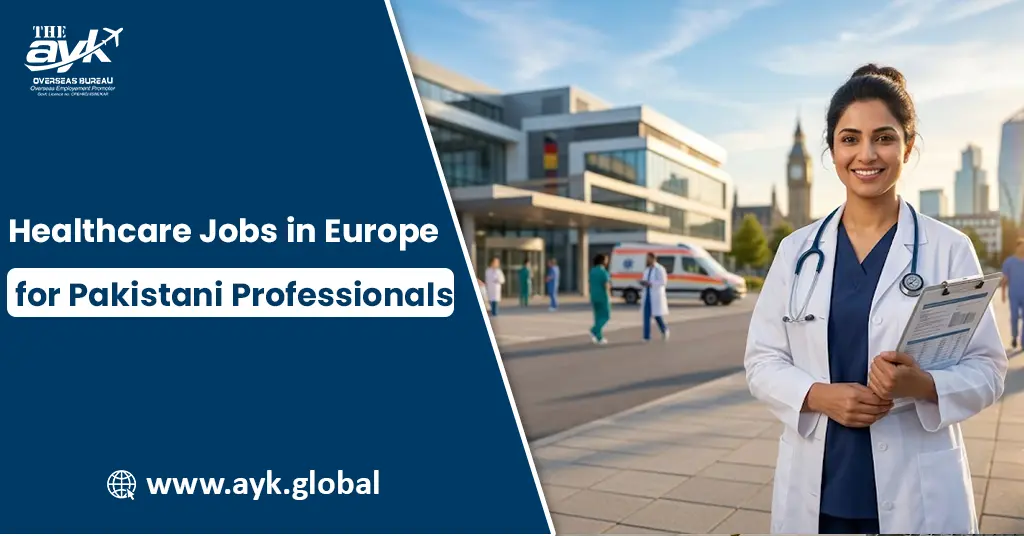
Healthcare Jobs in Europe for Pakistani Professionals
Published: July 06, 2026 | Views: 6
Healthcare Jobs in Europe for Pakistani Professionals
Healthcare jobs in Europe are among the most in-demand and well-paid career opportunities for Pakistani professionals in 2026. Due to aging populations, growing healthcare needs, and shortages of medical staff, many European countries are actively recruiting foreign healthcare workers. Countries like Germany, Ireland, Sweden, Norway, Netherlands, and Denmark are especially known for hiring nurses, doctors, caregivers, physiotherapists, medical technicians, and elderly care assistants from abroad. These jobs not only offer competitive salaries but also provide legal employment contracts, health insurance, paid leave, pension benefits, and long-term career stability. For Pakistani professionals, this sector is highly attractive because it offers structured career growth and potential pathways to permanent residency in many countries. However, applicants must meet strict qualification requirements, language proficiency standards, and licensing regulations depending on the destination country. Understanding the healthcare job market, visa process, and eligibility criteria is essential for success in 2026. This guide explains everything about healthcare jobs in Europe for Pakistani professionals, including demand, salaries, requirements, and application process.
1. Why Healthcare Jobs Are in High Demand in Europe
Healthcare jobs are in extremely high demand across Europe due to a combination of aging populations, increasing chronic diseases, and workforce shortages. Many European countries have a large elderly population that requires continuous medical care, nursing support, and long-term assistance. At the same time, a significant portion of healthcare professionals is retiring, creating a gap that cannot be filled by local workers alone. Hospitals, clinics, nursing homes, and rehabilitation centers are therefore actively recruiting international professionals to maintain healthcare services. Countries such as Germany, Ireland, and the Nordic nations are facing some of the most severe shortages, especially in nursing and elderly care. Governments have introduced simplified immigration policies and work visa programs to attract qualified foreign healthcare workers. This creates excellent opportunities for Pakistani professionals with medical qualifications and experience. The demand is expected to grow further in the coming years, making healthcare one of the most stable and secure career fields in Europe.
2. Types of Healthcare Jobs Available in Europe
Europe offers a wide range of healthcare job opportunities for Pakistani professionals depending on qualifications and experience. The most in-demand roles include registered nurses, general physicians, specialist doctors, caregivers, elderly care assistants, physiotherapists, radiographers, laboratory technicians, and medical assistants. Nurses and caregivers are especially in high demand in hospitals and elderly care homes due to increasing patient needs. Doctors with recognized qualifications can work in hospitals and private clinics after completing licensing requirements. Physiotherapists and rehabilitation specialists are also needed in hospitals and sports centers. Medical laboratory technicians and radiographers play a key role in diagnostic services. In addition, healthcare support staff such as hospital assistants and cleaning staff are also required in large numbers. Some countries offer fast-track programs for nurses and caregivers, making it easier for foreign professionals to enter the healthcare system. Each role has different requirements, salaries, and licensing procedures, so applicants must carefully choose based on their education and experience.
3. Salary and Benefits for Healthcare Workers in Europe
Healthcare professionals in Europe receive some of the highest salaries compared to many other industries, making it a highly attractive field for Pakistani job seekers. Salaries depend on the country, job role, qualifications, and experience level. Doctors and specialist physicians earn significantly higher incomes, while nurses and caregivers also receive competitive wages with regular salary increases. In addition to monthly salaries, healthcare workers enjoy numerous benefits such as paid annual leave, sick leave, maternity and paternity benefits, health insurance, and pension contributions. Many employers also provide relocation assistance, language training, and housing support for foreign workers. Working hours are regulated, ensuring proper rest and work-life balance. Overtime work is usually compensated separately. With experience, healthcare professionals can advance to senior positions, increasing their income and career stability. These financial and professional benefits make healthcare jobs one of the most secure and rewarding career options in Europe for Pakistani professionals.
4. Requirements for Healthcare Jobs in Europe
To work in healthcare jobs in Europe, Pakistani professionals must meet strict requirements depending on the country and job role. A recognized medical qualification such as a nursing diploma, MBBS degree, or relevant healthcare certification is essential. Most countries require verification and recognition of foreign qualifications before employment. Nurses and doctors often need to pass licensing exams or meet registration requirements to practice legally. Language proficiency is also important, especially in countries like Germany and Sweden, where knowledge of the local language is mandatory for patient communication. Applicants must also provide a valid passport, detailed CV, experience certificates, medical fitness report, and police clearance certificate. Some employers may require proof of specialized training or continuing education in healthcare. In addition, strong communication skills, empathy, and professional ethics are highly valued. Meeting these requirements is crucial for obtaining a work visa, securing employment, and building a successful healthcare career in Europe.
5. Hiring Process for Healthcare Jobs in Europe
The hiring process for healthcare jobs in Europe is structured and involves several important steps. It begins with preparing a professional CV highlighting medical qualifications, clinical experience, certifications, and language skills. Applicants then apply through hospital websites, healthcare recruitment agencies, and official job portals. Shortlisted candidates are usually invited for interviews, which may include technical assessments and discussions about medical experience. After selection, the employer provides a job offer or employment contract, which is required for visa processing. In many cases, employers assist with work permit applications and relocation support. For regulated professions such as nursing and medicine, applicants must complete qualification recognition or licensing procedures before starting work. Once the visa is approved, the candidate travels to Europe and begins employment in a healthcare facility. The entire process may take several weeks to months depending on the country and job role, but proper documentation and preparation significantly improve success rates.
6. Best European Countries for Healthcare Jobs
Several European countries offer excellent opportunities for Pakistani healthcare professionals due to strong demand and labor shortages. Germany is one of the top destinations, especially for nurses, caregivers, and medical technicians, offering structured training programs and high job availability. Ireland is also a popular choice because English is widely spoken and hospitals actively recruit international nurses and doctors. The Netherlands provides competitive salaries and modern healthcare facilities with strong working conditions. Sweden, Norway, Denmark, and Finland (Nordic countries) are known for high living standards, excellent healthcare systems, and strong demand for qualified medical staff. Austria and Switzerland also offer well-paying healthcare jobs, but they often require strict licensing and language proficiency. Each country has different immigration rules, salary structures, and qualification requirements, so Pakistani professionals should choose based on their skills, language ability, and long-term career goals. Selecting the right country increases the chances of successful employment and career growth in Europe’s healthcare sector.
7. Common Challenges in Healthcare Jobs in Europe
Although healthcare jobs in Europe offer excellent benefits, Pakistani professionals may face several challenges when starting their careers. One of the main challenges is language barrier, as many countries require strong knowledge of the local language to communicate with patients and colleagues. Another challenge is qualification recognition, where foreign degrees and diplomas must be verified and approved before working legally. The healthcare system in Europe is also highly regulated, requiring strict adherence to medical protocols, ethics, and patient safety standards. Work pressure can be high, especially in hospitals and emergency departments where staff shortages are common. Adjusting to a new culture, work environment, and lifestyle may also take time for foreign professionals. In some cases, licensing exams and training programs are required before full employment. However, most employers provide support such as language courses, training programs, and onboarding assistance to help foreign workers adapt successfully to the system.
8. Tips to Get Healthcare Jobs in Europe Easily
Getting healthcare jobs in Europe requires proper planning, preparation, and professional presentation. Pakistani applicants should first ensure their qualifications are complete, verified, and aligned with the requirements of the destination country. A well-structured CV highlighting medical experience, skills, and certifications is essential. Learning the local language of the target country significantly increases job opportunities, especially in Germany and Nordic countries. Applicants should apply through official hospital websites, government job portals, and licensed healthcare recruitment agencies. Avoiding fake agents and unverified job offers is very important. Preparing for interviews and possible skill assessments helps improve selection chances. Gaining additional certifications or short training courses in nursing or caregiving can also strengthen applications. Staying consistent in job applications and following official procedures increases success rates. With the right strategy and preparation, Pakistani healthcare professionals can secure stable and rewarding jobs in Europe.
9. Future Scope of Healthcare Jobs in Europe
The future of healthcare jobs in Europe is extremely strong due to increasing demand for medical services and aging populations. Over the next decade, Europe will continue to face shortages of doctors, nurses, caregivers, and allied health professionals. This ensures long-term job stability for foreign workers, including Pakistani professionals. Governments are expected to expand immigration programs and simplify licensing processes to attract international healthcare staff. Technological advancements in healthcare, such as digital health systems and telemedicine, will also create new job opportunities for trained professionals. However, human healthcare workers will remain essential for direct patient care, surgery, and emergency services. Career growth opportunities in hospitals, research institutions, and private healthcare facilities will continue to increase. This makes healthcare one of the most secure and future-proof career paths in Europe, offering long-term employment, residency options, and professional development opportunities for international workers.
10. Final Thoughts on Healthcare Jobs in Europe for Pakistani Professionals
Healthcare jobs in Europe offer excellent career opportunities for Pakistani professionals seeking stability, growth, and international experience. With high demand in countries like Germany, Ireland, Netherlands, Sweden, Norway, and Denmark, qualified healthcare workers have strong chances of securing employment. However, success depends on proper qualification recognition, language proficiency, and meeting licensing requirements. Applicants should always apply through verified employers and official recruitment channels to avoid fraud. While the process may take time and effort, the long-term benefits include high salaries, strong job security, professional development, and pathways to permanent residency in many countries. Healthcare remains one of the most respected and stable professions in Europe, offering a better future for skilled Pakistani professionals who are committed, well-trained, and ready to adapt to international standards.
 Why Trade-Tested Workers Perform Better in GCC Industries
 Workforce Solutions for Fast-Growing Companies
 Body Language and Non-Verbal Communication in Gulf Workplaces
 KSA Recruitment
 UAE Recruitment
 Qatar Recruitment
 Oman Recruitment
 Kuwait Recruitment
 Libya Recruitment
 Bahrain Recruitment
 Iraq Recruitment
 Malaysia Recruitment
 Malta Recruitment
 Canada Recruitment
 USA Recruitment
 Europe Recruitment
 UK Recruitment
 Romania Recruitment
 Poland Recruitment
 Bulgaria Recruitment
 Albania Recruitment
 Serbia Recruitment
 Lithuania Recruitment
 Japan Recruitment
 Turkey Recruitment
 Kyrgyzstan Recruitment
 South Korea Recruitment