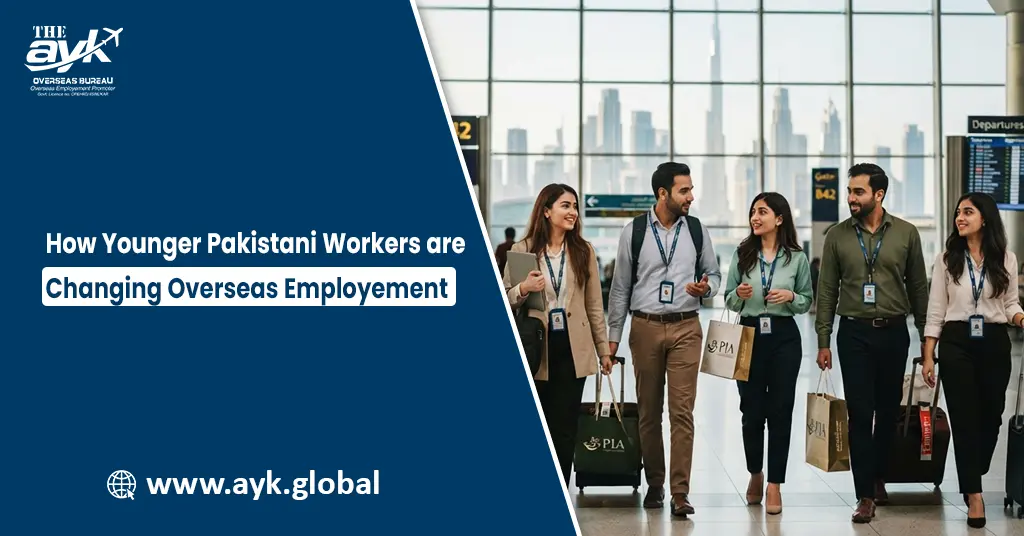
How Younger Pakistani Workers Are Changing Overseas Employment
Published: July 04, 2026 | Views: 13
Introduction
A generational shift is visibly occurring within Pakistan's overseas employment landscape as younger workers born in the 1990s and 2000s approach Gulf employment with meaningfully different expectations, skill profiles, communication patterns, and career orientations than the previous generations whose overseas employment experiences shaped the conventional wisdom that currently defines how Pakistani families and communities understand the overseas employment journey. These younger workers bring genuine advantages including stronger digital literacy, better English communication in many cases, greater access to information about their legal rights, and more deliberate career development orientation alongside the same fundamental economic motivations that have driven Pakistani overseas employment across all generations, creating an evolving overseas employment dynamic that benefits from these generational strengths while also presenting distinctive challenges that the overseas employment system and individual workers themselves must navigate thoughtfully. AYK Overseas Recruitment & HR Manpower Agency, recognized as one of Pakistan's top manpower agencies, is actively working with increasing numbers of younger Pakistani workers and observing these generational shifts directly in our daily operations, and this guide reflects our honest assessment of how younger workers are genuinely changing overseas employment dynamics and what this means for the future of Pakistani overseas labor migration.
Stronger Digital Literacy and Its Employment Implications
Younger Pakistani workers' substantially stronger digital literacy compared to previous generations creates genuine practical advantages throughout the overseas employment process, from more effective online job searching and scam identification to more efficient communication with Gulf employers and more confident navigation of the digital workplace systems that Gulf employment increasingly involves across all employment categories. This digital comfort means younger workers are more effective at independently researching Gulf employers, verifying agency credentials, comparing compensation standards, understanding their legal rights through available online resources, and generally accessing the information ecosystem that empowers more informed employment decisions than previous generations made with considerably more limited information access before departure. Gulf employers who have progressively digitized their operational communications, safety reporting systems, and workplace management platforms specifically benefit from younger workers' more natural digital comfort that reduces the learning investment required to integrate these workers into digital workplace systems that older workers sometimes require more deliberate support to navigate comfortably within Gulf employment contexts.
Higher Expectations and Career Development Orientation
Younger Pakistani workers approach overseas employment with more explicit career development expectations than the income maximization focus that characterized many previous generation approaches, seeking employment opportunities that provide genuine skill development, advancement potential, and career trajectory alongside the financial compensation that remains a core overseas employment motivation across all generations. This career development orientation makes younger workers more likely to pursue trade certification before departure, research specific employers' professional development offerings during the job selection process, actively seek advancement opportunities within their employment rather than accepting static positioning without pursuing available growth, and make employment decisions based on career development criteria alongside purely financial comparison. Gulf employers who recognize this career development orientation within their younger Pakistani worker population and respond with genuine advancement pathways, skills training investment, and professional recognition systems create stronger younger worker retention and engagement than employers who treat all overseas workers as interchangeable labor without meaningful career development dimension that younger workers specifically prioritize in their employment evaluation.
Different Communication Styles and Workplace Expectations
Younger Pakistani workers' communication styles and workplace expectations sometimes create adjustment challenges within Gulf employment contexts that were calibrated around the communication patterns and workplace compliance orientations of previous worker generation experiences, with younger workers being more likely to ask questions about task rationale, seek clarification about their rights and entitlements, express dissatisfaction through direct communication rather than passive acceptance, and generally engage with their employment situation with more assertive personal advocacy than some Gulf employment management approaches were designed to accommodate comfortably. This communication style difference creates both opportunities and challenges, with Gulf employers who can productively engage younger workers' more questioning communication orientation gaining workforce members who catch problems early and contribute improvement suggestions, while employers whose management approach depends on unquestioning compliance sometimes find younger worker communication more challenging than previous generation patterns they have more successfully managed. Younger workers themselves benefit from developing awareness of how their naturally assertive communication style lands within specific Gulf workplace cultural contexts, calibrating their directness and questioning frequency to the specific management culture they encounter rather than assuming their communication approach will be received identically across all Gulf workplace environments regardless of specific organizational culture and management style variation.
Greater Awareness of Worker Rights and Legal Protections
Younger Pakistani workers demonstrate considerably greater awareness of their legal rights and entitlements under Gulf labor law than previous generations who sometimes accepted violations of their legal entitlements out of ignorance that those violations were occurring, with information accessibility through smartphones, social media communities, and worker welfare advocacy organizations collectively raising the rights awareness among younger workers that allows more informed navigation of employment relationships. This rights awareness creates genuine worker welfare improvements as younger workers are more likely to report salary non-payment through available wage protection complaint channels, resist illegal document confiscation by asserting their documented rights, access complaint mechanisms when contract violations occur, and generally advocate for the employment conditions they are legally entitled to rather than accepting substandard treatment through uninformed compliance. Gulf employers who maintain genuine compliance with labor law requirements find younger worker rights awareness a non-issue since their actual employment practices already meet the standards younger workers are more aware of, while employers whose historical operations included some legally questionable practices find the more rights-aware younger worker population creates accountability pressure that ultimately serves legitimate worker welfare improvements across the overseas employment system.
Social Media Use and Community Information Sharing
Younger Pakistani overseas workers' active social media engagement creates information sharing networks that collectively improve the quality of information available to Gulf-bound Pakistani workers through real-time experience sharing from workers currently in Gulf employment, crowd-sourced employer reputation information that supplements formal review systems, and rapid fraud warning dissemination that helps workers identify and avoid specific schemes before they create more victims within Pakistani worker communities. This social media information ecosystem creates genuine collective intelligence that improves individual worker decision-making across job selection, fraud avoidance, rights advocacy, and various other dimensions of overseas employment management that better information consistently improves. The same social media engagement also creates risks that younger workers must navigate thoughtfully, including oversharing personal information that creates security vulnerabilities, being influenced by inaccurate information that circulates through community networks without adequate verification, and making employment decisions based on peer community narratives that may not accurately represent their individual circumstances rather than their specific personal situation's requirements.
Mental Health Awareness and Seeking Support
Younger Pakistani workers show meaningfully greater mental health awareness and willingness to acknowledge and seek support for mental health challenges during overseas employment than previous generations whose cultural frameworks often discouraged explicit mental health discussion or help-seeking, creating both opportunity for better mental health outcomes among younger overseas workers and distinctive challenges for an overseas employment system that has historically not emphasized mental health support provision. The loneliness, family separation stress, workplace pressure, and cultural adjustment challenges that overseas employment creates affect workers across all generations, but younger workers' greater willingness to recognize and articulate these experiences creates both earlier intervention opportunities when mental health challenges are identified and a more honest collective community discourse about the genuine human costs of overseas employment that previous generations sometimes processed privately without broader acknowledgment. Recruitment agencies and Gulf employers who recognize this mental health awareness shift and respond with more explicit mental health support resources, peer support connection facilitation, and reduced stigma around mental health discussion create better employment environments for younger workers whose wellbeing depends on feeling they can acknowledge and address the genuine mental health challenges that overseas employment creates without this acknowledgment being treated as weakness or unsuitability for continued overseas employment.
Financial Management Sophistication and Investment Awareness
Younger Pakistani workers approach the financial dimensions of overseas employment with more sophisticated planning orientation than previous generations, with greater awareness of investment options through Roshan Digital Accounts and various other financial instruments, more deliberate remittance service comparison to maximize transfer value, more conscious long-term financial planning that considers retirement and post-employment investment alongside immediate family support, and generally more financially literate approaches to the overseas employment financial opportunity that previous generations sometimes managed with less deliberate planning discipline. This financial sophistication means younger workers are more likely to arrive in Gulf employment having researched realistic salary ranges for their specific position, negotiated more effectively for appropriate compensation based on market knowledge, established financial plans that balance family support with personal savings goals, and make more informed decisions about investment of accumulated savings upon return based on research rather than simply following conventional property investment wisdom without adequate return on investment analysis. Recruitment agencies and financial service providers who engage with younger workers' greater financial sophistication through genuinely informed financial guidance rather than generic advice that doesn't acknowledge their existing financial awareness create more productive relationships with this more financially aware generation of overseas workers.
Technology Skills Creating New Employment Pathways
Younger Pakistani workers' stronger technology skills are opening employment pathways that were essentially inaccessible to previous generations, including Gulf information technology support roles, digital marketing support positions for Gulf businesses, social media management roles that Gulf commercial entities increasingly require, and various other technology-adjacent employment categories that leverage technology capability alongside or instead of purely physical trade competency. This technology employment access expansion is particularly significant because technology-related Gulf employment categories often provide more favorable working conditions, stronger career development pathways, and greater employment stability than physically demanding construction and manufacturing roles that historically dominated Pakistani overseas employment across previous generations. Workers with specific technology skills including web development, graphic design, content creation, data analysis, or software support capabilities should specifically research Gulf technology employment opportunities that their specific competencies enable, recognizing that technology-adjacent employment provides meaningfully differentiated overseas employment experiences compared to traditional physical labor categories that their generation's technology comfort makes more accessible than for previous generations.
Challenges Younger Workers Face in Gulf Employment
Despite their genuine advantages, younger Pakistani workers face distinctive challenges in Gulf employment that honest assessment must acknowledge alongside the strengths their generational characteristics provide, including sometimes unrealistically high initial salary expectations that lead to disappointment with genuine market rates for their experience level, workplace hierarchy adjustment challenges that more egalitarian domestic communication norms create within Gulf contexts that expect more formal hierarchical respect, and the emotional management challenges of extended family separation that younger workers sometimes find more difficult than they anticipated based on the casual distance that domestic digital connectivity had made feel manageable before actual physical overseas separation created its full emotional impact. Younger workers' relatively limited work experience compared to older candidates for the same positions sometimes creates genuine competency gaps that their digital confidence and communication sophistication do not fully compensate for in employers' assessment of overall candidate value, making realistic self-assessment of actual experience levels and skill depths important alongside the advocacy for strong compensation that market knowledge appropriately supports. Recruitment agencies working with younger workers provide their best service by offering honest calibration between younger workers' legitimate aspirations and the realistic employment options their current experience levels support, helping them access genuinely appropriate opportunities that provide career development pathways toward their aspirations rather than either dampening ambition inappropriately or facilitating overreach that creates early employment failure.
How AYK Overseas Serves Younger Pakistani Workers' Distinctive Needs
As a government-licensed international recruitment and HR manpower firm with offices in Karachi and Islamabad, AYK Overseas Recruitment & HR Manpower Agency actively works to serve younger Pakistani workers' distinctive needs and leverage their generational strengths within our placement services, providing guidance that respects their greater information access and rights awareness while also offering honest calibration of employment expectations and career development pathways that their limited experience sometimes needs more than their digital confidence suggests. Being recognized as one of Pakistan's top manpower agencies, we recognize that younger Pakistani workers represent the future of Pakistan's overseas employment sector and that building genuine service relationships with this generation through honest, informative, respectful engagement creates the lasting agency reputation that authentic service rather than exploitative placement creates across the multi-decade timeframe that genuine agency reputation building requires.
Conclusion
Younger Pakistani workers are genuinely changing overseas employment through stronger digital literacy, more deliberate career orientation, greater rights awareness, social media information sharing, mental health openness, financial sophistication, and technology skill access that collectively create a more informed, more assertive, and more capability-diverse overseas worker generation than previous cohorts who shaped the overseas employment system's current conventional wisdom. Recruitment agencies, Gulf employers, and Pakistani policy systems that recognize and adapt to these generational changes, rather than simply applying approaches designed for previous generation worker characteristics to a meaningfully different younger workforce, will create better outcomes for younger workers, more productive Gulf employment relationships, and more sustainable Pakistani overseas employment dynamics across the coming decades when this generation will form the dominant overseas worker cohort.
 Remote Hiring vs Overseas Recruitment: What Trending Now
 Complete Guide to Overseas Recruitment for Europe Jobs
 How to Choose the Right Recruitment Agency for Overseas Hiring
 KSA Recruitment
 UAE Recruitment
 Qatar Recruitment
 Oman Recruitment
 Kuwait Recruitment
 Libya Recruitment
 Bahrain Recruitment
 Iraq Recruitment
 Malaysia Recruitment
 Malta Recruitment
 Canada Recruitment
 USA Recruitment
 Europe Recruitment
 UK Recruitment
 Romania Recruitment
 Poland Recruitment
 Bulgaria Recruitment
 Albania Recruitment
 Serbia Recruitment
 Lithuania Recruitment
 Japan Recruitment
 Turkey Recruitment
 Kyrgyzstan Recruitment
 South Korea Recruitment